


 |
2022 Paris Photo–Aperture Foundation
PhotoBook Awards Shortlist
This year marks the tenth anniversary of the Paris Photo–Aperture PhotoBook Awards—a celebration of the photobook’s contributions to the evolving narrative of photography. The award recognizes excellence in three major categories of photobook publishing: First PhotoBook, PhotoBook of the Year, and Photography Catalogue of the Year.
A final jury will gather at Paris Photo this November to select and announce the winners for all three prizes. From there, shortlisted and winning titles will be profiled in a printed catalogue, to be released and distributed for free during Paris Photo fair, along with the Winter 2022 issue of Aperture magazine. The shortlisted books will be exhibited at the Grand Palais Éphémère during Paris Photo, and will tour internationally thereafter.
The following selected nominees are available for purchase through photo-eye.
First PhotoBook

Sabelo Mlangeni
South African photographer Sabelo Mlangeni’s documentary work reflects his conscious choice of themes, subcultures, and minority groups that usually remain invisible. The title of this collection of images, ‘Isivumelwano’, comes from Nguni, a Southern African language group. The word means “contract”, “agreement”, or “alliance”, and here it is synonymous with the marriage ceremonies in Black communities that Mlangeni has documented over nearly 30 years.

Marilyn Nance
From January 15 to February 12, 1977, more than 15,000 artists, intellectuals and performers from 55 nations worldwide gathered in Lagos, Nigeria, for the Second World Black and African Festival of Arts and Culture, also known as FESTAC’77. Taking place in the heyday of Nigeria’s oil wealth and following the African continent’s potent decade of decolonization, FESTAC’77 was the peak of Pan-Africanist expression. Among the musicians, writers, artists and cultural leaders in attendance were Ellsworth Ausby, Milford Graves, Fela Anikulapo Kuti, Samella Lewis, Audre Lorde, Winnie Owens, Miriam Makeba, Valerie Maynard, Queen Mother Moore and Sun Ra.
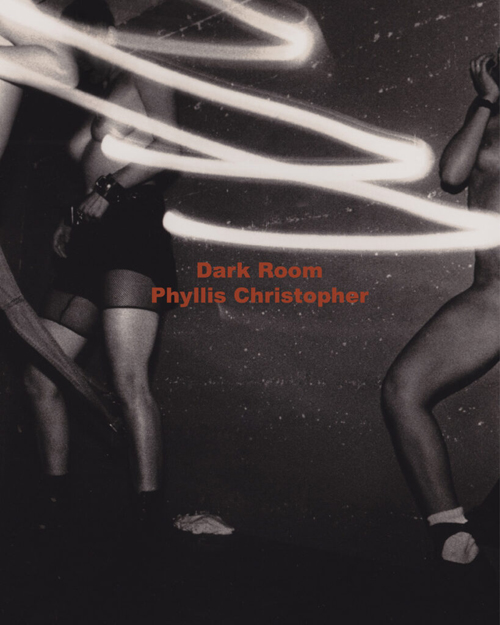
San Francisco Sex And Protest 1988-2003
Phyllis Christopher
Dark Room is a rare collection of lesbian erotic and protest photographs taken by Phyllis Christopher during the period of her life spent living in San Francisco. This explosive and tender body of work connects struggles for lesbian visibility, sex positivity, and bodily autonomy to expressions of gender subversion and queer community. At the height of the AIDS crisis in the United States, amid mainstream censorship and misinformation about sex, Christopher captured a countercultural insistence on the politics of pleasure – a community fighting for sexual and artistic freedoms in both public and intimate settings.
 BANK TOP
Craig Easton

Craig Easton
BANK TOP by photographer Craig Easton examines the representation and misrepresentation of northern communities. The work focuses on a small, tight-knit community in Blackburn, England, which has become synonymous with the use of words like segregation and integration — BBC’s Panorama describing it as ‘the most segregated town in Britain’.

Philippe Jarrigeon
Filled with colours and tactile moments, Philippe Jarrigeon’s first monograph celebrates fifteen years of a portfolio that is full of expression and deliciously deviant. Published under the artistic direction of Beda Achermann, the book gathers a collection of personal and editorial shots of mixed genres, from portraits to still lifes and landscapes. The title, Play, hints at the imaginative forces at work; a world saturated in pop fantasy and inhabited by humour, with a keen eye for detail and a cheeky wink towards the offbeat and irreverent. Glam goes hand in hand with art house consumer takes, the exceptional with the trivial, the beautiful with the ugly, the too serious with the too funny.
 As It Was Give(n) To Me
Stacy Kranitz
Stacy Kranitz
For the past twelve years, Stacy Kranitz has been making photographs in the Appalachian region of the United States in order to explore how photography can solidify or demystify stereotypes, and interpret memory and history in a region where the medium has failed to provide an equitable depiction of its people. Rather than reinforcing conventional views of Appalachia as a poverty-ridden region, or by selectively dwelling on positive aspects of the place and its people to offset problematic stereotypes, this work insists that each of these options are equally problematic ways of looking at place.
 Contact High
D’Angelo Lovell Williams
 SCUMB Manifesto
Justine Kurland
Inspired by Valerie Solanas’ iconoclastic feminist tract SCUM (Society for Cutting Up Men) Manifesto, SCUMB introduces us to photographer Justine Kurland’s own uncompromising initiative: the Society for Cutting Up Men’s Books. This volume presents a collection of collages Kurland created by cutting up and reconfiguring photobooks by male artists, as she went through the process of purging her own library of roughly 150 books by straight white men that have monopolized the photographic canon.
 Baldwin Lee
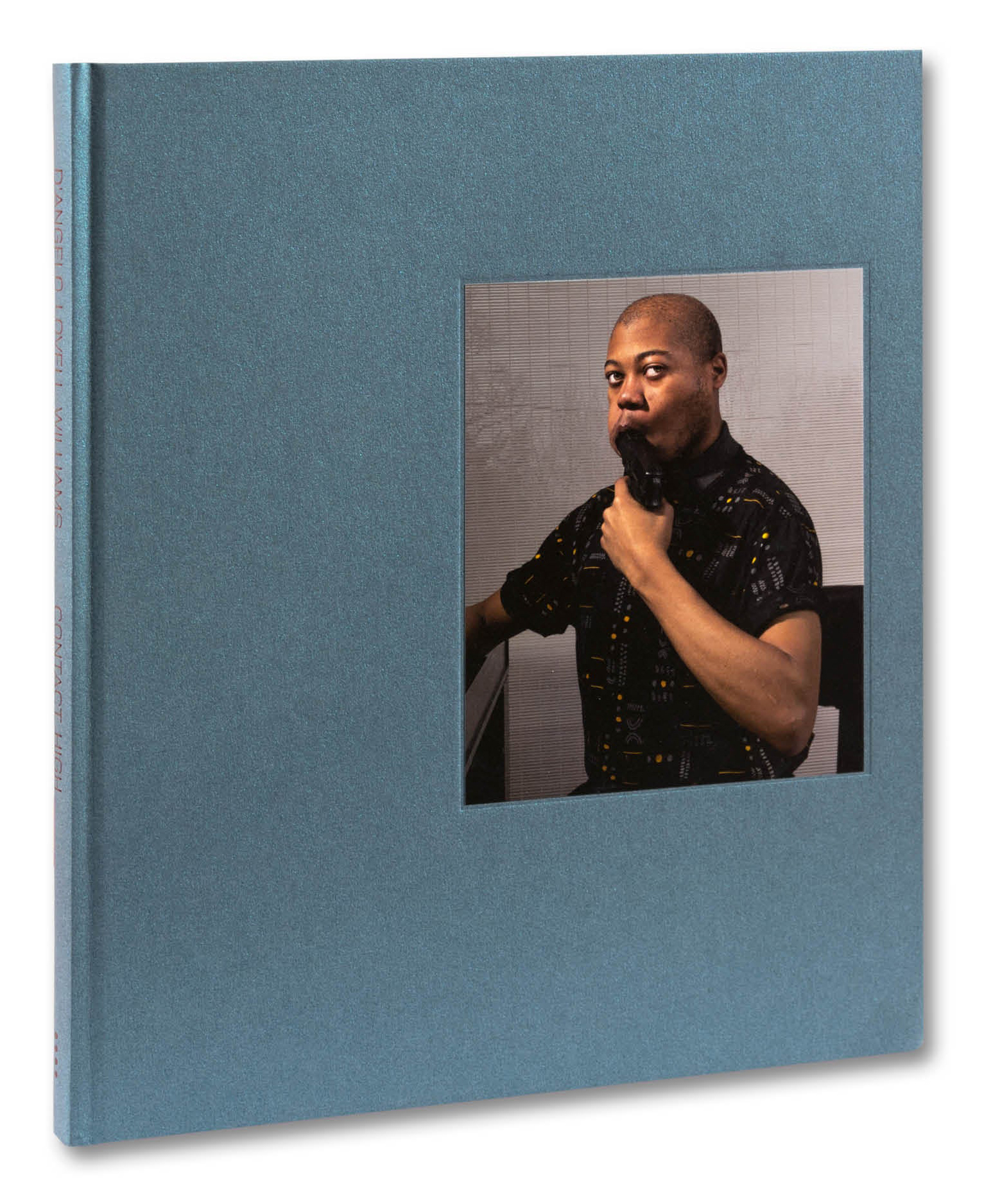
D’Angelo Lovell Williams
Both an artist’s book and comprehensive inquisition of D’Angelo Lovell Williams’ work to date, Contact High offers an expansive engagement with the visualisation of desire and depiction of the Black body. Throughout Williams’ narrative images, Black, gay men appear as sitters, lovers, caregivers, or shadows, reflecting the many forms in which Black queer people exist and have existed historically within each other’s lives. Williams’ work is guided by their life experience and an interrogation of their own perspective, as well as wider questions around the representation of race, class, sexuality, gender, and intimacy.
 Good Hope
Carla Liesching
Carla Liesching
In Good Hope, Carla Liesching constructs a fragmented visual and textual assemblage that orbits around the gardens and grounds at the Cape of Good Hope in South Africa — a historic location at the height of Empire, now an epicenter for anti-colonial resistance movements, and also the place of the artist’s birth. Named by the Portuguese in their ‘Age of Discovery’, the Cape’s position at the mid-point along the ‘Spice Route’ was viewed with great optimism for its potential to open up a valuable maritime passageway.
 The Land of Promises
Youqine Lefèvre
Youqine Lefèvre
The Land of Promises tells the intimate and personal stories of people living under the restrictions of China’s one-child policy. The policy has had huge and far-reaching consequences, particularly for hundreds of thousands of Chinese girls who have been separated from their families and registered for adoption. Photographer Youqine Lefèvre sets out to portray the journey of her own adoption through the story of six Belgian families. In doing so, she relates it to a broader context of international and transracial adoptions and other stories told by those she has met in the course of her travels. The changes in their lives resonate to this day and will continue in the future.
PhotoBook of the Year

Justine Kurland
Inspired by Valerie Solanas’ iconoclastic feminist tract SCUM (Society for Cutting Up Men) Manifesto, SCUMB introduces us to photographer Justine Kurland’s own uncompromising initiative: the Society for Cutting Up Men’s Books. This volume presents a collection of collages Kurland created by cutting up and reconfiguring photobooks by male artists, as she went through the process of purging her own library of roughly 150 books by straight white men that have monopolized the photographic canon.
In 1983, Baldwin Lee (born 1951) left his home in Knoxville, Tennessee, with his 4 × 5 view camera and set out on the first of a series of road trips to photograph the American South. The subjects of his pictures were Black Americans: at home, at work and at play, in the street and in nature. This project would consume Lee—a first-generation Chinese American—for the remainder of that decade, and it would forever transform his perception of his country, its people and himself.
 Périphérique
Mohamed Bourouissa
Mohamed Bourouissa
In this breakthrough series of photographs, Deutsche Börse award-winner Mohamed Bourouissa chose to appropriate the codes of history painting by staging scenes with his friends and acquaintances in the Paris banlieues where they used to hang out. Confrontations, gatherings, incidents, looks, and frozen gestures all suggest a palpable tension. Invoking Delacroix as much as Jeff Wall, Bourouissa’s high drama in the outskirts of Paris attempts to give a place in French history to individuals usually neglected and overlooked in contemporary society.
 My Husband
Tokuko Ushioda

Tokuko Ushioda
The joyful days with her husband, Shinzo Shimao, and daughter, Maho in a one-room unit of a Western-style house and her solitude she faced alone in the quiet night; Dormant for 40 years, the story of these photographs is finally uncovered. A set of two books with Book 1 and Book 2 each showcasing the 6×6 and 35mm photographs respectively.
 Look at me like you love me
Jess T. Dugan

Jess T. Dugan
In Look at me like you love me, Jess T. Dugan reflects on desire, intimacy, companionship, and the ways our identities are shaped by these experiences. In this highly personal collection of work, Dugan brings together self-portraits, portraits of individuals and couples, and still lifes, interwoven with diaristic writings reflecting on relationships, solitude, family, loss, healing, and the transformations that define a life.
 Flint Is Family In Three Acts
LaToya Ruby Frazier
LaToya Ruby Frazier
LaToya Ruby Frazier’s Flint Is Family in Three Acts chronicles the ongoing manmade water crisis in Flint, Michigan, from the perspective of those who live and fight for their right to access free, clean water. Featuring photographs, texts, poems and interviews made in collaboration with Flint’s residents, this five-year body of work, begun in 2016, serves as an intervention and alternative to mass media accounts of this political, economic and racial injustice.
 River's Dream
Curran Hatleberg
 Arrangements
Carmen Winant
 Another Country
British Documentary Photography Since 1945
Gerry Badger

Curran Hatleberg
Building on the concerns of Lost Coast (TBW Books, 2016) he continues his focus on the stories of American people, familIes and communities. River's Dream brilliantly demonstrates the artist's command over the contemporary photo book medium.
Carmen Winant
This book of multivalent narratives began with a simple premise: the collection of sheets of paper—ripped from books—featuring multiple photographs and inlaid narratives. Across a decade of working on other projects involving pulling images apart from one another, excising them from the page and recontextualizing them as new sets, American artist Carmen Winant diligently collected disparate sheets, skimming them off the top of her other ongoing collections.
Photography Catalogue of the Year

British Documentary Photography Since 1945
Gerry Badger
Another Country offers a lively, vital rethinking of British documentary photography over the last seven decades. This collection includes a diverse range of photographers working in an exciting array of photographic and artistic modes, encompassing images from iconic reportage to photo-text pieces, from self-portraits to political photo-collages.
 James Barnor - Stories
Pictures from the Archive
Pictures from the Archive
RRB is pleased to present our second title with Ghanaian photographer James Barnor. Published in parallel with the exhibition James Barnor, the Portfolio: 100 photographs (1949-1983), presented in 2022 at the LUMA Foundation as part of the Rencontres d’Arles festival, the book offers a kaleidoscopic overview of the Ghanaian photographer’s oeuvre.
 Devour the Land
War and American Landscape Photography since 1970
War and American Landscape Photography since 1970
Devour the Land considers how contemporary photographers have responded to the US military’s impact on the domestic environment since the 1970s, a dynamic period for environmental activism as well as for photography. This catalogue presents a lively range of voices at the intersection of art, environmentalism, militarism, photography, and politics.
 To look without fear
Wolfgang Tillmans
Wolfgang Tillmans
A visionary creator and intrepid polymath, Wolfgang Tillmans unites formal inventiveness with an ethical orientation that attends to the most pressing issues of life today. While his work transcends the bounds of any single artistic discipline, he is best known for his wide-ranging photographic output. From trenchant documents of social movements to windowsill still lifes, ecstatic images of nightlife to cameraless abstractions, sensitive portraits to architectural studies, astronomical phenomena to intimate nudes, he has explored seemingly every genre of photography imaginable, continually experimenting with how to make new pictures and deepen the viewer’s experience.
 Diane Arbus Documents
Best known for her penetrating images exploring what it means to be human, Diane Arbus is a pivotal and singular figure in American postwar photography. Arbus’s black-and-white photographs demolish aesthetic conventions and upend all certainties. Both lauded and criticized for her photographs of people deemed “outsiders,” Arbus continues to be a lightning rod for a wide range of opinions surrounding her subject matter and approach.


