PHOTOBOOK REVIEWS, INTERVIEWS AND WRITE-UPS
ALONG WITH THE LATEST PHOTO-EYE NEWS

Social Media

Showing posts with label Anne Kelly. Show all posts
photo-eye Gallery Interview with Vanessa Marsh Anne Kelly We are thrilled to present "Western Landscapes" by the incredibly talented Vanessa Marsh. In this conversation, we discuss curiosity, making photographs without a camera, printing processes, and more.
 

Vanessa Marsh, Western Landscape 1, Archival Pigment Ink Print (from scanned Cyanotype), 15x20 in, Editon of 10, $1600

We are thrilled to present Western Landscapes by the incredibly talented Vanessa Marsh!

About this work, Marsh writes, "The images depict the infrastructure and amusements of modern culture set against otherwise remote locations. The darkness of the sky and the prevalence of stars allude to ancient skies before light pollution changed our everyday experience of the universe. The images act as a meditation on our connection to the story of humanity, as well as our place in the vast geologic history of the earth and the cosmos."

In this conversation, we discuss curiosity, making photographs without a camera, printing processes, and more.


Anne Kelly: What role does curiosity play in creating your artwork?

Vanessa Marsh: I think it plays a significant role; the best new pathways come from experimenting and trying new combinations of factors. Each new series is born from a curiosity to learn a new process.

AK: Please describe your process as simply as possible.

VM: I work in various photographic processes using opaque stencils and cut paper to make multiple exposures on light-sensitive paper. The result is the illusion of a layered and dimensional landscape. 


Vanessa Marsh, Western Landscape 11, Archival Pigment Ink Print (from scanned Cyanotype), 15x20 in, Editon of 10, $1600


AK: You started creating camera-less photographs in 2011. What motivated you to make this transition?

VM: In graduate school and the years afterward, I was working with scale models that I would set up in front of my camera against real skies to capture semi-realistic-looking landscapes. Around that time, I was teaching a beginning photography workshop and used some of the scale models and some torn paper to demo how to create photograms. From the moment I saw the results of that demonstration, silhouetted figures set against a hazy landscape, I was hooked on making photograms of these imagined places. I no longer use scale models, but the basic ideas of layering silhouettes and graduated exposures began that evening.

 
Vanessa Marsh, Western Landscape 4, Archival Pigment Ink Print (from scanned Cyanotype), 15x20 in, Editon of 10, $1600


AK: Over the years, you have experimented with photograms using different printing techniques. Are you drawn to the process or the resulting color plate?

VM: I think both; the technical side of learning a new process excites me, and I love the challenge of translating my core materials into different photographic forms. As I get to know a new process, the color and mood, the benefits and limitations, inform the subject matter, which shifts a bit with each new project.

AK: Do you feel that the color plates result in a different psychological experience for the viewer?

VM: Yes, I think the various print processes evoke different experiences for the viewer. For example, my series, The Sun Beneath the Sky, is very bright and airy and could be seen as quite calming. On the other hand, some of the images set in the nighttime can have a somewhat uncanny feeling.


Vanessa Marsh, Western Landscape 7, Archival Pigment Ink Print (from scanned Cyanotype), 15x20 in, Editon of 10, $1600 

AK: You recently moved from the Bay Area to Oregon. How have the changing seasons in Oregon impacted how you work?

VM: Well, on a practical level, I had to re-think making Lumen prints with sunlight year-round as I had been able to do when I lived in California. This obstacle led me to investigate other ways of making that could be done in my studio during winter months. The seasons also inform how I collect reference images, as the flora shifts way more dramatically with the seasons here in Oregon than in California. Also, my subject matter is moving away from things like palm trees and towards ferns and blackberries. The images have always been amalgamations of various Western landscapes. However, the landscape I am presently living in comes to the forefront.
 

VIEW THE COMPLETE WESTERN LANDSCAPES SERIES HERE

*      *      *

PRINT COSTS ARE CURRENT UP TO THE TIME OF POSTING AND ARE SUBJECT TO CHANGE.

*      *      *

If you are in Santa Fe, please stop by we are open Tuesday– Saturday, from 10am- 5:30pm. 

PHOTO-EYE GALLERY
300 Rufina Circle, Unit A3, Santa Fe, NM 87507

For more information, and to reserve one of these unique works, please contact 
Gallery Director Anne Kelly
You may also call us at (505) 988-5152 x202


photo-eye Gallery Chris McCaw | photo-eye Conversations LIVE + NEW book photo-eye Gallery Last month we hosted a conversation between artist Chris McCaw and photo-eye Gallery director Anne Kelly, via Zoom in honor of McCaw's new book Marking Time. In case you missed it or would like to revisit or share it, the good news, we recorded it and are pleased to share it today.
Chris McCaw, Sunburned GSP #932 (Idaho), Unique Silver Gelatin Print, 8x10 in.


Last month we hosted a conversation between artist Chris McCaw and photo-eye Gallery director Anne Kelly, via Zoom in honor of McCaw's new book Marking Time. In case you missed it or would like to revisit and share it, the good news is that we recorded it and are pleased to post it today!


photo-eye Conversations is a series of causal conversations with photographers 
 we have the honor of working with. 


View | Order  Chris McCaw's new book Marking Time HERE

Marking Time, Photographs by Chris McCaw, Datz Press, 2023. 

Sunburn was a conceptual experiment and adventure in connecting time and analog photographic tools. … I continuously study what directions and shapes of sun trajectories I can obtain in various times and spaces on the Earth. I expect a magical scene to appear, but it is not just vague waiting. I study meticulously. To obtain the traces of the rising and setting sun, you must personally travel to that time and space. It cannot be manipulated. And I just love that process. 
— Chris McCaw 

 
Marking Time, Photographs by Chris McCaw, Datz Press, 2023. 

Chris McCaw works with a manually modified large format camera, loading vintage photo paper in place of film, and letting the sun come through the lens to physically burn the paper. This analog photographic method holds the unique documentary aspects of photography, as it captures the day and night of a distinct time and place. The passage of time is also recorded on the vintage paper, marked through varying levels of sunlight throughout the day. This book is a compilation of McCaw’s diverse work from the past 20 years, featuring the significant Sunburn series along with his Heliograph, Poly-Optic, Cirkut, and Tidal series, allowing us to experience the full scope of his variations flowing as one body centered around the sun. 

 *from the publisher's description


View unique works by Chris McCaw

            *

PRINT COSTS ARE CURRENT UP TO THE TIME OF POSTING AND ARE SUBJECT TO CHANGE.

            *

If you are in Santa Fe, please stop by we are open Tuesday– Saturday, from 10am- 5:30pm. 

PHOTO-EYE GALLERY
300 Rufina Circle, Unit A3, Santa Fe, NM 87507

For more information, and to reserve one of these unique works, please contact 
Gallery Director Anne Kelly
You may also call us at (505) 988-5152 x202


photo-eye Gallery DM Witman Index Interview Anne Kelly and DM Witman We are thrilled to introduce DM Witman and her project "Index", a series of gum bichromate photograms, to the Photographers Showcase. To provide some insight into Witman and her work, we are pleased to introduce this new work along with an interview with the artist.


#00141 Verbena hastata, 2018, Unique photogram, Rives BFK, gouache, gum arabic, kitakata, ink, 23k gold leaf, 29x23 in. framed, $1250


We are thrilled to introduce DM Witman and her project Index, a series of gum bichromate photograms, to the Photographers Showcase. To provide some insight into Witman and her work, we are pleased to introduce this new work along with an interview with the artist. In this interview, artist DM Witman and Gallery Director Anne Kelly delve into the connection between art and science, Witman's creative process, grants — and more.


Anne Kelly: Does wonder play a role in the making of your work

DM Witman: Wonder does play a part in my creative practice, in both the active and passive sense. I am someone who has a deep sense of curiosity and am constantly asking questions to help me understand the world around me. For me, the natural world abounds in wonder.

Generally, when I work, due to the nature of the materials and processes, the outcomes are not guaranteed. There is always a sense of “waiting to see what happens”. Now, that does not mean that the work is all due to magic, but there is a great deal of experimentation and being open to the results.

AK: You have degrees in both art and science. Do you feel that art and science have connective tissue?

DW: Art and science are deeply connected. Prior to the 20th century there was not as big as a distinction among interests — individuals attended the same salons to learn about new concepts, and new inventions, such as in painting, psychology, or about the human body. That has since changed and disciplinary boundaries abound. What was common then, is still common today — a sense of curiosity. Both art and science can be characterized by exploration, experimentation and discovery.  
  

#00106-2 Dryopteris spp. 2018, Unique photogram, Rives BFK, gouache, gum arabic, kitakata, ink, 23k gold leaf, 29x23 in. framed, $1250


AK: Index is a series of photograms. Can you please explain to our readers what a photogram is - and dive a bit into the chemical process and materials you have chosen to work with to create this series?

DM: A photogram is made when an object, or objects, are placed on the surface of light-sensitive materials, such as a piece of paper, or a piece of glass. Photograms can be made with many photographic processes, such as silver gelatin paper, cyanotypes, and as I have done with this series, with gum-bichromate.

With Index, I have coated large sheets of fine printmaking paper with a slurry of watercolor pigment and gum arabic mixed together with a light sensitizer. I repeated this step until the desired color and density is achieved for each sheet. Once, dried, the individual plants I collected were placed on top of the sensitized paper within a very large contact printing which would be set in the sun to expose the sensitized paper with the shape and details of the plants. Most days, I could make one to two pieces.

AK: Art often starts with a question. What question are you asking in this series?

DW: This work was born from my deeply personal experience with loss and grief. It was my attempt to grapple with a discovery about myself, that I had been experiencing grief due to ecological changes and loss, for many many months, unable to “make work. I was stuck. Collecting plants from the inter-tidal marsh along the river which I called home and have a deep connection and reverence with, was a bit of a reckoning that this place would change. And that many of the species would not tolerate the changes ahead — consistently higher water lines and higher tides, a greater salt content from Penobscot Bay, which is a few miles away. The reckoning was as much about a concern for the various plant species as it was an acknowledgment of how my actions, and those of humanity have induced these changes, for which for me, was a terrible amount of guilt. Perhaps the ultimate question for me involved an attempt to understand and process these feelings. I came to understand that I could move forward in the world, and in my life and my work, if I could make meaningful action(s). What could I do? Part of those actions meant holding space for these plants, which are often overlooked regarding conversations about the climate predicament.


#00105 Pontederia cordata. 2018, Unique photogram, Rives BFK, gouache, gum arabic, kitakata, ink, 23k gold leaf, 29x23 in. framed, $1250

AK: In your series Index, you are collecting and identifying plants that are not formally on the "endangered" list, but may be in the future. Do you see this work as a "call to action?"

DM: I certainly can see that. But for me at the time of making these objects, it was a way to both collect data and an act of memorializing the plants which are part of the way that I understand and connect to the natural world. The process allowed me to move forward to process what I was experiencing. And ultimately, a way for me to understand that I can continue in life by making meaningful actions to help the human and non-human species, no matter how small that action might seem in the scheme of it all.

AK: Do you feel that this series is in conversation with Anna Atkins' British Algee series?

DW: Anna Atkins has certainly been an influence on me as an artist. Her sensibilities and interest in botanical science, the naming of things, and sharing that with others. I’m sure she was interested in contributing to science and sharing this with others, which is I believe an intersection of the two bodies of work. However, I can only wonder if she considered that species might disappear due to human influence and impact back in the late 19th century. The works from Index are heavy, and there is a dimension to them, which is purposeful. They are objects, memorials, and of data — a baseline of a particular moment in the history of that place, along that river, at that time. And I find them beautiful.


#00105 Pontederia cordata. 2018, Unique photogram, Rives BFK, gouache, gum arabic, kitakata, ink, 23k gold leaf, 29x23 in. framed, $1250


AK: You describe yourself as a transdisciplinary artist working with photographic media, video, and installation. Do you feel your practice in each medium/media bleeds into each other — in the sense that perhaps you are working on a still photograph and it gives you an idea for a video?

DW: Absolutely. My work is driven first by concept. However, the process of making is also very important to me. I try to be open to how these explorations and expressions might manifest. These three realms of working can intertwine to create experiences for others, that are at times unexpected, and that I welcome.

AK: You have received a few grants. Do you have advice for other creatives as to how to go about getting a grant?

DW: Grants — yes! Write, apply, apply, refine by writing more, and apply again. While grants are competitive, I believe there is some element of timing. Attempt to understand what granting agencies are looking for — for example, does your particular idea or project align with the granting organization’s mission? Are they interested in funding work that has yet to begin, or projects which are deeply underway, or projects that are completed? The more you write, the better solidified and succinct your ideas become on the page. And know that for every successful grant I have received, there might be ten, twenty, or more rejections. The key is to not give up.


DM Witman is a transdisciplinary artist working at the intersection of environmental disruption and the human relationship to place in the Age of the Anthropocene.Her creative practice is deeply rooted within the effects of the climate predicament to humans and more-than-human species on this planet, employing photographic materials, video, and installation. Interviews and publications include The Guardian, BBC Culture, WIRED, Boston Globe, and Art New England. She actively exhibits her work and has been recognized with grants from the Maine Arts Commission, The Kindling Fund (a regrantor for the Warhol Foundation), The John Anson Kittredge Fund, and the Puffin Foundation. Her work has been collected by institutions such as the Museum of Fine Arts Houston and is placed within many private collections. She splits her time between the Borderlands of South Texas and Midcoast Maine.
 
DM Witman @Brenton Hamilton


*      *      *

PRINT COSTS ARE CURRENT UP TO THE TIME OF POSTING AND ARE SUBJECT TO CHANGE.

*      *      *

If you are in Santa Fe, please stop by we are open Tuesday– Saturday, from 10am- 5:30pm. 

PHOTO-EYE GALLERY
300 Rufina Circle, Unit A3, Santa Fe, NM 87507

For more information, and to reserve one of these unique works, please contact 
Gallery Director Anne Kelly
You may also call us at (505) 988-5152 x202


photo-eye Gallery photo-eye Conversations with David Emitt Adams and Jamey Stillings photo-eye Gallery In honor of the closing of Reshaping the Earth: Energy and the Environment, an exhibition featuring photographs by Jamey Stillings and David Emitt Adams, we are pleased to share a recent segment of photo-eye Conversations LIVE with David and Jamey.


In honor of the closing of Reshaping the Earth: Energy and the Environment, an exhibition featuring photographs by Jamey Stillings and David Emitt Adams, we are pleased to share a recent segment of photo-eye Conversations LIVE with David and Jamey.  Below the video, are a few installation shots if you haven't visited the gallery yet.


In this segment of photo-eye Conversations, Adams and Stillings engage in a conversation about their work, including in Reshaping the Earth: Energy and the Environment. If you're short on time, or would just like a taste, we also made two 5-minute videos you can watch: David Emitt Adams discussing his work (here)  and Jamey Stillings talking about his work and his new book (here).  
Enjoy!


Jamey Stillings' aerial photos document renewable energy projects and mining in Chile's Atacama desert, a region rich in natural resources like lithium, copper, gold, and iron ore.


David Emitt Adams uses historical photographic techniques to explore industrial landscapes from the American oil industry in his Power series. He captures the images using a custom-built camera and prints directly on 55-gallon steel oil drum lids using wet plate collodion chemistry.


View more work by David Emitt Adams here 
    

View more work by Jamey Stillings here 

Order Jamey Stillings' new book here 


*      *      *

PRINT COSTS ARE CURRENT UP TO THE TIME OF POSTING AND ARE SUBJECT TO CHANGE.

*      *      *

If you are in Santa Fe, please stop by we are open Tuesday– Saturday, from 10am- 5:30pm. 

PHOTO-EYE GALLERY
300 Rufina Circle, Unit A3, Santa Fe, NM 87507

For more information, and to reserve one of these unique works, please contact 
Gallery Director Anne Kelly
You may also call us at (505) 988-5152 x202


photo-eye Gallery Reshaping the Earth: Energy and the Environment photo-eye Gallery photo-eye Gallery is pleased to present Reshaping the Earth: Energy and the Environment, an exhibition of photographs by Jamey Stillings and David Emitt Adams

David Emitt Adams, Port of Los Angeles, San Pedro, CA, 2015, Wet Plate collodion on 55-gallon steel drum lid, 23.5 inches in diameter, Unique, $7,500 ready to hang

photo-eye Gallery is pleased to present Reshaping the Earth: Energy and the Environment, an exhibition of photographs by Jamey Stillings and David Emitt Adams. This exhibition observes the transformation of land due to the extraction of natural resources from the earth. This exhibition also highlights a selection of images by Bremner Benedict that explore natural springs in the Southwest, many of which are currently being threatened.

Jamey Stillings, #24916, 20 July 2017, Archival Pigment Ink Print, 31x44 in, Editon of 10 plus two artist's proofs, $3,400 unframed 

Jamey Stillings, #39386, 29 August 2022, 22x28 in, Editon of 15 plus two artist's proofs, $2,000 unframed

Jamey Stillings' stunning color, aerial photographs record rapidly growing large-scale renewable energy projects that incorporate wind, solar, hydro and mining projects in the Atacama desert of Chile. The landscape of the Atacama desert has a long history of being altered by humans due to the region's abundant natural resources such as lithium, copper, gold and iron ore.

David Emitt Adams, LA Harbor Oil Tanker, Wilmington, CA, 2017, Wet plate collodion tintype on 55-gallon steel drum lid, 23.5 inches in diameter, Unique, $7,500 ready to hang 

David Emitt Adams uses historical photographic techniques to explore his subjects, sparking conversations about the past and present. His "Power" series features images of industrial landscapes from the American oil industry, captured using a custom-built camera and printed directly onto 55-gallon steel oil drum lids using wet plate collodion chemistry.


Bremner Benedict, Pinto Hot Springs, NV, Archival Pigment Ink Print, 16x24 in, Edition of 4, $1,200 unframed. 

Benedict's "Hidden Water" project documents springs in the Southwest, including the Chihuahuan, Sonoran, and Mojave deserts, the Great Basin, and the Colorado Plateau. The project raises awareness about the loss of these vital ecosystems that have long been essential to human survival but are overlooked in our modern world.

About the artists:

Jamey Stillings is a photographer based in Santa Fe, NM. Jamey’s photographs have been exhibited nationally and internationally. His work is in the permanent collection of the United States Library of Congress Museum of Fine Arts, Houston Los Angeles County Museum of Art Nevada Museum of Art, and Center for Art + Environment Archive Collection among others. His monographs include ATACAMA: Renewable Energy and Mining in the High Desert of Chile, Steidl, 2023, The Evolution of Ivanpah Solar, Steidl, 2015 and The Bridge at Hoover Dam, Nazraeli Press, 2011.

David Emitt Adams is a photographer based in Phoenix, Arizona. David’s photographs have been exhibited nationally and internationally including museum exhibitions. His work is in the permanent collection of The Center for Creative Photography, The Santa Barbara Museum of Art, the Museum of Photographic Arts San Diego, The Ogden Museum of Southern Art, The George Eastman Museum, and The Worcester Art Museum as well as numerous private collections. 

Bremner Benedict is a photographer based in Concord, Massachusetts. Bremner's photographs have been exhibited in numerous group and solo exhibitions. Her work is in the permanent collection of Fidelity Art Boston Collection, The Center for Creative Photography, Tucson, New Mexico Museum of Art, George Eastman International Museum of Photography, and Philadelphia Museum of Art, among others.  In 2023 Benedict was the recipient of Center's Project Launch Grant

Also on display is a selection of work by gallery artists, including Mitch Dobrowner, Michael Kenna, Steve Fitch, and Beth Moon.


Reshaping the Earth: Energy and the Environment is on display through January 6th, 2024. An Artist Reception and Booksigning for Jamey Stillings will be held on Saturday, December 2nd, from 3-5 p.m.


*      *      *

PRINT COSTS ARE CURRENT UP TO THE TIME OF POSTING AND ARE SUBJECT TO CHANGE.

*      *      *

If you are in Santa Fe, please stop by we are open Tuesday– Saturday, from 10am- 5:30pm. 

PHOTO-EYE GALLERY
300 Rufina Circle, Unit A3, Santa Fe, NM 87507

For more information, and to reserve one of these unique works, please contact 
Gallery Director Anne Kelly
You may also call us at (505) 988-5152 x202


photo-eye Gallery New Work by David H. Gibson PHOTO-EYE GALLERY photo-eye is thrilled to share new work by David H. Gibson

Sunrise Moments, August 27, 2022, 7:23:48 a.m, Eagle Nest Lake, NM
10x40 in. Archival Pigment Ink Print, Editon of 25, $1200

For David H. Gibson, making photographs is "a constant process of experiencing the unexpected…like listening to music with its structure of sound forming and unfolding during performance."


Sunrise Moments, August 27, 2022, 7:33:43 a.m, Eagle Nest Lake, NM
10x40 in. Archival Pigment Ink Print, Editon of 25, $1200

Every August, David H. Gibson packs his camera and heads to New Mexico to continue a project he has been working on for at least two decades — photographing Eagle Nest Lake in the early hours of the day. David seeks to capture the ever-changing lake in his photos, each representing a unique moment in time, recording nature's artistry...


Sunrise Moments, August 31, 2022, 6:59:01 a.m, Eagle Nest Lake, NM
5x40 in. Archival Pigment Ink Print, Editon of 25, $1200

While the location is fixed, each minute of every morning is a different experience. Sometimes the lake is shrouded in mist, creating a mysterious and ethereal atmosphere — other times bright and sparkling, dark and stormy, or calm and peaceful...but every experience is different and memorable.

>>View more work by David H. Gibson<<


>>Learn more about David H. Gibson<<


*      *      *

PRINT COSTS ARE CURRENT UP TO THE TIME OF POSTING AND ARE SUBJECT TO CHANGE.

*      *      *

If you are in Santa Fe, please stop by we are open Tuesday– Saturday, from 10am- 5:30pm. 

PHOTO-EYE GALLERY
1300 Rufina Circle, Unit A3, Santa Fe, NM 87507

For more information, and to reserve one of these unique works, please contact 
Gallery Director Anne Kelly

You may also call us at (505) 988-5152 x202


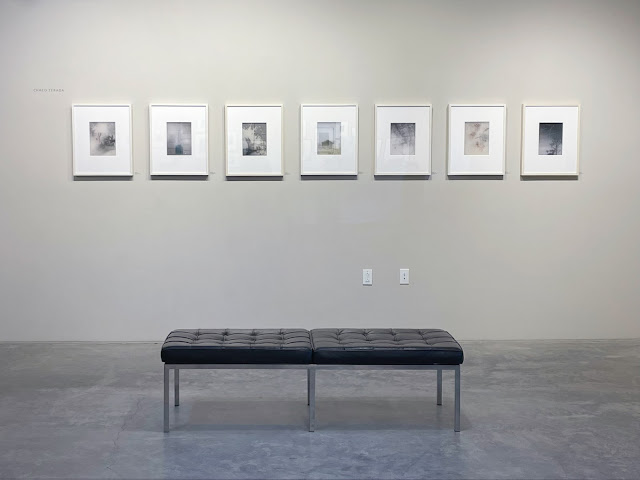
photo-eye Gallery Chaco Terada: Gallery Musings photo-eye Gallery photo-eye Gallery's staff is pleased to share thoughs on one of their favorite images by Chaco Terada.


Since the 6th century, calligraphy has been a revered art form in Japan, following its introduction by Chinese masters. Today, it reflects the influence of Japanese Zen Buddist philosophy, where artists clear their minds to allow each character to arise spontaneously, committing it to paper in fluid motions. Yhohei Teradam, an esteemed calligraphy teacher at the University of Toyama, began teaching his daughter Chaco the art when she was only four years old. In her early twenties, Chaco would bring her passion for calligraphy to the United States and combine it with a new love: photography.

Chaco Terada has always been captivated by the way the lines of folded calligraphy paper showed through when held up to the light. Inspired by a poetry book that merged text and images, she developed a process that combines Sumi ink calligraphic mark-making with black-and-white photographic images printed on sheer silk, producing unique vignettes. Her subjects include landscapes, portraits, flowers and other imagery that is shrouded and obscured, their details blurred by layers of silk. Each layer of silk is then stretched between 8-ply matboards, like a canvas so that each semi-transparent layer of silk interacts with each other. The calligraphy is often painted on multiple layers, giving the impression of free-floating thoughts in the atmosphere. The spaced layers add depth to the images, and the silk adds an ethereal, atmospheric quality to the photos. 

Terada's brushstrokes derive from characters with multiple interpretations, creating impressionistic takes on mood and feeling. She says, "My calligraphy is influenced by life experiences. When I create a brushstroke, I think of the motion of water in a stream or the movement of a breeze. My lines do not create a word in the traditional sense; they interpret the meaning or mood that I feel the word represents."

>> To learn more about represented artist Chaco Terada, click here <<

>> To view more of Chaco Terada's work, click here <<


Gallery Director Anne Kelly and Gallery Assistant Jovi Esquivel share their thoughts on their favorite piece. To fully appreciate Terada's work and the interplay between the layers of silk, they should be experienced in person.


As the gallery director at photo-eye, I have the opportunity to form a relationship with the artists we represent, which includes hearing stories that are typically not included in general artist statements. These stories help provide a more complete comprehension of an artist's work, so I like to share them alongside experiences whenever possible.

Chaco Terada's relationship with photo-eye dates back about 15 years. Over this period I have thoroughly enjoyed getting to know Chaco, watching her career blossom and her art-making process evolve.

Chaco began producing art at age four when she began her studies in the ancient art of calligraphy. In her twenties, her calligraphy skills presented the opportunity to travel. Chaco eventually decided to settle in the United States, where she developed a passion for photography, which she began incorporating into her brushwork. In this new process, she moved away from traditional characters, which can be literally interpreted, into a new free-form version of calligraphy that she considers meditative mark-making. These marks benefit from a mastery of the ancient art of calligraphy but are not bound by traditional rules.

I would like to highlight Little Fox, for I see Chaco in all of her images but particularly this one. I perceive Little Fox, as a portrait of the artist, but not in the literal sense. Foxes, known as kitsune, often appear in Japanese folklore and are believed to have paranormal abilities such as shapeshifting. Chaco possesses many positive characteristics associated with foxes. Chaco is cunning, playful and resilient. 

This piece was made in 2020 when most of us were in quarantine. During this time Chaco revisited images from the past, looking for new inspiration. In this process, she came across a photograph that she had made of an Oragomi fox that was photographed on a trip to Japan the year prior and decided to work with that. The final image depicts the origami fox framed by silhouetted foliage. The origami fox appears to be looking out a window and dreaming of returning to the forest to play. 

Because Chaso's images are composed by stacking multiple layers of semi-opaque silk, the individual elements become one, they are capable of representing not just one moment in time but multiple places within the same frame. Her past, present and future are illustrated in a single image.

—Anne Kelly


Chaco Terada, Sounds of Silhouette, Sumi & Pigment Ink on Silk, 10 x 7½ Image, Unique Object, $1800

I feel a profound connection to the wind, which beckons me to dream and awakens all of my senses. Living in New Mexico, I cannot escape the dramatic interplay of light and sound shaped by the forceful will of the wind as it moves through the tall Cottonwood trees. The artwork titled Sounds of Silhouette amplifies this connection for me. The work appears to be a vignette of leaves and branches that have been printed on multiple layers of silk, creating a sense of depth and varying densities that mirror the way light moves through trees. Against this backdrop of light and shadow, Chaco's hand emerges with iridescent calligraphic strokes, capturing the essence of wind whispering through leaves.

Chaco's process of combining calligraphy with photography on silk produces an otherworldly quality that draws me into the artwork and makes me feel connected to the natural world. 

—Jovi Esquivel


If you are in Santa Fe, please stop by during gallery hours or schedule a Virtual Visit here.


*      *      *

Print costs are current up to the time of posting and are subject to change.


For more information, and to reserve one of these unique, extraordinary new works,
please contact photo-eye Gallery Director Anne Kelly 

1300 Rufina Circle, Unit A3, Santa Fe, NM 87507
Tuesday– Saturday, from 10am– 5:30pm

You may also call us at (505) 988- 5152 x202


photo-eye Gallery photo-eye Conversations: Live w/ Mitch Dobrowner PHOTO-EYE GALLERY photo-eye Gallery is happy to share the recording of our live Zoom conversation with Mitch Dobrowner, the first segment of photo-eye Conversations: LIVE

Mitch Dobrowner, Supercell Swirles & Lightening, Clayton, New Mexico, 2022, 20x30", Edition of 25, $2,500

In case you missed it, we're happy to share the recording of our live Zoom conversation with Mitch Dobrowner, the first segment of photo-eye Conversations: LIVE!

The Zoom gathering was a relaxed chat between Gallery Director Anne Kelly and photographer Mitch Dobrowner, followed by a Q&A. 

Dobrowner has been traveling across the country with professional storm chasers for over a decade with the goal of capturing the calm amidst the storm. Though this seems counterintuitive, Dobrowner's hyper-technical approach and incredibly focused compositional eye enable him to find a sense of grounding even during the most extreme weather events. The translation of this imagery into flawless black-and-white prints provides the viewer with that same sense of peace, even among the chaos, a moment of stillness can always be found.


Mitch Dobrowner was born in 1956 in Long Island, Bethpage, New York. Worried about Mitch's future and the direction his life will take, his father decided to give him an old Argus rangefinder to fool around with—little did he realize that it would become a significant gesture for Mitch. After doing some research, and seeing work by Minor White and Ansel Adams, Mitch quickly became addicted to photography.

Years later, in early 2005, inspired by his wife, children and friends—he again picked up his camera. Working with professional storm chaser Roger Hill, Dobrowner has traveled throughout Western and Midwestern America to capture nature in its full fury; making extraordinary images of monsoons, tornados, and massive thunderstorms with the highest standard of craftsmanship. 

Dobrowner’s Storms series has attracted considerable media interest from National Geographic, Time, and New York Times Magazine, among others. In August of 2022 a print of the image Rope Out, from a private collection, has been acquired by the Philadelphia Museum of Art. Other museums that have acquired Mitch's work include The Center of Creative Photography, Tucson AZ; The National Gallery of Art, Washingon D.C.; The Museum of Fine Art, Houston TX; Cleveland Museum of Art, Cleaveland OH; Portland Museum of Art, Portland OR; Santa Barbara Museum of Art, Santa Barbara CA; and the Middlebury Museum of Art, Middlebury VA. 

He lives with his family in Studio City, California.


photo-eye Gallery is proud to represent artist Mitch Dobrowner.


*      *      *


SAVE THE DATE!


photo-eye Conversations: LIVE w/ Kate Breakey


August 17, 2023  /  @6pm MT

via Zoom

RSVP


*      *      *

PRINT COSTS ARE CURRENT UP TO THE TIME OF POSTING AND ARE SUBJECT TO CHANGE.

*      *      *

If you are in Santa Fe, please stop by during gallery hours or schedule a Virtual Visit HERE.  

For more information, and to reserve one of these unique works, please contact 
Gallery Director Anne Kelly or Gallery Assistant Jovi Esquivel.

You may also call us at (505) 988-5152 x202


photo-eye Gallery

1300 Rufina Circle, Unit A3, Santa Fe, NM 87507
Tuesday– Saturday, from 10am- 5:30pm

  photo-eye Gallery   The Day May Break, Chapter Two: An Interview with Nick Brandt    photo-eye Gallery       Gallery Director Anne Kelly and represented artist Nick Brandt discusses the evolution of his artistic vision, tracing its trajectory from his early days in Africa to his recent explorations in Bolivia.
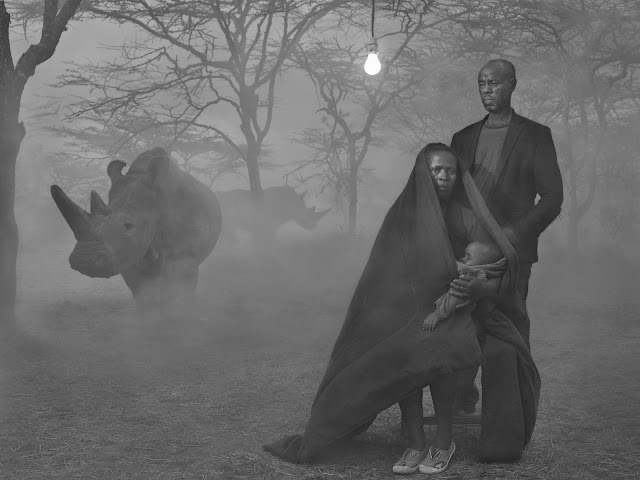
Nick Brandt, Alice, Stanley and Najin, Kenya, 2020

Nick Brandt, an accomplished artist known for his stunning photographs of Africa, has embarked on a remarkable journey spanning over two decades. His latest project, The Day May Break, a global series, takes him beyond the borders of Africa to Bolivia. With the release of his new book, The Day May Break, Chapter Two, Brandt's career reaches a significant milestone, offering a chance to reflect on his artistic evolution and delve deeper into his current works.

In a captivating interview with photo-eye Gallery Director Anne Kelly, Brandt discusses the evolution of his artistic vision, tracing its trajectory from his early days in Africa to his recent explorations in Bolivia. Their conversation also highlights Brandt's influential conservation organization, Big Life Foundation, which has made a profound difference in preserving wildlife habitats in one of Africa's key ecosystems. 

The interview delves into Brandt's global series, which addresses urgent environmental concerns, particularly climate change. Through his mesmerizing photographs, Brandt captures the awe-inspiring beauty of the natural world while emphasizing its vulnerability to human-induced threats.

This interview and the release of Brandt's new book offer a unique and celebratory opportunity to appreciate the legacy of an extraordinary artist, immerse ourselves in his artistic journey and achievements, and contemplate the promising directions that lie ahead for Nick Brandt's illustrious career.
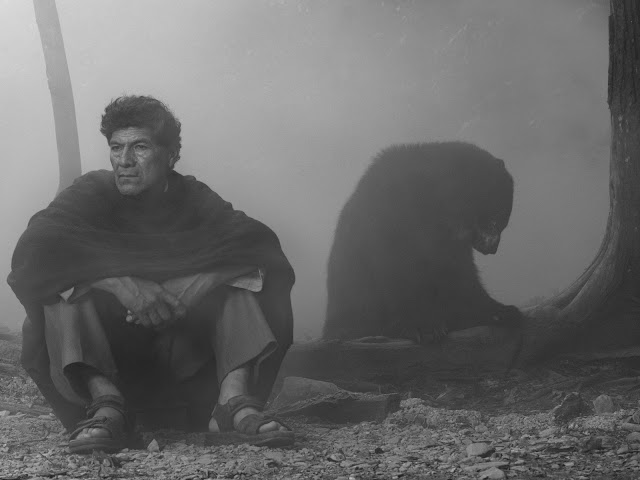

Nick Brandt, Lucio and Tarkus, Bolivia, 2022

Anne Kelly: Over 20 years ago you started photographing in Africa, this began with what grew into a trilogy of monumental portraits of East African Animals. Conservation was the goal from day one, but the trilogy was just the beginning. The time spent in Africa photographing was the direct path to the creation of your conservation organization Big Life Foundation—followed by several other call-for-action projects, including Inherit the Dust and This Empty World, leading to the multi-part global series that you are working on today. Would you have anticipated the trajectory of your work when you started photographing in Africa 20 years ago?
Nick Brandt: Good question. I don’t think I would have anticipated this trajectory back at the beginning, but that is an answer I am not happy about. I feel that I spent far too many years on the early work. I really only finally found my voice in 2014 with Inherit the Dust and from there, work that I feel is much more complex and ambitious than the early work.

Nick Brandt, Jame with People in Fog, Bolivia, 2022

AK: Your current series, The Day May Break, calls attention to climate change and environmental destruction globally. The images are made in carefully selected sanctuaries and your subjects are survivors, both human and animal. The humans have lost their homes and or livelihoods, and the rescued animals can’t be introduced back into the wild. In this series animals and humans are photographed together in the same frame and seen as equal. Please go into the transition from Inherit the Dust and This Empty World, to your current work.
NB: With every series, you can see people becoming more and more prominent in the photos. With The Day May Break, I went much further again. This was because this series (finally) addressed climate change. And with its direct impact on humans—especially those in poor rural areas of countries, with their low carbon emissions, bear the least responsibility—this concept grew out of that. So this series conceptually developed out of the desire to address climate change and to find a way to show both the most vulnerable humans and animals sharing the same fate. 

Nick Brandt, Lineth and Kini, Bolivia, 2022

AK: While your new works look at some difficult topics, hope is magnified in the new work.  Please expand.
NB: All these people and animals have been through trauma and dramatic hardships. But they survived. They are all still alive. And so in that, there is still hope and possibility.  It’s as the title of the series, The Day May Break, implies– The earth could shatter, or dawn still comes.
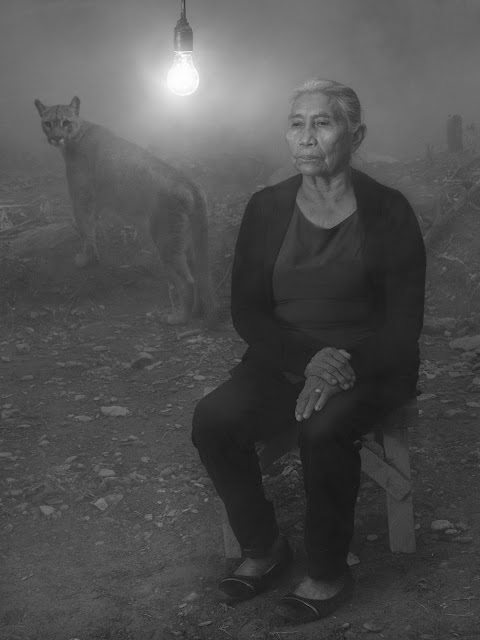
Nick Brandt, Juana and Nayra, Bolivia, 2022

AK: After working with animals in the wild for the early years, I imagine that the process of working with animals that are habituated to humans is a very different experience. Beyond the obvious, how does working with sanctuary animals compare to working in the wild?
NB: Thanks to their wonderful caretakers, many of the animals are so habituated to humans that they are very relaxed and with a little encouragement in the form of a mulberry leaf here, a carrot, or a nut there, hit their marks with impressive regularity. But regardless, one thing does not change—my photographing animals as sentient creatures, creatures that I view no different than humans. So I wait for those indefinable moments when they appear to present themselves for their portraits.

AK: Let's talk about your method of working. All of the images from the series On This Earth Trilogy were shot in the African wild - quietly watching and waiting for the right moment, and typically for long periods. Inherit the Dust, Empty World, and The Day May Break are high-production projects that involve a bit more control. However with these projects, after the scene is set, you take off your "director hat" and go back to patiently watching and waiting for "the moment". Why does that method of working appeal to you?
NB: I like working very loosely. I feel that what happens in real life is superior to what I might pre-script in my head, although of course, yes I do pre-visualize some photos, like for example, Richard and Sky, with Richard up a tall ladder so that his head and the giraffe's head (Sky) are a similar height in frame.
  
But during The Day May Break photo sessions, I frequently swapped out people with each respective animal until it felt like somehow, emotionally, the right combination. I like seeing what unexpected serendipity might unfold. For me, it was like a kind of photographic jazz.

Even in the earlier projects, it’s very loose. In Inherit the Dust, for example, the life-size portraits on panels were set in place in each location, and then I stayed there long enough that the local people were no longer interested that I was there and just went about their lives. At the start of that project, I had tried hiring people and shouted action but it was just terrible and I quickly realized I would get better results just letting the local people do their thing. Besides waiting for clouds, those photos were just a kind of elaborate street photography.

AK: Chapter Two was photographed in a sanctuary in Bolivia—this was your first significant project outside of Africa. Why did you select Bolivia specifically?
NB: The original plan had been to go to Brazil, which for the last five years, under eco-terrorist thank-god-former President Bolsonaro, has become the poster child for the apocalyptic ever-escalating destruction of the Amazon rainforest.

However, in Brazil, there were only a few habituated species in each sanctuary and those sanctuaries were spread out the length and breadth of the vast country. This would have necessitated many days of flying and driving between each: expensive, wasteful, and likely created the need to find a new crew in each new area that we visited.

Fortunately, to Brazil’s west, in Bolivia, is the home of Senda Verde Animal Sanctuary. Senda Verde is not just a wonderful animal sanctuary and non-profit organization, but also practically speaking, it is home to rescued members of almost all of the key South American species. This meant that I was able to photograph the entire Chapter Two part of the project in this one location. They’re wonderful people working on a tiny budget and despite that, never turn away a reduced animal, from bears down to birds and baby monkeys.
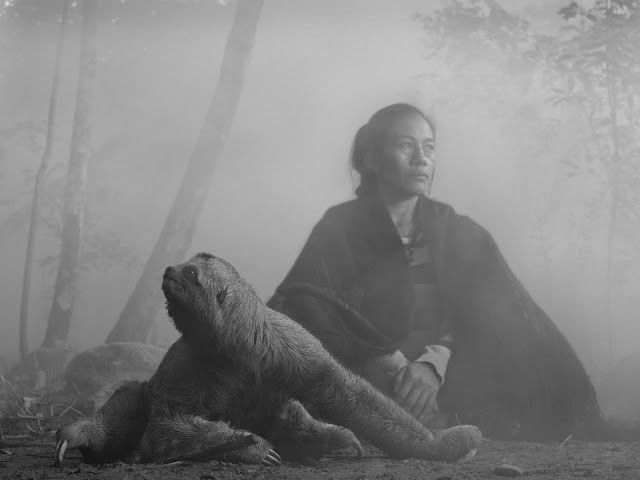
Nick Brandt, Ruth and Zosa, Bolivia, 2022

AK: A percentage of proceeds from print sales go to the people and sanctuaries that you are photographing at. I know that this has already made a big difference. Please share a few stories about this.
NB: The impact of those proceeds has had the most impact in Kenya and Zimbabwe because, at this point, that work has been out for 1 1/2 years. Regardless of who is the subject of each photo, the proceeds have been evenly divided among the people on a biannual basis, a kind of royalty payment. But in addition, certain buyers have donated a further amount to the people featured in the actual prints that they bought.

As a result, three of the young girls have their education paid for for the next six years; several couples have been able to start their own businesses after having their lives ruined by the impacts of climate change, and homes or parts of homes have been rebuilt that were destroyed by floods and cyclones.

AK: Some viewers (mistakenly) assume that the photos from The Day May Break are composites, which they are not. It is important to you that people understand that the image is made "in camera”. Why is this method of working important to you?
NB: Yes, there seems to be widespread thinking these days that anything visually unexpected or apparently hard to execute must have been photoshopped into creation - or god help us now - A.I generated. I could make my life much easier, and save a ton of time and thus money if I went the Photoshop route, but there is so much more aesthetic and emotional integrity to these portraits when the people and animals are photographed together, at the same time in the same frame. If I just stitched two separate elements together, it would never be as organic, as surprising. A photo like Kuda and Sky II, where Sky the giraffe unexpectedly leans down over Kuda as she sits at a table, I would never have dreamed that up.
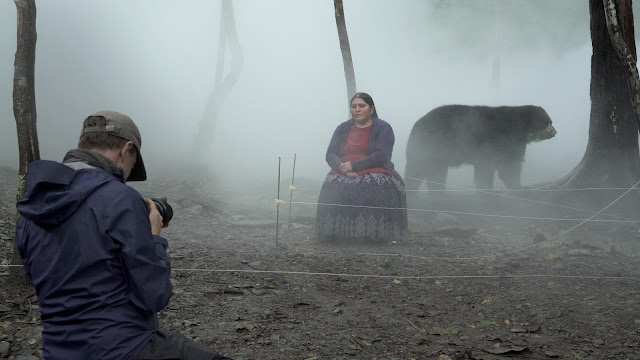
The Day May Break, Chapter Two, Nick Brandt photographing Carmen and Tarkus

AK: The subjects in your images are typically not looking directly into the camera, they seem to be in their own world and are seemingly unaware of your presence. In the case that the subjects are looking in your general direction, it is almost as though they are looking through you or over your shoulder. I imagine that this is a result of your method of working, but I sense that there is more to it. Please expand.
NB: As a kind of an aside, the humans and animals are deliberately never looking at each other. They share the same frame, of course, sharing the same universe, but remain disconnected from one another.

Meanwhile, there are the young girls, the future & to generalize massively, the more empathetic of the sexes (noting that there are the Marjorie Taylor Greenes, Lauren Bohberts, and Amy Coney Barretts of the world to contradict that). They usually look the strongest the most determined and defiant, looking directly into the camera.

In Marisol’s defiant look, I am reminded of Greta Thunberg. This planet urgently needs a million Gretas. If one young girl can start alone with just a placard on a street in Stockholm, so can we all.
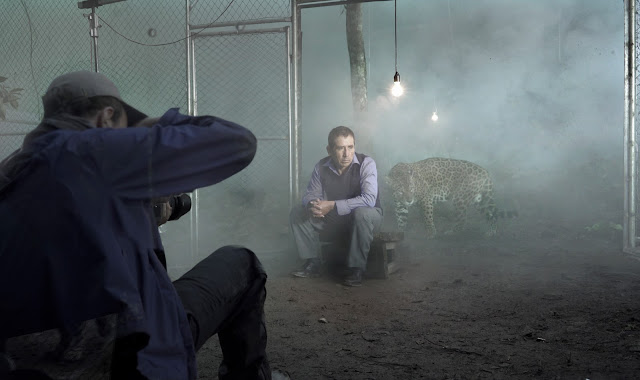
The Day May Break, Chapter Two, Nick Brandt Photographing Luis and Hernak

AK: What has been the largest technical challenge shooting the new work?
NB: As so often in my work, the largest technical challenge is caused by the wrong kind of weather. So, on The Day May Break, Chapter One, I went in the rainy season, as I so often do, not just to take advantage of cloud cover, always my preferred aesthetic, but also to have enough moisture in the air for the water-based fog machines that we used to work effectively.

When you have weeks of baking, bone-dry heat and winds, and cloudless skies, the fog coming out of the machines evaporates almost immediately. So for two weeks in Zimbabwe, we were only able to photograph for thiry minutes before sunrise and thirty minutes after sunset.
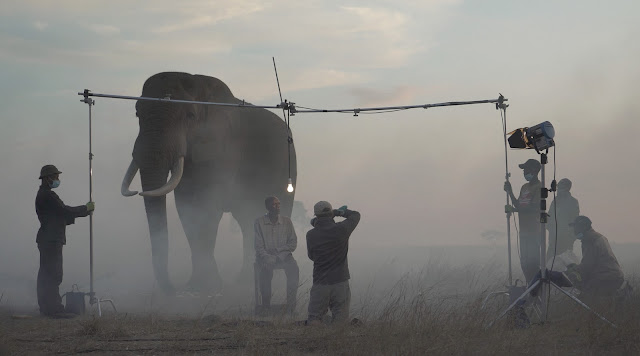
The Day May Break, Chapter Two, Nick Brandt photographing Mathew and Mak

AK: You note in your book that this is a Carbon Neutral project. Please expand on the actions that you are taking.
NB: I feel that if I make a project that is significantly about climate change, the project itself needs to be carbon neutral. So as imperfect as the system of Carbon credit is, I paid for carbon credits equivalent to all the fuel consumption from transport, generators, etc. from my shoot toward an African reforestation program. 

AK: Let's talk about the process of making books, you have published a few, do you have advice for someone that is considering publishing their first?
NB: For me, publishing a book is invaluable. It can generate publicity about your work in so much more effective way than having no book. No one in the media knows or cares whether your print run is 500 or 10,000 - the book exists. And if it’s well printed, it acts as a very useful portfolio. To me, it’s worth doing even if you have to put in your own money, which is increasingly inevitable. In these days of social media, print runs have dropped dramatically, so it’s pretty hard to make any kind of profit.
  
Once you have a publisher, do everything you can to not cave in to compromise. Every time I have done it –to not appear difficult, to not want to be unpopular– I have ended up in earlier years with poor results and deeply regretted that I did not push harder with my concerns. Visual creators live and die by how our work is presented (this is why for me, Instagram is so inadequate - visually complex detailed imagery reduced to this depressing minuscule size on a phone, and in the hands of others, often randomly cropped.

AK: In the back of the book, you have included the personal stories of each animal and person involved in the project.  Who was responsible for locating all of the humans that participated and recording their stories?
NB: For many weeks in advance, researchers went out across the country, especially in Zimbabwe and Bolivia, looking for and meeting people who had stories to tell of lives devastated by climate change. Once chosen by me from their photos and stories, they then traveled to the sanctuaries and conservancies to be photographed with the animals.

AK: The text in your recent book, The Day May Break, Chapter Two, is written to the reader/readers of the future. I know that text isn't written to me specifically, but it feels inclusive and engaging, as opposed to text that is written "at" the reader.  I like that.
NB: Well, I guess because I fervently believe that all of us can do something. As I wrote in the essay: 
“We need to all become good ancestors. We need to adopt a way of life that reduces the environmental impact that our actions will have on those billions of unborn yet to come. Can we show that we care about the humans and animals and trees that we will never live to see?”

AK: What is next?
NB: I just returned from photographing Chapter Three of The Day May Break in Fiji. All being well, this will be released in September, with the book to hopefully follow in 2024.


The Day May Break, Chapter Two by Nick Brandt

>>Purchase Book <<


Signed copies are available!

About the Limited Editions:
Four Limited Edition Prints are available in editions of 25 each, signed and numbered on a label affixed verso on a beautiful matte, archival paper.

Each print is presented in a handsome display folder with the print easily removable for framing. A signed copy of The Day May Break: Chapter Two is included with each print.
(8⅝ x 11½" image on 9⅝ x 12½" matte paper. Edition of 25, each.)

Clockwise, from top left: Carmen and Zosa II, Jame and People in Fog, Lucio and Chascas, and Lineth and Kini


*      *      *

If you are in Santa Fe, please stop by during gallery hours or schedule a Virtual Visit HERE.


For more information, and to reserve one of these unique, extraordinary new works,
please contact photo-eye Gallery Director Anne Kelly or Gallery Associate Jovi Esquivel.


photo-eye Gallery

1300 Rufina Circle, Unit A3, Santa Fe, NM 87507
Tuesday– Saturday, from 10am– 5:30pm

You may also call us at (505) 988- 5152 x202