PHOTOBOOK REVIEWS, INTERVIEWS AND WRITE-UPS
ALONG WITH THE LATEST PHOTO-EYE NEWS

Social Media

Showing posts with label Meggan Gould. Show all posts
Book Review The Artist’s Books By Francesca Woodman Reviewed by Meggan Gould "Francesca Woodman: The Artists Books has been sitting on my desk for some months, haunting me. I have been slow to open it, and slow to compose this eventual response; I keep getting circularly mired in trying to account for this reticence..."

The Artist’s Books. By Francesca Woodman.
https://www.photoeye.com/bookstore/citation.cfm?catalog=ZK278
The Artist’s Books
By Francesca Woodman

MACK Books, London, UK, 2023. 416 pp., 9¾x11¾".

Francesca Woodman: The Artists Books has been sitting on my desk for some months, haunting me. I have been slow to open it, and slow to compose this eventual response; I keep getting circularly mired in trying to account for this reticence.

The first few photography courses I took were in the continuing education program at the Rhode Island School of Design. My own obsession was instant and irrevocable, and I was soon earning minimum wage as a monitor in the continuing ed darkroom, using the earnings to buy any box of photo paper I could afford, and time in the lab to burn through the paper. The year was 2000, two decades after Francesca Woodman was an undergraduate student at RISD, and she still loomed large in the Providence photographic mystique. It feels like a confession then, that I never engaged much with Woodman’s work. Several iconic images were seared into my memory alongside a perfunctory, broad-stroke biography of her too-short life, but I had never sat long with the photographs themselves.

Until now. I open these pages, these books within a book. It is a weighty compendium: 412 pages and maybe 412 pounds to match. Within are reproduced, page by page, eight artist books that Woodman made between 1976 and 1980 while a student at RISD. The vessel for each of the eight books is a vintage notebook or journal, acquired by Woodman while studying abroad in Rome during her junior year in college.


MACK has done an extraordinary job reproducing these notebooks. Each page of once-white-now-yellowing notebook paper is laid out on the larger white pages, each gutter of original notebook aligned with the gutter of the larger tome. The tonality of the paper stocks is exquisitely rendered, and I drown, happy, in the details of the edges of the pages and their two-dimensional splay. The paper surface itself becomes as much a protagonist in these notebooks as Woodman herself. The bleeding of ink permeates multiple pages, water stains creep from edges, yellowing tape patches tears, crisp corners disintegrate. The trompe l’oeil reproduction makes me want to peel each original photo up from the uncannily perfect pages; I have a physical response that vacillates between extreme pleasure (visual) and frustration (tactile) at the flattened pages.

I cannot help but think of the scrawled surfaces of the notebook pages as akin to decorative rugs (in the best possible way) beneath Woodman’s square, concise photographs. In Portraits, Friends, Equations (1977-1978), Woodman’s page-rugs are an equation-ridden notebook that dates from 1894-1895; in Angels, Calendar Notebook (1977-1978) exquisitely rendered calligraphy gives us page after page of undated French poetry. In each: a juxtaposition of languages, or of sensibilities, lingers in the intersection between the found penwork and the silver gelatin insets.


“Blank” pages (devoid of text, image, or both) are reproduced in the notebooks as faithfully as those with Woodman’s glued or taped photographs, allowing us to experience the pacing as the artist would have, as if we had each notebook in hand. Untitled (Pilgrim Mills) includes only seven photographs, taken at the eponymous mill in Providence where she rented a studio before her year abroad. Its background is elaborate cursive jottings of names and numbers, unparseable. Blankness settles into its power as a theme; the photographic pacing within each notebook is irregular, and there are many stretches where page after page of comparative emptiness unfurl.


You may note that I have remained reticent to write about the photographs. A brief attempt: they are quiet riddles. Most are reliant on choreographed interior spaces. Fragments of bodies flit through a camera that is almost always low to the ground. Some are printed on transparencies, and dark photographic silver merges with the underlying handwriting. Woodman’s pencil notes and (very occasional) caption stop me as they almost pierce what becomes a consistent veil of multilayered illegibility. White paint covers some passages, frames some photos. Fluid and raw, the photographs somehow contain both joy and pain — or maybe prison and freedom — in equal measure.


It is hard not to think of the blank pages as evocative of the missing years of this artist, who ended her life at the age of 22. I don’t try too hard to decode the internal logic of any of the individual books, or maybe any of the individual photographs, although Katerina Jerinic, the Collections Curator for the Woodman Family Foundation, provides snippets of context for each of the notebooks. The book ends with a letter Woodman wrote to her parents from Rome, where she echoes my own haplessness, trying to make sense of the beauty, strangeness, and sadness of these sweet books:

“…i don’t seem to be able to take very nice pictures these days/It’s a little depressing especially since i am here in Italy, surrounded by beauty. So lately I’ve been sticking the things i did this fall into books like the one this paper came from. I’m not sure it helps the pictures but it does make me feel usefuller.”

Purchase Book

Read More Book Reviews


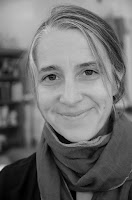
Meggan Gould is an artist living and working outside of Albuquerque, New Mexico, where she is an Associate Professor of Art at the University of New Mexico. She is a graduate of the University of North Carolina at Chapel Hill,, the SALT Institute for Documentary Studies, and Speos (Paris Photographic Institute), where she finally began her studies in photography. She received an MFA in photography from the University of Massachusetts — Dartmouth. She recently wrote a book, Sorry, No Pictures, about her own relationship to photography.
Book Review Pictures from the Outside By Chantal Zakari and 13 incarcerated men Reviewed by Meggan Gould "I have a folder, somewhere on my hard drive, of screenshots that I collected in a short-lived mad frenzy to wander Google Earth and find every house or apartment in which I had lived..."

By Chantal Zakari and 13 incarcerated men.
https://www.photoeye.com/bookstore/citation.cfm?catalog=ZK447
Pictures from the Outside
By Chantal Zakari and 13 incarcerated men

Eighteen Publications, 2023. 136 pp., 5¾x8¼".

I have a folder, somewhere on my hard drive, of screenshots that I collected in a short-lived mad frenzy to wander Google Earth and find every house or apartment in which I had lived. I moved a lot in my twenties — multiple cities on two continents — in short, a horrifying number of lease agreements. In Providence alone I count five apartments within a 2-mile radius. A few years back, yearning for more peripatetic days and armed with the easy familiarity of the shift-command-4 gesture, I traveled the world and captured each address, as frontally as possible (the joy of the selective screenshot capture: in-camera framing and cropping of screen landscape). Somewhere in my studio there is a small box with the tiny test cyanotypes I made of these screenshots. They are equal parts poignant (to me) and unremarkable.

It is worth noting that I had the privilege of access to this imagery when this flight of fancy overcame me. The privilege to sit at a computer and revisit sites of memory, to attempt to clutch them through an act of collection (followed, in my case, by a peculiar penchant for a chemical translation). Many (too many) do not share this privilege, this freedom of virtual or physical movement to explore the reliability — or friability — of memory. In Pictures from the Outside, Chantal Zakari engages in a collaborative photo-making process with a group of incarcerated men, acting as a visual conduit to memories of specific architecture that molded their pasts. The architecture in which they are currently housed is hinted at in the structure of the book itself: exposed board covers shelter the book in a heavy casing, and the open-spine binding is reminiscent, dare I say, of barred windows.


Zakari allowed the men a visual reprieve from the prison walls, in the form of external image-making on their behalf. She established parameters: no photographs of people, and within a driving radius of two to three hours. Reminiscent of a scavenger hunt, Zakari was asked to visit specific childhood houses, a bodega, multiple schools, a flight of stairs, a portentous courthouse door. She asked the men to tell her how to take the envisioned picture. What corner should she stand on, what direction should she aim her camera? Often they sketched the framing; one reproduced sketch asks the artist to stand at the starred intersection of Mead and Russle Streets, with a note to “please take photo approximately where star is. I trust your judgment.”

Judgment is a recurring theme throughout. That of the law, of course, but also one’s own judgments and their consequences. Multiple levels of text intersect with Zakari’s photographs: the initial prompts, the men’s jotted observations upon receiving the photographs, and longer reflection pieces that use the architectural structures visualized as launching points for broader narratives about childhood, education, love, parks, abuse, prayer, violence, and play. Zakari includes her own notes and observations as she looked to faithfully execute each requested image; the layered voices intermingle and form a rich tapestry of personal experiences of place, often spanning decades.


I am struck that the collaborative aspect of this project is as interesting, if not more so, than the resultant photographs. To be a stand-in for someone else’s vision, possibly warped with the weight of time and emotional baggage, and to channel vision through multiple lenses — optical and conceptual — is an extraordinary exercise in communication and trust. A banal street corner, ostensibly unremarkable, is rendered poignant through the way in which photography accesses it, holds it, and delivers it back to the eyes yearning to see it. Or, it is an extraordinary privilege to visit our past, and photography can be an exquisite gift.

Purchase Book

Read More Book Reviews


Meggan Gould is an artist living and working outside of Albuquerque, New Mexico, where she is an Associate Professor of Art at the University of New Mexico. She is a graduate of the University of North Carolina at Chapel Hill,, the SALT Institute for Documentary Studies, and Speos (Paris Photographic Institute), where she finally began her studies in photography. She received an MFA in photography from the University of Massachusetts — Dartmouth. She recently wrote a book, Sorry, No Pictures, about her own relationship to photography.
Book Review Abzgram Photographs by Karolina Wojtas Reviewed by Meggan Gould "This book is insane! To begin with: it’s a parallelogram, with just enough of a skew from the traditional rectangular book frame to make you question your bearings..."

Abzgram. By Karolina Wojtas.
https://www.photoeye.com/bookstore/citation.cfm?catalog=DU661
Abzgram
Photographs by Karolina Wojtas

Spector Books, 2023. 204 pp., 153 illustrations, 7¼x10x¾".

This book is insane! To begin with: it’s a parallelogram, with just enough of a skew from the traditional rectangular book frame to make you question your bearings. Second, and perhaps more importantly, it is unrelenting. Every square inch of page is covered. Small photographs pile up on backgrounds of lined orthographic paper, color fields intersect large photographs, diagrams, scribbles, notes and graph paper add up to nothing short of visual cacophony. I had a photography teacher who loved to talk about the inclusion of “pages de respiration” in a photobook — spaces for deliberate breath between photographs. Wojtas gives us no breathers — in we go, and in we stay.

If I breathe at all here, it might lean toward borderline hyperventilation. It takes a minute to place this unrelenting overstimulation, this frenetic tension, but once I get there it is obvious: school! Fluorescent. Caged. Bombarded on all sides. Repetitive. Underlying rigidity of structures. What is primary school, if not a seesaw from prescriptive tedium to tedium, with intermittent jolts of pleasure and provocation?

On first few flip-throughs, I am flummoxed by the sustained mayhem within this book. Maybe I rub my eyes for good measure. Is this for real? What is this inscrutable chaos? A camera flash fires, again and again and again and again and again and again. I decide that this artist loves school. I decide that this artist hates school. I decide that this might be a brilliant excoriation of a Kafkaesque educational institution. I decide that I never want to set foot in a school again.


I will describe a few moments of relative pause for me. Uniformed children singing in page after page of dizzying snapshot grids of singing school groups, lined up in orderly assembly formations; if you know the Polish national anthem, this might be its soundtrack moment. Indecipherable grading schemes on surprisingly varied iterations of graph paper. The inexhaustible numerals of pi typed out as the background of 11 pages (along with other stamps, marks, drawings), layered over frame after frame of a tousle-headed kid in a red hoodie. Young adults standing on classroom tables, deadpan stares at the camera, dressed in black with circular orange exclamation mark stickers on their chests. A kid in jeans and sneakers attempting to climb onto a bank of lockers. A thumbnail survey of exuberantly painted classroom doors, each illuminated by the ubiquitous flash. Unable to decode the scrawls on the walls and in the margins, I regret that I cannot parse even a smidge of the Polish language.


Trying to pause feels futile. I recommend submission, and simply being awash in this sum total of a chaos of shenanigans. I would have loved to see the exhibition version; Abzgram is a photo book translation of a sprawling multimedia exhibition in Berlin, which included extensive video and room-sized installation work. The exhibition and monograph were the fruits of the C/O Berlin Talent Award 2022, which Wojtas won in the Artist category. For the book iteration of the experience, Wojtas was paired with Mathias Gründig, who won the same award in the Theorist category. Gründig’s essay, entitled “Play and Punish”, soothes my (pleasantly frazzled) nerves; I feel camaraderie in this experience, where “all the dials are set to eleven, more is more.” Ruminating on the relationship between play and work in the context of Wojtas’ anarchic work, Gründig invokes the history of Polish pedagogy amid sprawling philosophical entry points, including Michel Foucault, Walter Benjamin, and Johan Huizinga. The book also includes an interview between Gründig and Wojtas, in which the question as to whether she liked school is answered and we read of the artist’s relationship to language, the camera, and maturity.

Abzgram. It is a pitch-perfect pleasure-pain title in that I can neither exactly pronounce nor explain it, but it feels right. It is somehow both knowable and unknowable, an exuberant almost-anarchy of letters to match the exuberant almost-anarchy of photography on display within these pages.

Purchase Book

Read More Book Reviews


Meggan Gould is an artist living and working outside of Albuquerque, New Mexico, where she is an Associate Professor of Art at the University of New Mexico. She is a graduate of the University of North Carolina at Chapel Hill,, the SALT Institute for Documentary Studies, and Speos (Paris Photographic Institute), where she finally began her studies in photography. She received an MFA in photography from the University of Massachusetts — Dartmouth. She recently wrote a book, Sorry, No Pictures, about her own relationship to photography.
Book Review Hunting In Time Photographs by Ronit Porat Reviewed by Meggan Gould "It is useful to know what makes us let down, or put up, our guard, what makes us instantly melt or bristle. My own bright-copper-kettle pleasure points are as follows: clocks, owls, negatives, shadowy enigma, pointed anonymity, archival deep dives, dead birds, tools in deadpan still life, reworked narratives where truth is slippery, and fictions enticing..."

Hunting In TimeBy Ronit Porat.
https://www.photoeye.com/bookstore/citation.cfm?catalog=IZ194
Hunting In Time
Photographs by Ronit Porat

Sternthal Books, 2023. In English. 192 pp., 6¾x9½".

Raindrops on roses, whiskers on kittens… I asked my students this week to list their favorite photographed things, emphasis on photographed. (And, of course, the inverse: things that automatically raise eyebrows or make them cranky when in photographic form.) It is useful to know what makes us let down, or put up, our guard, what makes us instantly melt or bristle. My own bright-copper-kettle pleasure points are as follows: clocks, owls, negatives, shadowy enigma, pointed anonymity, archival deep dives, dead birds, tools in deadpan still life, reworked narratives where truth is slippery, and fictions enticing. This partial list was generated while in the thrall of Ronit Porat’s Hunting in Time — as if this book wrote this list for me, reminding me of each and then sequentially checking the boxes.

This is the tale of a murder. Almost a century ago, several teenagers attempted to rob a clockmaker in Weimar Berlin, and he wound up dead. No pun intended. A cacophony of midnight-clanging clocks interrupted the robbery, the perpetrators were spooked, the clockmaker was killed. He had a side gig, dabbling in producing pornographic photographic material in the back room, often starring… you guessed it, one of the future murder suspects. Lengthy — and internationally publicized — murder trials ensued, invoking sexual deviance and underage consent, as well as the ethical foundations of a society in flux.


I said this was a tale, but it is not exactly a narrative. This book is based in multiple exhibitions that the author put together based in and around the archival record of this murder. An essay by Ines Weizman provides a larger societal framework for the murder and its aftermath, helping to contextualize much of the photographic material that Porat was able to mine, as well as her methodological approach. Gender politics are invoked, as is encroaching Nazism, biological clocks, trauma, and the tale of a box of stereoscopic photographs that were supposed to be burned but were not.

Composed of an astonishing breadth of photographic source material, the images weave a complicated and haunting web of associative thought and non-linear pathways. The murdered clockmaker’s photographic record of an obsession with young women serves as a starting point, as do images sourced from contemporaneous publications supporting a then-burgeoning interest in studies of criminal psychology. Fashion magazines, supply catalogues and patent application sketches (handcuffs, corsets) all add to Porat’s repository of suggestive enigma. There are stern owl eyes, limp dangling rabbits, birds in flight and birds on hands, female bodies in motion and female bodies at rest, watchmaking and surgical implements, gloved hands, and cigarettes.


Meticulous documentation of the photographic source material lies enticingly at the back of the book. I spent a not-insignificant amount of time indulging in scratching the itch of the raison d’être of each photograph. Sources range from Ilse Bing to eBay and from Walker Evans to Etsy; photographer unknown was responsible for many. The artist absorbed and physically translated each gleaned photograph with equal-opportunity care; a photograph of a chastity belt in a Parisian museum was lifted from howstuffworks.com and rendered as a negative, followed two pages later by the swan half of Francesca Woodman’s interpretation of Leda and the Swan, similarly inverted and astonishingly arresting. Each image is absorbed into the visual logic of the whole. Singular photographs coexist with multiple exposures and spliced montages; the intermingling of whole and fragment, comfort and danger, predator and prey is allowed to mirror the murky confusion of the tale itself. A rich gamut of monochrome possibilities is represented, simultaneously luminous and shadowy, with tonal ranges in shades of gray, permutations of sepia, and purple-browns.


There is no true-crime-podcast resolution here, neither redemption nor indictment for any of the protagonists. Within this humble, linen-bound cover, I read an invitation to speculate on the power of the archive, and a simultaneous reminder of its inherent futility. Or, our own photographic gaze and its consequences (as maker or audience) is as unreliable, and influenced by cultural milieu, as that of the many photographs produced in and around the murder of a clockmaker-pornographer in Berlin, a century ago. And these photographic musings are a few of my favorite things.

Purchase Book

Read More Book Reviews


Meggan Gould is an artist living and working outside of Albuquerque, New Mexico, where she is an Associate Professor of Art at the University of New Mexico. She is a graduate of the University of North Carolina at Chapel Hill,, the SALT Institute for Documentary Studies, and Speos (Paris Photographic Institute), where she finally began her studies in photography. She received an MFA in photography from the University of Massachusetts — Dartmouth. She recently wrote a book, Sorry, No Pictures, about her own relationship to photography.
Book Review Current Condition Photographs by Nina Strand Reviewed by Meggan Gould "Here in my house, we spend a lot of time projecting human language and emotions onto our dogs. Anthropomorphizing is a fixture of our relationship with these patient canines (see?), doomed to inhabit elaborately spun personae and affectations..."

Current ConditionBy Nina Strand.
https://www.photoeye.com/bookstore/citation.cfm?catalog=ZK440
Current Condition
Photographs by Nina Strand

Journal, 2023. In English. 106 pp., 95 color images, 6x8¼".

Last year, reviewing Re’gis de Gasperi’s Box of Illusions, I delighted in a minor coincidence: a forty-six-year-old-me looking at a book by a forty-six-year-old artist contemplating the particularities of his age. One year later, I pick up Nina Strand’s Current Condition, and I flinch: now I find a forty-seven-year-old-me looking at the work of a forty-seven-year-old artist also contemplating the particularities of our shared age. Perhaps photo-eye needs to stop suggesting such irritatingly age-appropriate books to review.

My current condition: forty-seven, and often cranky at the world. But cheered by this book, somehow.

A succinct description on the back cover sets the stage:
According to a recent study, ‘stress’ is the word most commonly used by today’s forty-somethings. What is this stress about? What do we want? 
Current Condition is a photo-novel in four chapters, on how to navigate adult life.
If only my adult life looked a bit more like the one Strand presents at surface value herein — a life of Parisian flânerie and relaxed philosophizing. The artist, in the company of a different interlocutor in each of four (seasonal) chapters, wanders the storied streets of Paris. They walk and chat, enjoying the occasional respite of a sidewalk café or one of the city’s iconic, green-slatted benches. I admit to some acute stirrings of jealousy. I say to myself, with some rancor: that could have been me, if I had stayed. Later, to my family, dreamily, over dinner: can we move to Paris?


Each page presents a photograph with conversational text as caption. The photographs are 35mm in format, vernacular in effect. Each couple is dispassionately presented in the center of the frame, often frozen with mouth agape, mid-word, mid-gesticulation. Sometimes they face the camera or are in profile, other times we stalk them, Sophie Calle-style. There are exactly two exceptions within the photographs: in the first, a sticker on a municipal sign pole, a crude outline of a facepalm. The caption: “— Maybe there’s a reason to be ashamed? — We should probably do something.” In the second, a singular vertical image of a bookstore display, books on feminism on display in the vitrine. The caption: “We don’t. We never win.”

The rhythm-breaking difference between these two images lends them clout, despite their ostensible banality, and together they summarize the conversations: Bourgeois shame and existential angst are splayed against a backdrop of middle-aged feminism. The dialogue is delightful in its pithiness, meandering from despair to protest and change, with invocations of dick pics and hashtags along the way.


Underlying stressors, as noted, are pervasive in image and text alike, despite the relaxed perambulation visualized in the photographs. These are pandemic times, and the protagonists mask up in the métro and upon entering restaurants. The irony, however, of sitting at a café with coffee and eau plate in a glass bottle while discussing how to “take a stand,” to “actually say something,” is clearly not lost on the artist.

I write this in a coffee shop, sipping on a mug of coffee, the size of which one would be hard-pressed to find in Paris. My own current condition, stressed by heat and traffic and scheduling sports and playdates, is one that is quickly consumed by trivialities. I’m not solving much, it seems, but I can indeed commiserate with middle-class, middle-aged anguish over how to self-actualize while watching humanity self-destruct. I eavesdrop on several tables of conversational coffee-friendships around me, wondering if I will find any similarities to Strand’s fictionalized discourse between peers, looking for shared snippets of muddled existential crisis, pierced with moments of clarity. I catch one about debt, another about the bible, a third about bartending. I stop listening.


Later in the day, I think of this book while my partner and I discuss the merits of dental floss iterations. We wonder, aloud: How many dead turtles is our oral hygiene worth? I think of Strand, and imagine someone lurking behind us, photographing our ablutions while we casually throw around the weight of individual and societal needs. Which takes me back to daydreaming about Paris. About a Benjaminian stroll with Nina Strand. In it, I would acknowledge the immensity and banality of our shared concerns, perhaps, and commiserate over the futility of solving them.

Purchase Book

Read More Book Reviews


Meggan Gould is an artist living and working outside of Albuquerque, New Mexico, where she is an Associate Professor of Art at the University of New Mexico. She is a graduate of the University of North Carolina at Chapel Hill,, the SALT Institute for Documentary Studies, and Speos (Paris Photographic Institute), where she finally began her studies in photography. She received an MFA in photography from the University of Massachusetts — Dartmouth. She recently wrote a book, Sorry, No Pictures, about her own relationship to photography.
Book Review The Heart is a Sandwich Photographs by Jason Fulford Reviewed by Meggan Gould "Here in my house, we spend a lot of time projecting human language and emotions onto our dogs. Anthropomorphizing is a fixture of our relationship with these patient canines (see?), doomed to inhabit elaborately spun personae and affectations..."

The Heart is a SandwichBy Jason Fulford.
https://www.photoeye.com/bookstore/citation.cfm?catalog=ZK284
The Heart is a Sandwich
Photographs by Jason Fulford

MACK, 2023. 320 pp., 5¼x7¾".

If I am to be honest with myself, and you, I should admit that I often avoid reading short stories. Perhaps I commit too quickly to characters and plot lines and resent being ripped from them before a full novel’s engagement has passed; I suspect that short stories will break my heart by ending as soon as I am hooked. This is not a point of pride, rather an acknowledgment that I do a disservice to an entire genre of writing that does not deserve my reticence to shift gears. This is absurd, of course, and Jason Fulford’s newest book is here to remind me of the delight — and clout — that the short story’s episodic engagement can represent.

The Heart is a Sandwich is a collection of capricious photo-short-stories that operate loosely within different photographic ecosystems. A sun-drenched European urbanity and snippets of Italian language throughout ground us geographically in Italy. Several of the stories feel based in loose graphic coincidences, meandering observations that coalesce around a serendipity of found forms and vivid colors. I learn the Italian word for confetti, coriandoli, in the eponymous short story wherein the photographs are treated with casual, colorful joy, and tossed like confetti around the page. Other stories are more specific to a moment that transpired between the artist and adjacent human characters: the cobwebs and brooms inhabiting Guido’s Garage (the fourth story), a workshop with artists, leaning over a table piled with small prints, acting out the universal book-project-sequencing-posture (final story, entitled “Uno Spaghetto”).


As there was in Fulford’s This Equals That (Aperture, 2014), I feel an intense and direct pleasure in the act of looking, matched with a parallel pleasure in the act of finding within these photographs. There is a persistent, and delightful, suggestion of a photographic scavenger hunt. Fulford uses the exclusionary (and always square) frame with virtuosity, centering us in fragments — pointed fragments, often devoid of context. He plays with shifted perspective of both space and time, extending or enlarging moments with the distance of several elapsed paces or breaths. There is an insistence to Fulford’s looking that I relish, an insistence on the photographer as an embodied agent of vision. Subtle optical illusions abound: games of lining a horizon up with foreground architecture, games of spot-the-difference between multiple frames. Moments of superbly controlled — but somehow still casual-feeling — visual serendipity. I recognize that I teeter on the brink of overusing the word serendipity. Also: scavenger, which I even find printed in large letters on an index card, perched in the shadows on a radiator, on one of the final pages.


A few stories shift, instead, toward narrative arc, most direct in “Metamorfosi,” in which we see both dough and metal take form, via human hands, into the exact same enigmatic braided shape. Artisans labor with this singular form, metamorphosis is enacted on materials as they are rendered edible and decorative, respectively. The Italian bakery is rife with banter, the metal shop silent and focused. I am reminded that I may have seen this shape before, many stories back, in cooked bread iteration on the dashboard of a car. I flip back to confirm: indeed. It is a starfish-reminiscent twisted braid, four-armed, that I am sure must have a fancy Italian name. I turn to the internet and search for Borgia’s Braid (the title of the first story in which it appears); while I am reminded of the infamous Renaissance family by that name, I find nothing about a regional specialty of enriched bread. The mystery braid can remain happily twisted and unresolved, a prop to connect stories across space and time.


Fulford delivers a stream of bright, saturated, joyful refusals to allow a photograph — or a short story reliant on multiple photographs — to be predictably or conventionally legible. I find it to be a remarkable juxtaposition of straightforwardness with obfuscation. I even find that I can temper my aforementioned pushback against the brevity of short stories; the serendipitous scavenging, the delight and humor in vision, holds me within these stories, and within the larger-than-the-sum-of-its-parts whole.

Purchase Book

Read More Book Reviews


Meggan Gould is an artist living and working outside of Albuquerque, New Mexico, where she is an Associate Professor of Art at the University of New Mexico. She is a graduate of the University of North Carolina at Chapel Hill,, the SALT Institute for Documentary Studies, and Speos (Paris Photographic Institute), where she finally began her studies in photography. She received an MFA in photography from the University of Massachusetts — Dartmouth. She recently wrote a book, Sorry, No Pictures, about her own relationship to photography.