PHOTOBOOK REVIEWS, INTERVIEWS AND WRITE-UPS
ALONG WITH THE LATEST PHOTO-EYE NEWS

Social Media

Home Work, Photographs by Tessa Bunney.
Published by Dewi Lewis Publishing, 2011.
Home Work
Reviewed by Karen Jenkins
______________________________________________
Tessa Bunney Home Work
Photographs by Tessa Bunney
Dewi Lewis Publishing, 2011. Hardbound. 112 pp., 53 color illustrations, 9-1/4x6-1/2".

The photographs collected in Home Work are a high point in Tessa Bunney's ongoing exploration of traditional rural ways of life increasingly encroached upon by modern industrial society. The series looks at the agrarian communities surrounding Hanoi, Vietnam slated to be systematically absorbed into this burgeoning urban center. Yet the resulting images represent neither a 'before' nor 'after' to the inevitable. Rather, they compel us to consider what it can mean to adapt, looking at how these "craft villages" are striving to survive the loss of land and livelihood by tapping into local resources and devising small scale industries to bridge the gap. The future is uncertain and a lucid account of the political and environmental implications of this transformation can be found in two scholarly essays and Bunney's introduction. Several images within Home Work echo this broad view, speaking overtly of the looming urban landscape via billboards and construction sites. These are not Bunney's best, but they set the tone for how we read her more intimate views. As the open fields vanish, work moves home and it is within this intersection of the industrial and the domestic that Bunney finds her richest material.

Home Work, by Tessa Bunney. Published by Dewi Lewis Publishing, 2011.
This volume is my first in-depth exposure to Bunney's work, known largely in her native United Kingdom. What is first striking about these images is their sense of quiet and stillness. Working slowly with only available light, Bunney creates tight views of the working spaces and working lives of her subjects - primarily women laboring alone. Sometimes a child is included in the view, showing us that this home work - whether the creation of rice noodles or incense - is done in tandem with child rearing and other domestic duties. This interweaving is elegantly reinforced across images as well - in one, a baby is swaddled in a green hammock that resembles the banana leaves forming a delicate wrapping around a 'husband and wife' cake depicted on the following page. Pattern enlivens a variety of textiles - garments printed with abstracted leaves and floral designs emerge from lush fields or armloads of cuttings, underscoring the commingling of mass production and the homemade.

Home Work, by Tessa Bunney. Published by Dewi Lewis Publishing, 2011.
 There is a danger in creating images as beautiful as Bunney's - that the subject becomes glamorized or oversimplified through its superficial appeal. Yet the larger themes of interest to her, economic, environmental and social, are contained within subtle contrasts - light and dust, texture and decay, steam and grime, pattern and chaos. This monograph serves Bunney's project well; its 42 color images are thoughtfully sequenced and accompanied by writing that elucidates bigger issues while still allowing the photographs to speak for themselves. I enjoy that the viewer easily comprehends that this is Bunney's idiosyncratic view, underscored by the inclusion of excerpts from her travel blog. All the same, there is ample room for the viewer's own discovery of a fascinating aspect of contemporary Vietnamese life on the cusp of change through images of people and places rarely photographed.—Karen Jenkins

 _____________________________
Karen Jenkins earned a Master's degree in Art History, specializing in the History of Photography from the University of Arizona. She has held curatorial positions at the Center for Creative Photography in Tucson, AZ and the Demuth Museum in Lancaster, PA. Most recently she helped to debut a new arts project, Art in the Open Philadelphia, that challenges contemporary artists to reimagine the tradition of creating works of art en plein air for the 21st century.
The Suffering of Light by Alex Webb
The Suffering of Light by Alex Webb is a stunning collection of photographs taken over the last thirty years of the photographer’s career. Teetering between documentary, street and fine art photography, the images in this book display Webb’s unique vision of using vivid color, gestural movement and complex composition to share the intricate stories of his extensive travels. Webb — considered a groundbreaking photographer in his use of color — joined Magnum in 1976 and has since found himself capturing the complexities of daily life throughout the world, including remote regions in South America, Africa and the Caribbean. Lusciously printed and thoughtfully edited, this new monograph published by Aperture is an exquisite addition to Webb’s earlier titles. A limited number of signed copies are now in stock and available for order. 


Pontiac by Gerry Johansson
Pontiac by Gerry Johansson is the photographer's documentation of Pontiac, Michigan, offering a meditation on the decline of the auto industry in the Great Lakes State. The images in this book are formally beautiful and depict a landscape that is often vacant and homogenized. The eerie sense of abandonment and seclusion that is apparent in many of these photographs is subtly drawn out by the photographer's approach of focusing on quiet neighborhoods, deserted parking lots and empty buildings. Beyond its depiction of Michigan, Pontiac is an intriguing commentary on the state of America as a whole and a sensitive portrait of small town life. Copies are in stock and available for order.


Subscription Series 3, TBW Books

Volume three of TBW Books Subscription Series. This new installment features the work of Mark Steinmetz, Dru Donovan, Katy Grannan and Elaine Stocki. While not a direct collaboration between the artists, the series creates a cohesive dialogue between these four differing photographic perspectives focusing on loss and raising questions about interpersonal psychological dynamics. Steinmetz's Philip & Micheline is an intimate portrait of the end of life experience of the photographer's parents. Donovan’s Lifting Water investigates the psychological weight shared through the rituals of caregiving by both the caregiver and cared for. Katy Grannan's N showcases the photographer's long time partnership with her subject Nicole, highlighting the dynamics between the artist and subject. Stocki's Balcony raises many questions but provides the viewer with few answers about psychological limitations and human interaction. Copies of this highly sought after and beautifully constructed series are in stock and available for order.


Blackdrop Island by Klara Källström

Blackdrop Island by Klara Källström is an attractively designed book compiled of photographs taken in Tokyo in 2008 and 2010. The title refers to Källström’s curiosity in photographing at night, allowing the darkness to create a black backdrop, isolating certain parts of the image and leaving the viewer with only a small glimpse of the whole scene. The images — printed on doubled-folded sheets — create a fragmented depiction of a city usually associated with an unnerving intensity from overcrowded streets and tight living conditions. Here, however, Källström has isolated a mere fraction of the city nightlife, allowing the viewer to contemplate a scene that would otherwise go unnoticed. Signed copies are arriving soon and are available for preorder.

Wikiland by Klara Källström and Thobias Fäldt


Wikiland by Klara Källström and Thobias Fäldt displays a series of images taken outside of the Belmarsh court in London and at the Ellingham Hal in Norfolk, England during Julian Assange’s high-profile legal case. The photographs here navigate between obvious references to the Assange trial and depictions of a banal world that seem far from the media frenzy surrounding the WikiLeaks organization and their leader. This interesting new publication is printed on newsprint and encased in a cardboard box. Copies are arriving soon and available for preorder. 

   
Abendsonne by Misha de Ridder
Abendsonne by Misha de Ridder is an intriguing book. Printed large-scale on a thick stockboard, the images demand individual attention. The physicality of this oversized book combined with the weight of the stock and integration of a seamless gutter, creates a viewing experience that overtakes the visual senses, making it easy to lose oneself in the impressive subtlety of de Ridder’s photographs. Only eight images are present in this monograph, each a representation of the surreal natural phenomena, known as Abendsonne, that presents itself during the last few hours of sunlight when shadows and pristine reflections alter the landscape’s appearance and aesthetic reality. Signed copies are arriving soon and are available for preorder. 


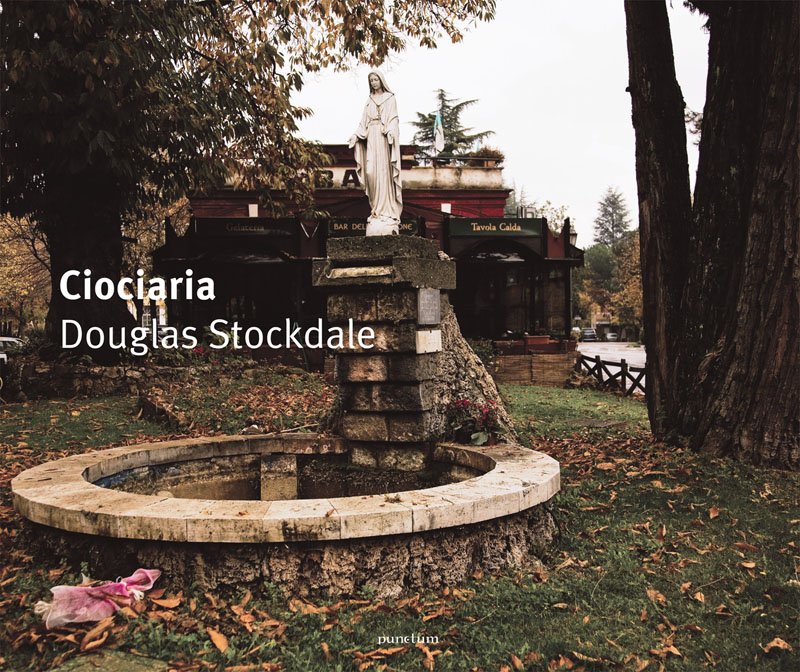
Ciociaria by Douglas Stockdale
Ciociaria by Douglas Stockdale is a personal realization of a land and culture previously unknown to the photographer. Ciociaria — a loosely defined region in central Italy — is the subject of Stockdale’s new monograph published by Punctum and displays the photographer’s natural ability to create a series of images that reflects his own interpretation of an unfamiliar land. The photographs in this book navigate between urban and natural landscapes and depict an honest dialogue between an outsider and a seemingly close-knit world. Beautifully printed, the photographs here are an inspiring investigation into a personal journey that has manifested itself as a series of reflective discovery. Signed copies are arriving soon and are available for preorder.

Left: Sumo by Craig McDean, Right: In Search of Dominquez & Escalante by Greg Mac Gregor and Siegfried Halus

Sumo by Craig McDean is an intimate view into the world of Sumo wrestling. While living in Japan in 1993, McDean found his way into the private realm of this highly popular sport, befriending many of the wrestlers and creating a series of photographs that are a graceful depiction from an insider’s perspective. The abstracted movement caught by the photographer’s camera has added a surreal and magical element that captures the art of Sumo as a spiritual ritual and harmonious exercise. Copies are arriving soon and available for preorder.

In Search of Dominguez & Escalante by Greg Mac Gregor and Siegfried Halus is an account of the photographers’ journey retracing the 1776 expedition from Santa Fe to Monterey, California by Franciscan friars Francisco Atansio Dominquez and Silvestre Velez de Escalante. Venturing into uncharted territories, Dominguez and Escalante trekked through a land predominantly unseen by European eyes, encountering native peoples and describing the frontier lands of the Colorado Plateau. Mac Gregor and Halus undertook the task of retracing the friars’ steps and documenting their own site-specific expedition, largely using Escalante’s journal as a guide. The images in this book give an insight into the importance and magnitude of the original expedition, while also giving commentary on the experience Mac Gregor and Halus captured through their lens and writings. Copies are now in stock and are available for order. 


* originally published in photo-eye's New Arrivals Newsletter. Text by Antone Dolezal.   
Cover of Homage: Remembering Chernobyl

 Jim Krantz has dedicated the profits from his newest book Homage: Remembering Chernobyl to supporting the mission of Natural Resource Defense Council (NRDC), the leading nongovernmental authority on world nuclear forces and an advocate for clean energy and the environment. Krantz's book is indeed a reverent look at a place that was a beloved homeland for many who have suffered so much. His journey into the book project was prompted by an anonymous “love letter” found in a drawer of an abandoned home near the epicenter of the contamination. He was moved by the passion displayed in the verses lamenting the tragic, forced and abrupt loss of the author’s homeland. This former inhabitant took the time to write what translates to a 110 line poem before abandoning his or her home, and leaving, as Krantz describes, so quickly that the dishes remained on the table. One of the sections of this ode reads:

Oh, our dear Chernobyl
The echo blast touched you 


Deserted stand your houses and buildings
We just had to leave you behind


Many did leave, but a few returned. The current inhabitants of Chernobyl are still battling the disastrous changes to their homeland. The population is sick from the nuclear poisoning and suffering from the lack of social structure that they had before the incident. As Scott Clearwater states in the accompanying essay Chernobyl: A Scientific Perspective, the amount of radiation that was received by over 200,000 people following the initial contamination can increase the chance of cancer by 5 new cases per 100 people. Radiation exposure is spread by wind, forest fires and even plants that are grown in the region and exported. The area will not be non-radioactive for generations. Clearwater describes in layman's terms what happened at reactor in 1986 and briefly goes into the consequences to the environment and health issues of those who did live and now reside near Chernobyl.

 Homage: Remembering Chernobyl by Jim Krantz
Homage: Remembering Chernobyl by Jim Krantz
In contrast to the inclusion of Clearwater’s factual account, Krantz selects other writers to convey the challenges of quotidian life and illustrate the contemporary culture of this Ukrainian city. In a brief phone conversation with Krantz, he noted that alcohol consumption in Russia is rampant and essayist and blogger John King’s personal struggles with the drug are used to illustrate this problem. King colorfully describes his journey through alcoholism – starting with imbibing the remains of mixed drinks at his parents 1950s cocktail parties to his later use of harder drugs and years of struggling to get control of his addictions. His story is personal, but highlights the struggles that many Russians currently or will imminently face.

Homage: Remembering Chernobyl by Jim Krantz
American born writer Askold Melnyczuk had taken inspiration for his three novels from his parents’ relocation from their Ukrainian birthplace, a dislocation they thought would be temporary. In Homage, he tells of the experience of accompanying his father to the grave of Melnyczuk junior’s paternal grandfather, a site the senior Melnyczuk had yet to visit because of his forced emigration many years earlier. His father was estranged from his family and home, seemingly not by choice but by distance. Melnyczuk’s brief bit of prose about his uncomfortable search to reconnect with the final resting place of his grandfather reflects what Krantz accomplishes with his photos, though Krantz works on a much wider scale: the residents of Chernobyl attempting to reconnect to the land that was lost. Krantz is able to capture the resilience and longing in their portraits.

The essays in Homage are informational, as in the case of Scott Clearwater and Henry L. Henderson of the NRDC, or personal, as with the essays of Melnyczuk and King. In contrast Krantz seems to only shoot what appears before his lens. His images are displayed in vibrant colors of peeling paint, an abandoned shoe, television, overcoats, or amusement park. The despair seen in some portraits is contrasted by smiles of children, adolescents and adults. Krantz’s images are not judgmental, but do not mistake the project as apolitical as he allows the texts to illustrate his message: The damage from the reactor is ongoing and by illuminating the legacy of this man-made pollution he hopes to help to prevent another “Chernobyl.”

All proceeds from the sale of this book and limited edition go to Natural Resource Defense Council. The book is available as softbound signed and a limited edition for $125 which comes with a choice of one of two prints which are shown below.
Split Melons, print choice for limited edition of Homage: Remembering Chernobyl
Overcoats, print choice for limited edition of Homage: Remembering Chernobyl
Purchase a copy of Homage here.

Read the other posts in this series here.
Aftermath, Photographs by Jörn Vanhöfen.
Published by Hatje Cantz, 2011.
Aftermath
Reviewed by David Ondrik
___________________________________
Jörn Vanhöfen Aftermath
Photographs by Jörn Vanhöfen
Hatje Cantz, 2011. Hardbound. 160 pp., 70 color illustrations, 13-1/2x11".

Aftermath is a book filled with photographic evidence of how we're screwing up everything from the economy to the ecosystem. There are giant trash piles, recycle yards, abandoned ocean liners, dumped tires, the Chicago stock exchange, mega-malls, and roads to nowhere. They're all expertly photographed in gorgeous color, and printed at an impressive 9.5" x 11.5" so they're large enough to get lost in the details. It seems certain that Jörn Vanhöfen is a large format photographer of some sort, either film or pixels, and it's a good thing, as these images rely on a high level of detail to communicate effectively. Most of the work is straightforward documentation of various decrepit or soulless environments. Port Elizabeth #8865 shows a multi-level street system as it winds through an urban environment. There is an obvious stratification of wealth and power from the dark, filthy lower levels to the light, airy apartments in the upper side. It reminds me of Ridley Scott's Blade Runner, and although it's not 2019 yet, Vanhöfen makes the case that we're getting closer to dystopia every day.

Aftermath, by Jörn Vanhöfen. Published by Hatje Cantz, 2011.
There are a few images where Vanhöfen exhibits a dark sense of humor. Glory #2964 makes a somewhat obvious but still chuckle worthy juxtaposition - in a supermarket named Glory, a proletariat mural reminiscent of Diego Rivera languishes next to a stack of neon colored soda. The worker's glory has brought us an obscene amount of unnaturally colored corn-syrup water, to quench our thirst and widen our waistline. Other images, especially Italien #51, indicate indebtedness to the Surrealist movement: a giant ball of fire blooms in what at first looks like an unburned field. It seems totally out of place until we realize that the background of the image is choked with it smoke. So the event itself isn't as surreal as the photograph of the event.

Aftermath, by Jörn Vanhöfen. Published by Hatje Cantz, 2011.
And that's a problem this kind of photographic work has a hard time avoiding. These images only record that something happened - this pile of tires collected, this building is abandoned, that person sleeps on the street - but they can't (or at least they don't) tell us anything about why these things happened. Why is that building abandoned, how is the stock exchange exploitive, what caused that forest fire? You won't find the answers here, and you won't find them in the accompanying texts. Author Hans Christoph Buch writes a somewhat engaging essay tying Vanhöfen's images to Classical ideas of man's destructive nature. While it's instructive to learn that Antigone and Aftermath share a dismal view of our destructive potential, it's not clear that this knowledge adds to the understanding of our current global conundrum. These photographs are a cool and detached observation of the terrible aftermath of our collective belief that short-term gain beats long-term sustainability. The problem here though, is if the photographs are intended to inspire us to change our ways, there are no practical solutions suggested here to help us do so. And if our destructive propensity is inexorable and inevitable, why bother mourning the damage we've caused?—David Ondrik

_____________________________
David Ondrik has lived in Albuquerque since the late 1970s. He was introduced to photography in high school and quickly appropriated his father’s Canon A-1 so that he could pursue this exciting artistic medium. He received his BFA, with an emphasis in photography, from the University of New Mexico and has been involved in the medium ever since. Ondrik is also a National Teaching Board Certified high school art teacher.
In Almost Every Picture #10
I'm a bit of a sucker for found images. I have a modest collection, photographs forgotten in the pages of books and discovered during my days working in used book shops -- an awkward corporate meeting group portrait, beautiful Kodachrome images of children who are now my parent's age, a surprise Polaroid of a guy on the can. But none of my discoveries have the continuity of the images collected by KesselsKramer and featured in the In Almost Every Picture series, which likely accounts for my increasing love for these books. Each volume features a series of images linked by subject matter. Printed in intimately sized, well-designed softcovers, the series has now expanded to its tenth volume. Each is a small mystery -- the viewer slowly piecing together the information revealed through these collections of found vernacular images. Fascination in the series seems to be broadening, as some of the books are now out of print.

The first book presented dozens of photographs of a woman taken by her husband, vacation photos with a strikingly similar pose, the wife, standing center frame, her hair, clothes and the backgrounds changing over decades. They are an odd collection, so carefully taken, each scene so specifically preserved, but the husband's presence is only as a photographer. The images were found at a flea market, and as with every collection discovered this way, KesselsKramer note that they will gladly return the photos should a rightful owner make themselves known. The second volume featured a different kind of story -- images shot by a taxi driver of a female passenger and the car, frequently stopping to photograph their journey. Book three collects images of animals captured by a motion sensor camera -- deer and a variety of small creatures wander by behaving as humans seldom see them. In volume four we see a series of images of fraternal female twins, meticulously dressed and identically styled. Taken in Barcelona during WWII, the final picture features just one of the young women, standing off center. Next was the first book in an apparent series trend -- documentations of pets, shot by their loving owners. Book five shows a family's love and pride for their dog, experimenting with different film and lighting to photograph the beautiful dalmatian.

In Almost Every Picture books #1-5
In book six, over 60 years of a woman's passport photos, 75 in all, creating a sparse long-term portrait of a woman captured in a tight photographic frame. Book seven is one of my personal favorites -- another long term portrait series, this time of a Dutch woman at a fairground shooting gallery. Starting at age 16, she began a tradition of hitting a target and triggering a photograph to be taken that was then given to her as a prize. She managed to return almost yearly to the fair over the next 70 years. It's a remarkable series of photographs, the world changing around her as she remains still and focused, hitting the bulls-eye every time.

Book eight borrows images from a blog and familiar early 2000s internet meme -- a picture with the text “I have no idea what you’re talking about… so here’s a bunny with a pancake on its head.” Deeply loved by his owner, Oolong was the star of daily blog posts depicting the rabbit with strange objects balanced on his head. Book nine features another pet, this time a black dog, and a family's long attempt to take his picture. Throughout the set of photos, the dog appears as a strange dark form, fluffy and canine-shaped, but faceless. After years of effort, the book concludes with some successful pictures of the animal, his owners finally figuring out how to photograph him.

From In Almost Every Picture #8 and #9
Which brings us to the latest edition, book ten. Entirely pink from cover to cover (and all 148 pages), book ten is a strange detective story yielding a surprising amount of similar images. Sorting through his family's photo-archive, photographer Michel Campeau discovered a picture of his mother hand-feeding a piglet in a restaurant. The image came with no explanation and stuck with Campeau. Years later, he encountered a similar photograph and concluded that if there were two, there were likely more. After casting a wide net for these souvenir images, Campeau was surprised to get hundreds of responses and ultimately collected over 200 of these images, the best of which are reproduced here.

From In Almost Every Picture #10
Each image in this book is entirely delightful. Captured between the years of 1938 to 1973, the formula is the same; the piglet in center frame drinking from a bottle held by a dinner guest, another diner often holding out the animal's tail. It is the similarities and differences between these images that make the collection so enticing -- the surprisingly common look of tenderness in the eyes of the bottle holder, the unfakeable smiles and laughter of the dinner guest, so contagious that people at other tables turn smiling to watch the scene. The piglet visits all sorts of guest -- middle-aged cigar smoking men, large groups of young couples, family dinners and well-dressed solo eaters -- fashion ever changing, from Sunday best to understated glamor. The real humor is in the details, the awkward expressions of table mates who can't hide their discomfort with the porcine visitor. I can understand why this project became a bit of an obsession for society photographer Jean-Paul Cuerrier who capture over 2000 images total, most of which are lost; the experience seemed to create genuine reactions and happiness -- the laughter in the room is almost audible. It is an altogether odd and charming collection, though it's forgivable if one is left with a little uneasiness at the unknown fate of the central character. -- Sarah Bradley

Like books 1-5, books 6-10 are now all collected in a box set, which includes the now out of print In Almost Every Picture #7. The 1-5 collection is now sold out, and I expect the 6-10 collection will follow. -- Sarah Bradley

Purchase In Almost Every Picture #10
Purchase In Almost Every Picture Limited Edition # 6-10
Visible Library, Photographs by Sam Falls.
Published by Lay Flat, 2011.
Visible Library
Reviewed by George Slade
__________________________________________
Sam Falls Visible Library
Photographs by Sam Falls
Lay Flat, 2011. Softcover. 36 pp., Illustrated throughout, 9-1/2x7-3/4".

There may be a simple explanation to Visible Library. One might find it with web access and a few keystrokes. I resist the easy answer, looking to Falls' photographs and the book presenting them for clues.

One could spend significant time in this modest volume addressing the questions posed by its title. What library are we visiting? What parts of it are visible? Then, as those superficial questions fall aside unanswered, the provocation enters more metaphysical terrain; what is a library, and what does it mean for that "librariness" to be visible? Photography trades in the visible; what can be seen (and consequently recorded) is the photograph's sine qua non. The essence of libraries is order, without which all its resources are irretrievable and inaccessible. Perhaps the title is an oxymoron, a coy lure.

Visible Library, by Sam Falls. Published by Lay Flat, 2011.
 I may be over-stressing the analytical construct; the final product is feathery and chimerical. The play of light and form across reflective surfaces in what appear to be cultured spaces-museums, historic houses, maybe even libraries-anchors the progression. There's an evasive quality to the monochrome reproductions, refusing both highlight and shadow, that holds us in a visual limbo regarding the scenes. Are we to surmise that Falls is uncertain of what these photographs convey? Or, like the title of the book, do the photographs propose a solarized inversion of dark and light, of explicit and coded meanings? 'Tis a quandary.—George Slade
 _____________________________
George Slade, a longtime contributor to photo-eye, is a photography writer, curator, historian and consultant based in Minneapolis, Minnesota. He can be found on-line at http://rephotographica-slade.blogspot.com
Dune, Photographs by Misha de Ridder.
Published by Lay Flat, 2011.
Dune
Reviewed by George Slade
____________________________________
Misha de Ridder Dune
Photographs by Misha de Ridder
Lay Flat, 2011. Softcover. 36 pp., Illustrated throughout, 9-1/2x11-1/2".

The satisfactions of this concise book are stated in the epigraph, four lines from an 19th century Dutch writer printed on an elegant extension of the soft cover that flows across your lap as you read. Courtesy of this design, the words accompany your experience of Dune, unlike most introductory quotations that disappear when a page is turned. (Thumbs up to Lay Flat for this.)

That extended flap also echoes the rolling topography of the dune landscape evoked in de Ridder's photographs. For good measure, the cover is sand-colored, though the photographs carry very little of this conventional sand tone. Perhaps the goal is to suggest "dune" then see how far the photographs can travel away from the base.

Dune, by Misha de Ridder. Published by Lay Flat, 2011.
 Regardless, the effect is intriguing; de Ridder images the teeming ordinariness his countryman, Everhardus John Potgieter, implied when he wrote "Dreary are thy heavens and boisterous is thy shore,/Bare are thy dunes and plain thy fields galore" (translated from Dutch for the epigraph). De Ridder inscribes aspects of an unnamed "bare" and "boisterous" littoral region in thirteen color and black-and-white photographs of surprising range and effect. His work alternately sidesteps and utilizes the "dreary" skies; there are lovely slashes and splashes of sunlight here, and formal explorations of paths and flora that benefit from flatter light.

Dune, by Misha de Ridder. Published by Lay Flat, 2011.
A more extensive survey might overtax the topic, or descend into formal exercises around the treatment of "plain" landscapes. But Dune's aspirations are just right, and gracefully realized in this publication.—George Slade

 _____________________________
George Slade, a longtime contributor to photo-eye, is a photography writer, curator, historian and consultant based in Minneapolis, Minnesota. He can be found on-line at http://rephotographica-slade.blogspot.com/
photo-eye’s Publisher Direct is now accessible through photo-eye’s Website! To see a list of all Publisher Direct titles click here.

With the exciting explosion in the number of independently published and small press photography books, Publisher Direct enables photo-eye to continue its legacy as a resource for promoting books of importance to our eclectic and sophisticated audience.

Publisher Direct is a curated, invitation only service that provides photographers and independent book publishers with an avenue for promoting their titles on photo-eye's popular website, allowing their publications to be viewed by a large audience of photobook enthusiasts. Purchases and fulfillment are through the publisher themselves instead of photo-eye. For more information on Publisher Direct click here.
Zapallal|Yurinaki
Zapallal and Yurinaki are two towns outside Lima, Peru, documented by Andrés Marroquín Winkelmann who left his native Peru for Germany at age 20. Returning as a European-educated photographer, the project that became Zapallal|Yurinaki is Marroquín Winkelmann’s photographic effort to address the 40% poverty in Peru and the invisibleness of those trapped below the line. Getting involved in the communities by developing photographic workshops for the village youth, Marroquín Winkelmann also undertook the assignments, purposely shooting from a low vantage point like those of his youthful cohorts. These workshops resulted in a group exhibition where Marroquín Winkelmann’s photographs were reportedly indistinguishable from those of the children. This was just one element in his earnest collaboration with these villages, an attempt to give a photographic voice to people who have been “visually under represented,” as Jorge Villacorta says in one of the accompanying essays, and resulting in this wonderful book.

The book has an unique design -- raw boards with images affixed to the front and back covers, the endpapers are printed with a photograph of children's scribbles on a wall, giving the impression that the endpapers themselves have been graffittied. This immediately sets the tone for the book, one that is focused on the people and scenes in the pages. Opening the endpaper, the images begin at once, but in a peculiar fashion. On the right-hand page, four images overlay in partial pages, creating a collage of humans and animals. As each of these smaller pages is turned, text is revealed on the other side, images of cursive handwriting in Spanish, describing the subjects of photographs: "This is a photo of my pet named Rayo," "Here are my favorite toys," "My brother Michel." These descriptive half-pages are mirrored on the other side of the book, closing out this series of photographs with the words of those captured in the images. It is an appropriate opening for an unusual documentary project, one in which scenes were staged and chosen by the subjects in collaboration with the photographer.

from Zapallal|Yurinaki
This technique has the potential to provide an uncommon documentary, extending the photographic vision beyond one set of eyes to many, ostensibly giving the subjects and community at large a better ability to portray themselves and their home the way it is seen from the inside. But it could, of course, just as easily head in the opposite direction, generating a body of work without unifying direction or vision, a collection of images created by committee, or a sanitized version of life, one that reflects the subjects wishful projections rather than daily realities. Marroquín Winkelmann seems to have navigated these problems with finesse, as the resulting project is both revealing and purposeful, showing both the beauty and starkness of these communities. I would be interested to know how Marroquín Winkelmann managed this, but unfortunately there’s only trace information on this element of the project in the first essay, which I expect reads better in its native language than in the English translation.

from Zapallal|Yurinaki
Ultimately, we are left with the pictures, which are wonderful. They succeed in occupying a surreal space between documentary and staged photography, one in which the world seems both impossibly beautiful, but also strikingly real. Much of this is achieved through the lighting, which is perhaps the most obvious indication of staging in this series. The lighting transforms what could easily have become straightforward documentary shots into something more cinematic, more meditative. Images of people going about chores, children playing and modest arrangements of food become more arresting, more iconic.

from Zapallal|Yurinaki
It’s not entirely clear which images were taken in which location, though I would assume that the first half of the book depicts Zapallal and the second, after the dividing peacock blue essay pages, is Yurinaki. Though rather convoluted in translation, the first essay puts Marroquín Winkelmann in context within contemporary documentary photography, while the second (which reads well in English) traces the economic condition of the poor in Peru. -- Sarah Bradley

 Purchase a copy of Zapallal|Yurinaki
ECHOLILIA / Sometimes I wonder, Connected Creativity, On Form and Fiction, Hose Variations
Timothy Archibald's ECHOLILIA / Sometimes I wonder is a beautiful collaboration between father and son. Featured in the New York Times, TIME and other highly acclaimed publications, this book focuses on a journey of discovery for the two collaborators through the filter of the autistic spectrum.

Jos Jansen's Connected Creativity is a documentation of the daily life of NXP researchers at work. The photographer's focus on the global semiconductor company was inspired by the 1989 publication Natlab by photographer Ed van der Elsken and gives a unique insight into a world of innovation.

Adrian Tyler's On Form and Fiction is a stunningly printed book that makes a striking connection between nature and human perception. Focusing on the last surviving areas of European primeval forests, this book takes the viewer through the annual cycle of the land’s death and rebirth.

Bjarne Bare’s Hose Variations is an engaging view into human habit and character. By photographing hoses as they are found, the photographer focuses on a "dead moment" shedding a small light on the owners’ personality.

All Publisher Direct titles are available for order through the publisher via a special link within their listing.
The Heath, Photographs by Andy Sewell.
Published by Andy Sewell, 2011.
The Heath
Reviewed by Antone Dolezal
________________________________
Andy Sewell The Heath
Photographs by Andy Sewell
Andy Sewell, London, 2011. Hardbound. 84 pp., 39 color illustrations, 11-3/4x9-1/2".

It is on rare occasion that one opens a book of photographs reflective of a specific place that speak softly to a personal journey of subtle meditation, while at the same time contains imagery so moving as to leave the viewer contemplating their own experience. This is where I found myself after quietly absorbing the images in Andy Sewell's self-published book The Heath, pondering a personal sense of place and considering my own ideal of solitary reflection.

The Heath is a book that suggests the notion of an eloquent withdraw. It is also a book about a place, the Hampstead Heath, an ancient park located at one of the highest points in London. It is a place seemingly buried deep within the urban surroundings of the English city and exists as a wild but managed landscape. Naturally captivated by the Heath, Sewell spent five years losing himself in this hybrid expanse, creating a series of photographs that have uncovered the subtle beauty of the terrain, as well as his personal maturity in photographic approach.

The Heath, by Andy Sewell. Published by Andy Sewell, 2011.
 The photographer's intelligent portrayal of his subject isn't for the casual viewer, but rather for those who appreciate the challenge of consuming the complexities a powerful narrative provides. While turning the pages of The Heath, there comes a striking realization that Sewell's withdraw into the dense forest and tall grasses never fully provide the photographer with full seclusion. There is always an element of intrusion in these photographs, an intrusion that is often so delicate as to be easily overlooked. A distant light or scatter of birdseed seems insignificant, but in this book it is the subtlety of the imagery that gives weight to the series. At times the photographer shares a glimpse of the Heath's popularity. An open field - designed to accommodate dozens of dog owners and picnickers - appears from the shade and solitude of the forest trees. It is as if while on an isolated path, Sewell stumbled upon another reality for those who enjoy this controlled environment.

The Heath, by Andy Sewell. Published by Andy Sewell, 2011.
 Operating within the limitation of a self-published book, Sewell creatively pre-sold 89 limited edition copies that led to the funding and publication of this title. By doing so, the photographer managed to produce an object that is beautiful in design. Imprinted on the cloth cover is a subtle map of the urban habitat surrounding the Heath, giving a context to the broader environment and importance to the management of public lands provided by the city of London. The exquisite end-papers and stunning printing further elevates this object and serves as an inspiring model for those seeking self-publication.

The Heath, by Andy Sewell. Published by Andy Sewell, 2011.
 While Sewell admits he frequents the Heath to find a place that feels natural, his photographs display the reality that he is not alone in this quest. The presence of others and apparent management of the land may always be there, but what is also clear from the images in this book is that the photographer has found a place that allows for his own sense of solitary contemplation... even if only for a little bit of time.—Antone Dolezal

purchase book


_____________________________
 Antone Dolezal is a New Mexico based photographer and writer. His photographs have been exhibited and published nationally and are held in several private and public collections. His writing contributions have appeared regularly in various photographic publications, including Finite Foto, photo-eye Blog and photo-eye Magazine. Antone studied photography, art history and writing at the College of Santa Fe, receiving his BFA in 2006.
Chinese Sentiment, Photographs by Shen Wei.
Published by Charles Lane Press, 2011.
Chinese Sentiment
Reviewed by Adam Bell
_____________________________________
Shen Wei Chinese Sentiment
Photographs by Shen Wei
Charles Lane Press, 2011. Hardbound. 124 pp., 75 color illustrations, 9x12-1/4".

Judging solely by the numerous photobooks and news reports that have inundated the West in the past ten years, modern China appears alternatively as a skyscraper laden wonderland or a threatening economic and political juggernaut. Rarely do more nuanced reports or reflections on these radical changes appear in the West. Avoiding the jingoistic and sensationalist tenor of recent books, Shen Wei's first book, Chinese Sentiment, offers an antidote to the neon tigers and faceless masses of recent photographic work on China. Instead, Shen presents a beautiful dream fugue about contemporary China in the throws of tumultuous change that even its populace hasn't quite fully comprehended.

Leaving his hometown of Shanghai at a young age, Shen came to the United States to study art and later photography. Returning many years later, Chinese Sentiment is his love letter to a China he has lost, but never forgotten. Captured by the eyes of a returning ex-pat, he creates intimate images infused with romantic longing for a world in which he no longer entirely belongs. Avoiding the major urban areas, Shen focuses on smaller cities and peripheral communities that exist outside the major development zones of China. Intimate portraits and nudes mix with restrained landscapes and details offering a poetic portrait of a country in flux.

Chinese Sentiment, by Shen Wei. Published by Charles Lane Press, 2011.
 Throughout the book, a sense of isolation and melancholy pervades. People are captured alone in their rooms, in somnambulant repose, or various states of undress - as if caught between activities or held inside, fearful of the changing world outside. Although we learn little about the people depicted, Shen's images are intensely personal and intimate. Like Proust, Shen evokes a China of the senses - each image, pairing or gesture summoning the fleeting memories of a China that once was, but nevertheless still exists, hidden beneath the surface or dormant in Shen's memories.

Chinese Sentiment, by Shen Wei. Published by Charles Lane Press, 2011.
 The book is beautifully designed and printed. In addition to gorgeously printed end paper, the cover is foil stamped with an exquisite cherry blossom design. Arranged in short chapters of approximately ten to twelve images each, the images run across the top of the spreads in a pleasing design. Guest edited by Lesley Martin of Aperture, the book also contains a short but insightful essay by Peter Hessler. Charles Lane Press has not put out many books, but they more than made up for the lack of quantity with their excellent quality. Like their recent books by Richard Renaldi and Allison Davies, Chinese Sentiment is clearly a labor of love.

Chinese Sentiment, by Shen Wei. Published by Charles Lane Press, 2011.
 The last several years have seen an onslaught of photobooks dealing with China. While this is not necessarily bad, there is a numbing sameness to the narrative. Photographers from all over the world seemed to rush to China with their large-format cameras competing to document these changes first - in many cases photographing the same buildings, intersections or construction sites ad nauseam. Emerging quietly after the storm, Chinese Sentiment offers a glimpse behind the COR-TEN and neon forest of contemporary China to reveal a world of poetry and quiet beauty.—Adam Bell
 _____________________________
Adam Bell is a photographer and writer based in Brooklyn, NY. He received his MFA from the School of Visual Arts, and his work has been exhibited and published internationally. He is the co-editor and co-author, with Charles H. Traub and Steve Heller, of The Education of a Photographer (Allworth Press, 2006). His writing has appeared in Foam Magazine, Lay Flat and Ahorn Magazine. He is currently on staff and faculty at the School of Visual Arts' MFA Photography, Video and Related Media Department.