PHOTOBOOK REVIEWS, INTERVIEWS AND WRITE-UPS
ALONG WITH THE LATEST PHOTO-EYE NEWS

Social Media

Book Review Good Pictures Text by Kim Beil Reviewed by Brian Arnold "Most histories of photography focus on the work of individual photographers and the fine art of the medium. When they address technology, it is mostly to discuss the major changes that caused seismic shifts, like the development of wet plate or the Kodak Brownie. The bulk of the field, however, is much more commercial and pedestrian than these histories reflect..."

Good PicturesBy Kim Beil.
https://www.photoeye.com/bookstore/citation.cfm?catalog=IG030
Good Pictures
A History of Popular Photography
Text by Kim Beil


Stanford University Press, Stanford, 2020. 336 pp., 7½x9x1".

“All pictures do cultural work and can allow insight into the concerns of their makers and viewers. Through their makers’ aesthetic choices, photographs indicate not only that they are ‘good pictures’ but that they are good pictures according to the rules of a specific time and place. Photographs reveal their allegiance to particular social groups through the formal decisions they exhibit...” — Kim Beil

In his influential history and guidebook from the 1970s, The Keepers of Light, author William Crawford begins his text by defining photographic syntax. If syntax is the rules of language that help give it shape and create meaning — the rules of sentence and paragraph structure — then photographic syntax, Crawford argues, is developed by the technologies and processes that we use to create pictures, the essential parameters of visual meaning.

Most histories of photography focus on the work of individual photographers and the fine art of the medium. When they address technology, it is mostly to discuss the major changes that caused seismic shifts, like the development of wet plate or the Kodak Brownie. The bulk of the field, however, is much more commercial and pedestrian than these histories reflect. The new book by Kim Beil, an art historian at Stanford University, Good Pictures: A History of Popular Photography, addresses the popular development of photography, and traces the technological advancement of the medium through its commercialized discourse. She emphasizes the much more common uses of the medium, and thus the development of more vernacular uses of photography. In doing so, she shows the subtle and remarkable evolution of the medium since its inception, and provides an insight attuned to Crawford’s discussion on photographic syntax, looking at how photographic technologies, codes, and styles have developed with the advancement of the medium.


Beil’s book is divided into six sections, each representing decades of photographic history, and these sections are further divided into short chapters. The topics detailed include technical innovations and trends that took hold during the times outlined in the sections. Such topics include the tools required for a daguerreotype portrait studio, the development of magnesium flash, soft-focus, the Rembrandt effect, ruin porn, drone photography, and the prevalence of digital filters today. Each of the chapters can be read independently, as an essay describing the particular innovation or trend discussed — the book even includes prompts encouraging the reader to jump between related chapters, rather than reading it from beginning to end — but, collectively, they offer a greater understanding of the popular development of amateur and commercial photography from the beginning of the medium to the present day.

There are parts of Beil’s history that are well researched and documented elsewhere (the popularity of gum printing and pictorialist photography, for instance) but nevertheless, she discusses photographic innovations and trends I knew little about (the story of Jacob Riis burning down a building with flash powder, for example. I knew little about the development of magnesium flash). There are other topics, too, that she discusses from a new perspective; the chapters on modernist composition show how photographers like Weston and Maholy-Nagy influenced popular and amateur photography texts and trends.


Beil’s research comes from unlikely sources. Histories of photography typically document important collections, but Beil instead quotes popular magazines and how-to books. Looking at her sources for reproductions also reveals a great deal about her intentions and perspective; she includes pictures from books marketed toward “weekend” photographers produced by Kodak, Instagram accounts, Gourmet magazine, Magnum Photo, Hollywood headshots, the Metropolitan Museum of Art, and Popular Photography. Together, these point to a broader and more pedestrian history — and thus perhaps more accessible and democratic — than those that have created and defined the photographic canon.

I’ve been teaching photography since 1999, and have seen many trends come and go (cross-processing and HDR were especially popular) and some that never seem to go out of fashion (ruin porn, specifically dilapidated barns). The collective study of these techniques and trends, however, reveal how photography took root and became the all-pervasive medium we know today. Perhaps more importantly, thinking back to Crawford’s idea about photographic syntax, in reading Beil’s book we can see how technologies and fashion evolved into new vocabularies and help create and influence how we make meaning for visual and photographic experiences.

Purchase Book

Read More Book Reviews


Brian Arnold
is a photographer and writer based in Ithaca, NY, where he works as an Indonesian language translator for the Southeast Asia Program at Cornell University. He has published two books on photography, Alternate Processes in Photography: Technique, History, and Creative Potential (Oxford University Press, 2017) and Identity Crisis: Reflections on Public and Private and Life in Contemporary Javanese Photography (Afterhours Books/Johnson Museum of Art, 2017). Brian has two more books due for release in 2021, A History of Photography in Indonesia: Essays on Photography from the Colonial Era to the Digital Age (Afterhours Books) and From Out of Darkness (Catfish Books).
Book Review Predicting the Past Photographs by Stephen Berkman Reviewed by Kim Beil "Many histories of photography are wishful, if not purely speculative. In the absence of meta-data or contact sheets, how much can we really know about the moment that a picture was taken? Even with these pieces of evidence, how can we know by whom it was taken? Attribution was a notorious problem for collectors who took stamps like ‘Studio of Brady’ at face value..."

Predicting the Past. By Stephen Berkman.
https://www.photoeye.com/bookstore/citation.cfm?catalog=ZJ580
Predicting the Past
Zohar Studios, The Lost Years
Photographs by Stephen Berkman


Hat & Beard Press, 2020. 368 pp., 11x14".

Many histories of photography are wishful, if not purely speculative. In the absence of meta-data or contact sheets, how much can we really know about the moment that a picture was taken? Even with these pieces of evidence, how can we know by whom it was taken? Attribution was a notorious problem for collectors who took stamps like ‘Studio of Brady’ at face value.

Stephen Berkman’s book, Predicting the Past: Zohar Studios, The Lost Years, is every bit as paradoxical as its title. The entire project is framed with a classic storytelling device: the assertion that the Zohar project is “based on a true story.” Berkman’s beguiling project both insists on its authenticity and challenges it at every turn.

Berkman’s story, as it unfurls in Lawrence Weschler’s essay, is this: Berkman found an interleaf in a nineteenth-century album that carried the verso impression of a steel engraving. The engraving seemed to depict a New York photo studio called “Zohar’s.” Berkman sought out the original engraving, then immigration records and finally discovered a few other primary source materials. Then, because no images made by Zohar are extant, Berkman re-made them himself. Using a large-format camera and deliriously imperfect lenses, the Los Angeles-based photographer created fantastical scenes with actors, myriad props, and copious historical liberties. The resulting prints made from his wet collodion negatives bear all the marks of archival imagery, from the scratches, rubs, and breaks in the image surface to the hollow cheeks and deep, dark eyes of his sitters.

The pleasure in this book, like some of the pleasures of a daguerreotype, is in the way the details reflect your own image back at you. As a historian of photography, I was immediately taken in by the book’s promise of an undiscovered archive. When I looked closer, I was initially disappointed, then frustrated at being duped. My emotions spun between skepticism, credulity, back to distrust and cynicism, before they finally sublimated into a grinning and giddy appreciation, by way of that other classic story-listening device: suspension of disbelief. I struggled mightily before I was subdued. I was won over by Berkman’s wholesale commitment to his project, which is exactly the kind of passion demanded by the work of history, even if it’s patently fiction.

Purchase Book

Read More Book Reviews


Kim Beil is an art historian who teaches at Stanford University. She is the author of Good Pictures: A History of Popular Photography.
photo-eye Gallery New Work: James Pitts photo-eye Gallery
photo-eye Gallery is delighted to announce new work by represented artist and Santa Fe based photographer James Pitts.

James Pitts, Drooping Tulip in White Japanese Vase Facing Right,  2020, archival pigment print, 15" x 19", edition of 10, $1200

photo-eye Gallery is delighted to announce new work by represented artist and Santa Fe based photographer James Pitts.

Made during the pandemic, the new images are from the artist's ongoing series Flowers a meditative series of various flora set against minimal backgrounds that are a nod to Zen philosophy in its simplicity and delicateness.

Widely known for his serene and beautiful prints created from large-format negatives, Pitts' work is timeless, elegant, and alluring.

Take a look at the link below to see more new images, and please reach out to us if you would like further information.


James Pitts, Single White Tulip in Round Black Vase, 2020, archival pigment print, 15" x 15", edition of 10, $1200

 
"The past year afforded more time
than normal for stillness and
observation.
I am thrilled to be alive and sentient.
I love making things, whether it be
building a guitar, cooking a meal
for my wife, making a vase or
setting up a little stage to take a photograph."   
 

James Pitts, Drooping Cyclamen in Coil Sculpey on Gold Rectangle, 2020, archival pigment print, 15" x 15", edition of 10, $1200
 
"I have never lost the excitement
of seeing an image on the ground
glass, turning on the lights to view
a new negative in the hypo, brushing
platinum sensitizer on a piece of
paper or viewing a final print.
It is all magical."
 

James Pitts, Ranunculus and Bud in First Sculpey Vase Shadows, 2020, archival pigment print, 15" x 19", edition of 10, $1200
 
"The natural world is astonishing and
the amount of diversity is truly
unbelievable."


James Pitts, Climatis in Victoria's Sculpie Vase, 2020, archival pigment print, 8" x 5.5", edition of 10, $900

"Flowers engage me. I am
interested in a dialogue between
the bloom and an environment."
 

James Pitts, Tiny Daisy Four Sculpey Vases, 2020, archival pigment print, 19" x 15", edition of 10, $1200

"Being present in the liminal space is
intoxicating and the anticipation of change is thrilling.
I am interested in human interaction 
with nature.
I am blessed with time and joyful 
to be alive."
 

James Pitts, Flower Gold Sculpey Edge of Table, 2020, archival pigment print, 15" x 15", edition of 10, $1200
 
"Photography helps me to see and 
to remember where I have been and to cherish  
this remarkable place."
 – James Pitts


 » Interview with James Pitts


• • • • •
 
 
All prices listed were current at the time this post was published.


For more information, and to purchase prints, please contact Gallery Director Anne Kelly or Gallery Assistant Patricia Martin, or you may also call us at 505-988-5152 x202
Book Review feest Photographs by Ed Van Der Elsken Reviewed by InHae Yap "Ed van der Elsken’s feest arrives in my hands like a guidebook, moving with ease through scenes I remember distantly: the freewheeling excitement of carnivals and parades, the raucous joys of private apartment parties, the solemn decor of state visits and religious processions..."

feest by Ed Van Der Elsken.
https://www.photoeye.com/bookstore/citation.cfm?catalog=IB962
feest
Photographs by Ed Van Der Elsken

Nai010, 2020. 224 pp., black-and-white illustrations, 4½x7x¾".

Watching pre-pandemic movies isn’t quite the same anymore. I cringe when people lean into one another, grind and sweat in clubs, or share food. Even animated films sometimes elicit an involuntary flinch. It’s not precisely a reaction of disgust, nor of envy, but perhaps something closer to bewilderment: is it possible that I, too, once moved among strangers without any such inhibitions? The feeling is foreign; my body has forgotten.

Ed van der Elsken’s feest arrives in my hands like a guidebook, moving with ease through scenes I remember distantly: the freewheeling excitement of carnivals and parades, the raucous joys of private apartment parties, the solemn decor of state visits and religious processions. “Feest” is often translated to its closest English cognate, “feast,” and certainly this monograph is a feast of sumptuous visual excess, if not one of literal food and drink. Though modest in size (measuring just 4.5 x 7.75”), feest is filled to the brim –– crammed, even –– with images, each printed to the very edge of the page. In this way, feest bursts with all the vivacity of its namesake.

feest is the result of a collaborative effort between the Rijksmuseum and the Nederlands Fotomuseum. The two institutions had jointly acquired van der Elskin’s archive in 2019 when they discovered the preliminary designs for an unpublished photobook, which consisted of little more than a cover design and a selection of photographs pieced together with yellowed tape. Why the project was never completed remains unknown; there is no mention of feest in van der Elsken’s correspondence with publishers or friends. In an accompanying essay, curators at the Rijksmuseum recount the unique process of posthumously researching and publishing a book with few, if any, archival records to speak of.


We do know that van der Elsken began feest around 1960, at the tail-end of a particularly exciting period in his life. Many of its images were taken in the fifties, running parallel to the bohemian culture that inspired two of his major publications of that decade, Love on the Left Bank (1956) and Jazz (1959). feest also features images from the artist’s fourteen-month world tour at the end of the decade. This tour resulted in another celebrated monograph, Sweet Life (1966), a gritty travelogue that might be best compared to Robert Frank’s The Americans. As a loose chronicle of van der Elsken’s early career and the European postwar zeitgeist, feest is a fascinating archive in its own right.

That’s not to say, however, that the photographs in feest follow any clear chronological progression. Parisian May Day demonstrations in 1950 easily give way to birthday parties in 1959 Amsterdam, before jumping to Durban in the southern hemisphere. Rather, its narrative arc is purely visual. We focus on the grainy, high-contrast “snapshot” style that imbues these disparate images with a quivering, barely-contained sense of energy. (It’s no surprise that van der Elsken was also an avid filmmaker.) Combined with van der Elsken’s preference for blurred shots of people in motion, feest becomes a cinematic reel of fleeting impressions.


The book’s dynamic edit reminds me that photography is very much a physical activity. Like moving through a crowd, my progression through its pages is only loosely linear, for I am constantly distracted. Every step further into the fray brings a new sight, the last spectacle already half-forgotten. I meander through the party, lingering upon a face frozen in laughter, like a snarl, or a harlequin figure with legs flashing the can-can. There is the occasional feeling of déjà vu –– and indeed, some photos are repeated throughout the book, cropped or resized within new contexts. I am helpless against the relentless flow of images; my body revels in it.

As we follow Van der Elsken’s footsteps, I recall Charles Baudelaire’s great admiration for the flâneur, the modern artist whose “passion and profession is to merge with the crowd.” feest embodies the sensorial thrill of roaming through metropolitan life, even sixty years past its initial creation. And in the midst of our current social isolation, it is a joyous reminder of what we can look forward to in the intangible, post-pandemic future.

Purchase Book

Read More Book Reviews


InHae Yap is a researcher whose work explores shared themes, questions, and histories between photography and anthropology. Her writing has appeared in photo-eye, Strange Fire Collective, and Critical Interventions, among other publications. She is currently based in New York.
photo-eye Gallery Images of Spring | Gallery Favorites photo-eye Gallery
Warmer days and lovely flowers are returning to the Northern Hemisphere. To welcome the return of Spring, we have selected eight images from our flat files connected to this invigorating season.

Tom Chambers, Spring's Landfall, 2006, archival pigment print, 20 x 20 inches, edition of 20, $1600

Warmer days and lovely flowers are returning to the Northern Hemisphere. To welcome the return of Spring, we have selected eight images from our flat files connected to this invigorating season.

Gathered on our blog, you will find a virtual trip outdoors through our collection of spring-inspired images from talented artists like Diana Bloomfield, Keith Carter, Hiroshi Watanabe and others  of peonies, butterflies, bird houses and more.

Take a look and enjoy!


 DIANA BLOOMFIELD

Diana Bloomfield, Drifting Peonies, 2018, tricolor gum bichromate over cyanotype, 12 x 9 inches, edition of 5, $1200


LAURIE TÜMER

 
Laurie Tümer, California Fronds, archival pigment print, 5 x 6 inches, edition of 30, $700
 

KEITH CARTER

 
Keith Carter, Full Length Birdhouses, archival pigment print, 16 x 16 inches, edition of 25, $1600


PATTY CARROLL


Patty Carroll, Spring Strips, archival pigment print, 15 x 15 inches, edition of 20, $900
   » Conversation with Patty Carroll and Anne Kelly
» View More Work by Patty Carroll


• • • • •
 
All prices listed were current at the time this post was published.


For more information, and to purchase prints, please contact Gallery Director Anne Kelly or Gallery Assistant Patricia Martin, or you may also call us at 505-988-5152 x202


Book Review 25 de Noviembre Photographs by Ernesto Bazan Reviewed by Barbara Peacock "25 de Noviembre is the latest book by Ernesto Bazan, the fourth devoted to his beloved island of Cuba. After first leafing through it, I realized that I needed to set aside time for more viewings. Each time I returned to a profoundly different experience..."

25 de NoviembreBy Ernesto Bazan.
https://www.photoeye.com/bookstore/citation.cfm?catalog=ZJ307
25 de Noviembre
Photographs by Ernesto Bazan

BazanPhotos Publishing, Brooklyn, NY, 2020. 234 pp., 10x10½x1½".

25 de Noviembre is the latest book by Ernesto Bazan, the fourth devoted to his beloved island of Cuba. After first leafing through it, I realized that I needed to set aside time for more viewings. Each time I returned to a profoundly different experience.

Bazan’s book is hauntingly beautiful. What strikes me most of all is the departure from his usual style, perhaps one of the most important things an artist can do. It is said that the best thing for us, as creative beings, is to continue to move forward in new directions — exploring and metamorphosing.

25 de Noviembre shows a deeper side of Bazan’s life; while his work has always been poetic, this series is closer to poetry itself. A book of poetic forms woven into a beautiful tapestry full of darkness and light, sadness and hope; accumulated memories and moments of joyous freedom.

Each time I revisit the book it reveals something new, much like a Bergman film. The images are so much tighter than in his previous books, which makes them intimate. The rich, dark blacks that permeate throughout keep a hold on you — they pull you in. It feels cinematic, the pages like single frames of a film. Everything from the texture of the cover to the layout of the book, and its fold-out pages, has a special feel.

I know it was a hard book to make: emotionally, spiritually and physically. Engaging with it, I can almost feel the author’s tears on each page; his soul is wide open. Bazan’s heart is in these images, and in 25 de Noviembre’s story.

Purchase Book

Read More Book Reviews


Barbara Peacock is an assignment photographer living in Portland, Maine. She studied fine arts at Boston University School of Fine Arts, and photography and filmmaking at The School for the Museum of Fine Arts / Tufts University. In 2016 she published Hometown:1982-2015 (BazanPhotos Publishing). Her current project, American Bedroom: reflections on the nature of life is a cultural and anthropological study of Americans in their private dwelling; their bedrooms.

She also founded a non-profit organization The Nightingale Project, which teaches art and photography to needy children. The program travels with a mix of adults and high school students. Journeys so far have been to Haiti, Cambodia and New York.
photo-eye Gallery My Childhood Reassembled | Virtual Walk-Through with Richard Tuschman photo-eye Gallery
photo-eye Gallery is pleased to invite you on a virtual walk-through of our current exhibition My Childhood Reassembled, an online solo exhibition by New York-based photographer Richard Tuschman.

Richard Tuschman, Pretend Grown Ups, 2016-2020, 14.5 x 21.5 inches, edition of 5, $2000

photo-eye Gallery is pleased to invite you to a virtual walk-through of My Childhood Reassembled, an online solo exhibition by New York-based photographer Richard Tuschman.

In the beautifully nostalgic, contemplative, and visually captivating new work by Richard Tuschman, the real world fuses with digitally created realms, resulting in seamless images portraying the magical and fluid times of youth. A self-taught model maker and photographer, Tuschman painstakingly crafted miniature sets of his childhood home, photographed them, and then digitally inserted real models into the images to recreate the most significant memories from his early years in emotionally compelling scenes with open-ended narratives.

Last weekend, as part of our video series photo-eye Conversations, Gallery Director Anne Kelly joined Richard Tuschman in an online view of his fantastic exhibition. They discussed Tuschman's process in re-creating his childhood home among other things. Watch this lively interview below or on Vimeo.


• • • • •
 
All prices listed were current at the time this post was published.
 
For more information, and to purchase prints, please contact Gallery Director Anne Kelly or Gallery Assistant Patricia Martin, or you may also call us at 505-988-5152 x202
 
Book Review Nothing Will Ever be the Same Again Photographs by Amanda Marchand Reviewed by Brian Arnold "Amanda Marchand’s photobook, Nothing Will Ever Be the Same Again, unapologetically embraces photography’s proclivity for sentimentality. The work is tempered by a deep longing, subtle visual poetics, and a feeling of detachment as we watch time pass through the camera..."

By Amanda Marchand.
https://www.photoeye.com/bookstore/citation.cfm?catalog=ZJ081
Nothing Will Ever be the Same Again
Photographs by Amanda Marchand

Datz Press, Seoul, 2019. 84 pp., 11½x9¾".

“Three windows in an old schoolhouse. 
Four, if you count the camera as a window too.” 

— Amanda Marchand 

Sentimentality is an inherent attribute of photography. By depending of impressions based on prior experiences, photography allows (maybe even encourages) a nostalgic and romanticized view of our personal and shared histories. This sentimental nature can be either an asset or a trap. When looking back at the work of Clarence White or Heinrich Kühn, it is easy to dismiss them as excessively romantic and saccharine. And yet even relentless, aggressive photographers like Lee Friedlander and Garry Winogrand have sentimental streaks.

Amanda Marchand’s photobook, Nothing Will Ever Be the Same Again, unapologetically embraces photography’s proclivity for sentimentality. The work is tempered by a deep longing, subtle visual poetics, and a feeling of detachment as we watch time pass through the camera. Marchand, a Canadian photographer, made the pictures in Nothing Will Ever Be the Same Again over just a few months. The photographs are all of just three windows in an old schoolhouse in Finland, made deep in winter when the days are short and the light rich, but elusive.


Designed and printed by Datz Press in Seoul, South Korea, the book is beautifully conceived. Printed in a small edition, Nothing Will Ever Be the Same Again is produced with great care and sensitivity, helping to substantiate the poetic and romantic narrative in Marchand’s pictures. The book begins with the dust jacket; removing the jacket and seeing its underside reveals what at first glance appears as free-verse poetry, each line offering short impressions on the passage of time. A closer look, however, reveals that interspersed within the lines of verse are small, light grey squares. As you enter the book, it becomes clear that these grey squares map out the pictures spread across the pages of the book, and the poem is really a list of titles or descriptions of the photographs.

This design strategy, keeping some of the content and intent of the book hidden from view, perfectly describes and anticipates the pictures found inside. All of Marchand’s pictures feel like something is hidden, like what she really photographed is an internal landscape, rather than the one described by the camera. She invites the viewer into a romantic, nostalgic reverie in which we watch time evaporate, leaving us longing for something much more concrete. Marchand asks the viewer to look beyond the pictures, to recognize that the gestures and feelings driving the photographs offer the real substance of the book.

By focusing on windows, Marchand has chosen an obvious metaphor, but again, the design and photographic strategies help elevate the book beyond simple cliches. The page spreads are staggered, some with a single photograph of a window printed full-page, others with 6 or more pictures interspersed across the spread. Some are gatefolds that open to show much larger spreads of pictures, and still others where photographs hinged and floating on the surface of the paper with little bits of words and secrets printed beneath. At times the pictures look at the world beyond the windows, at other times the way the windows refract light on the interior walls. The combined effect is two-fold; each spread feels like a contained passage of verse or a poem itself, and yet, collectively, they render a broader passage of time, sustaining a more complex narrative about photography and personal experience.

True to its title, each copy of Nothing Will Ever Be the Same is unique. One page towards the back of the book has a print tipped in, and no two of these are the same. Limited to just 300 copies, reading Nothing Will Ever Be the Same feels like an intimate experience.

Purchase Book

Read More Book Reviews


Brian Arnold
is a photographer and writer based in Ithaca, NY, where he works as an Indonesian language translator for the Southeast Asia Program at Cornell University. He has published two books on photography, Alternate Processes in Photography: Technique, History, and Creative Potential (Oxford University Press, 2017) and Identity Crisis: Reflections on Public and Private and Life in Contemporary Javanese Photography (Afterhours Books/Johnson Museum of Art, 2017). Brian has two more books due for release in 2021, A History of Photography in Indonesia: Essays on Photography from the Colonial Era to the Digital Age (Afterhours Books) and From Out of Darkness (Catfish Books).
photo-eye Gallery From the Flat Files: Cameraless Photography photo-eye Gallery
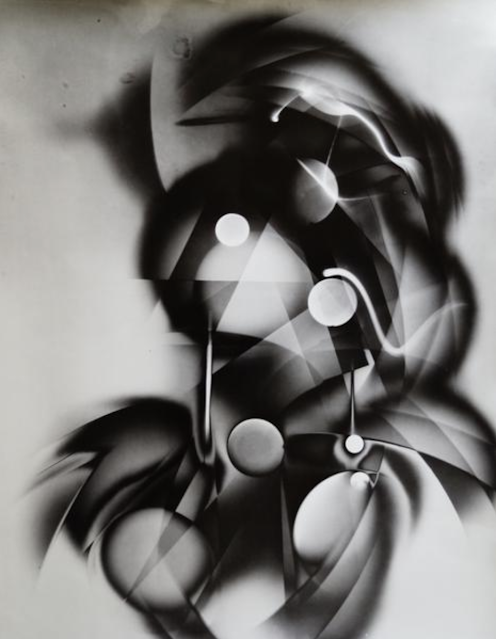
While a photograph, analog or digital, can be reproduced indefinitely, cameraless photographs are typically one-of-a-kind pieces. This week we explore our favorite cameraless images from our flat files and share them here.

Michael Jackson, Mrs. S, luminogram, 20 x 16 inches, unique, $4000

 
While a photograph, analog or digital, can be reproduced indefinitely, cameraless photographs are typically one-of-a-kind pieces.

These unique images, which do away with the mediation of a camera or a lens, include photograms, photogenic drawings, cyanotypes, luminograms, and chemigrams. All terms that designate the various cameraless processes of those artists who choose to use the primary elements of photography — light, paper, and chemicals — as both their tools and subjects to create the image.

This week we explore our favorite cameraless images from our flat files and share them here. Take a look below.


 VANESSA MARSH


KATE BREAKEY

Kate Breakey, Common Ground Dove, gelatin-silver print, 17 x 14 inches, edition of 7, framed, $1150


To learn more about our cameraless collection and our last show on cameraless photography, take a look at the link below.

» LIGHT + METAL: Closing thoughts from Gallery Director Anne Kelly


• • • • •

For more information, and to purchase prints, please contact Gallery Director Anne Kelly or Gallery Assistant Patricia Martin, or you may also call us at 505-988-5152 x202