PHOTOBOOK REVIEWS, INTERVIEWS AND WRITE-UPS
ALONG WITH THE LATEST PHOTO-EYE NEWS

Social Media

Showing posts with label photo-eye Gallery. Show all posts
photo-eye Gallery Reshaping the Earth: Energy and the Environment photo-eye Gallery photo-eye Gallery is pleased to present Reshaping the Earth: Energy and the Environment, an exhibition of photographs by Jamey Stillings and David Emitt Adams

David Emitt Adams, Port of Los Angeles, San Pedro, CA, 2015, Wet Plate collodion on 55-gallon steel drum lid, 23.5 inches in diameter, Unique, $7,500 ready to hang

photo-eye Gallery is pleased to present Reshaping the Earth: Energy and the Environment, an exhibition of photographs by Jamey Stillings and David Emitt Adams. This exhibition observes the transformation of land due to the extraction of natural resources from the earth. This exhibition also highlights a selection of images by Bremner Benedict that explore natural springs in the Southwest, many of which are currently being threatened.

Jamey Stillings, #24916, 20 July 2017, Archival Pigment Ink Print, 31x44 in, Editon of 10 plus two artist's proofs, $3,400 unframed 

Jamey Stillings, #39386, 29 August 2022, 22x28 in, Editon of 15 plus two artist's proofs, $2,000 unframed

Jamey Stillings' stunning color, aerial photographs record rapidly growing large-scale renewable energy projects that incorporate wind, solar, hydro and mining projects in the Atacama desert of Chile. The landscape of the Atacama desert has a long history of being altered by humans due to the region's abundant natural resources such as lithium, copper, gold and iron ore.

David Emitt Adams, LA Harbor Oil Tanker, Wilmington, CA, 2017, Wet plate collodion tintype on 55-gallon steel drum lid, 23.5 inches in diameter, Unique, $7,500 ready to hang 

David Emitt Adams uses historical photographic techniques to explore his subjects, sparking conversations about the past and present. His "Power" series features images of industrial landscapes from the American oil industry, captured using a custom-built camera and printed directly onto 55-gallon steel oil drum lids using wet plate collodion chemistry.


Bremner Benedict, Pinto Hot Springs, NV, Archival Pigment Ink Print, 16x24 in, Edition of 4, $1,200 unframed. 

Benedict's "Hidden Water" project documents springs in the Southwest, including the Chihuahuan, Sonoran, and Mojave deserts, the Great Basin, and the Colorado Plateau. The project raises awareness about the loss of these vital ecosystems that have long been essential to human survival but are overlooked in our modern world.

About the artists:

Jamey Stillings is a photographer based in Santa Fe, NM. Jamey’s photographs have been exhibited nationally and internationally. His work is in the permanent collection of the United States Library of Congress Museum of Fine Arts, Houston Los Angeles County Museum of Art Nevada Museum of Art, and Center for Art + Environment Archive Collection among others. His monographs include ATACAMA: Renewable Energy and Mining in the High Desert of Chile, Steidl, 2023, The Evolution of Ivanpah Solar, Steidl, 2015 and The Bridge at Hoover Dam, Nazraeli Press, 2011.

David Emitt Adams is a photographer based in Phoenix, Arizona. David’s photographs have been exhibited nationally and internationally including museum exhibitions. His work is in the permanent collection of The Center for Creative Photography, The Santa Barbara Museum of Art, the Museum of Photographic Arts San Diego, The Ogden Museum of Southern Art, The George Eastman Museum, and The Worcester Art Museum as well as numerous private collections. 

Bremner Benedict is a photographer based in Concord, Massachusetts. Bremner's photographs have been exhibited in numerous group and solo exhibitions. Her work is in the permanent collection of Fidelity Art Boston Collection, The Center for Creative Photography, Tucson, New Mexico Museum of Art, George Eastman International Museum of Photography, and Philadelphia Museum of Art, among others.  In 2023 Benedict was the recipient of Center's Project Launch Grant

Also on display is a selection of work by gallery artists, including Mitch Dobrowner, Michael Kenna, Steve Fitch, and Beth Moon.


Reshaping the Earth: Energy and the Environment is on display through January 6th, 2024. An Artist Reception and Booksigning for Jamey Stillings will be held on Saturday, December 2nd, from 3-5 p.m.


*      *      *

PRINT COSTS ARE CURRENT UP TO THE TIME OF POSTING AND ARE SUBJECT TO CHANGE.

*      *      *

If you are in Santa Fe, please stop by we are open Tuesday– Saturday, from 10am- 5:30pm. 

PHOTO-EYE GALLERY
300 Rufina Circle, Unit A3, Santa Fe, NM 87507

For more information, and to reserve one of these unique works, please contact 
Gallery Director Anne Kelly
You may also call us at (505) 988-5152 x202


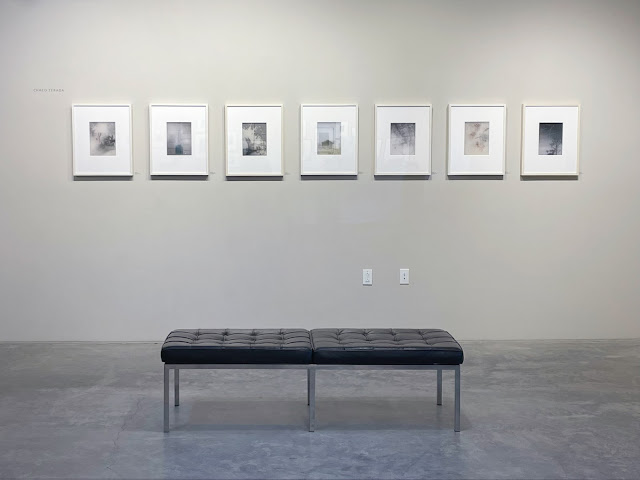
photo-eye Gallery Chaco Terada: New Work photo-eye Gallery photo-eye Gallery is thrilled to share new work by Chaco Terada.


Chaco Terada, I Am Home 4, 2022, Sumi & Pigment Ink on Silk, 10x7", Unique Print, $1,800

If you've been following Chaco Terada's work, you might be anticipating her annual visit to photo-eye.  I am pleased to report that we were able to catch up with Chaco recently and now have some fantastic new pieces in our inventory.  A selection of the new works can be viewed below, and you can find additional work on our website.  


In the case that you've recently discovered Terada's work, you might be curious about her unique process.  Terada's process involves printing photographic images onto multiple layers of silk, which are often embellished with brushwork using Sumi ink. Each layer of silk is delicately stretched between an 8-ply matboard, like a canvas, so that every semi-transparent layer of silk interacts with each other, much like a watercolor painting.   


Enjoy viewing — and please reach out if you would like to discuss a specific piece.  

 
Chaco Terada, To Pontoon 1, 2018, Sumi & Pigment Ink on Silk, 10x7", Unique Print, $1,800


Chaco Terada, A Fragment 2, 2023, Sumi & Pigment Ink on Silk, 10x7 in, Unique Print, $1800


Chaco Terada, Wind from East 2, 2023, Sumi & Pigment Ink on Silk, 10x7 in,  Unique Print, $1800


If you would like to know more about Chaco Terada and her process you can find more information HERE


*      *      *
PRINT COSTS ARE CURRENT UP TO THE TIME OF POSTING AND ARE SUBJECT TO CHANGE.
*      *      *
If you are in Santa Fe, please stop by we are open Tuesday– Saturday, from 10am- 5:30pm. 

1300 Rufina Circle, Unit A3, Santa Fe, NM 87507

For more information, and to reserve one of these unique works, please contact 
Gallery Director Anne Kelly
You may also call us at (505) 988-5152 x202

photo-eye Gallery Chaco Terada: Gallery Musings photo-eye Gallery photo-eye Gallery's staff is pleased to share thoughs on one of their favorite images by Chaco Terada.


Since the 6th century, calligraphy has been a revered art form in Japan, following its introduction by Chinese masters. Today, it reflects the influence of Japanese Zen Buddist philosophy, where artists clear their minds to allow each character to arise spontaneously, committing it to paper in fluid motions. Yhohei Teradam, an esteemed calligraphy teacher at the University of Toyama, began teaching his daughter Chaco the art when she was only four years old. In her early twenties, Chaco would bring her passion for calligraphy to the United States and combine it with a new love: photography.

Chaco Terada has always been captivated by the way the lines of folded calligraphy paper showed through when held up to the light. Inspired by a poetry book that merged text and images, she developed a process that combines Sumi ink calligraphic mark-making with black-and-white photographic images printed on sheer silk, producing unique vignettes. Her subjects include landscapes, portraits, flowers and other imagery that is shrouded and obscured, their details blurred by layers of silk. Each layer of silk is then stretched between 8-ply matboards, like a canvas so that each semi-transparent layer of silk interacts with each other. The calligraphy is often painted on multiple layers, giving the impression of free-floating thoughts in the atmosphere. The spaced layers add depth to the images, and the silk adds an ethereal, atmospheric quality to the photos. 

Terada's brushstrokes derive from characters with multiple interpretations, creating impressionistic takes on mood and feeling. She says, "My calligraphy is influenced by life experiences. When I create a brushstroke, I think of the motion of water in a stream or the movement of a breeze. My lines do not create a word in the traditional sense; they interpret the meaning or mood that I feel the word represents."

>> To learn more about represented artist Chaco Terada, click here <<

>> To view more of Chaco Terada's work, click here <<


Gallery Director Anne Kelly and Gallery Assistant Jovi Esquivel share their thoughts on their favorite piece. To fully appreciate Terada's work and the interplay between the layers of silk, they should be experienced in person.


As the gallery director at photo-eye, I have the opportunity to form a relationship with the artists we represent, which includes hearing stories that are typically not included in general artist statements. These stories help provide a more complete comprehension of an artist's work, so I like to share them alongside experiences whenever possible.

Chaco Terada's relationship with photo-eye dates back about 15 years. Over this period I have thoroughly enjoyed getting to know Chaco, watching her career blossom and her art-making process evolve.

Chaco began producing art at age four when she began her studies in the ancient art of calligraphy. In her twenties, her calligraphy skills presented the opportunity to travel. Chaco eventually decided to settle in the United States, where she developed a passion for photography, which she began incorporating into her brushwork. In this new process, she moved away from traditional characters, which can be literally interpreted, into a new free-form version of calligraphy that she considers meditative mark-making. These marks benefit from a mastery of the ancient art of calligraphy but are not bound by traditional rules.

I would like to highlight Little Fox, for I see Chaco in all of her images but particularly this one. I perceive Little Fox, as a portrait of the artist, but not in the literal sense. Foxes, known as kitsune, often appear in Japanese folklore and are believed to have paranormal abilities such as shapeshifting. Chaco possesses many positive characteristics associated with foxes. Chaco is cunning, playful and resilient. 

This piece was made in 2020 when most of us were in quarantine. During this time Chaco revisited images from the past, looking for new inspiration. In this process, she came across a photograph that she had made of an Oragomi fox that was photographed on a trip to Japan the year prior and decided to work with that. The final image depicts the origami fox framed by silhouetted foliage. The origami fox appears to be looking out a window and dreaming of returning to the forest to play. 

Because Chaso's images are composed by stacking multiple layers of semi-opaque silk, the individual elements become one, they are capable of representing not just one moment in time but multiple places within the same frame. Her past, present and future are illustrated in a single image.

—Anne Kelly


Chaco Terada, Sounds of Silhouette, Sumi & Pigment Ink on Silk, 10 x 7½ Image, Unique Object, $1800

I feel a profound connection to the wind, which beckons me to dream and awakens all of my senses. Living in New Mexico, I cannot escape the dramatic interplay of light and sound shaped by the forceful will of the wind as it moves through the tall Cottonwood trees. The artwork titled Sounds of Silhouette amplifies this connection for me. The work appears to be a vignette of leaves and branches that have been printed on multiple layers of silk, creating a sense of depth and varying densities that mirror the way light moves through trees. Against this backdrop of light and shadow, Chaco's hand emerges with iridescent calligraphic strokes, capturing the essence of wind whispering through leaves.

Chaco's process of combining calligraphy with photography on silk produces an otherworldly quality that draws me into the artwork and makes me feel connected to the natural world. 

—Jovi Esquivel


If you are in Santa Fe, please stop by during gallery hours or schedule a Virtual Visit here.


*      *      *

Print costs are current up to the time of posting and are subject to change.


For more information, and to reserve one of these unique, extraordinary new works,
please contact photo-eye Gallery Director Anne Kelly 

1300 Rufina Circle, Unit A3, Santa Fe, NM 87507
Tuesday– Saturday, from 10am– 5:30pm

You may also call us at (505) 988- 5152 x202


photo-eye Gallery New Work from Mitch Dobrowner PHOTO-EYE GALLERY Three new images by represented artist Mitch Dobrowner!

Mitch Dobrowner, Volucris in High Desert, Trementina, NM, 2023, 15.5x30", Edition of 15, $2,500

"Our job is to record, each in his own way, this world of light and shadow and time that will never come again exactly as it is today."

—Edward Abby
1927- 1989

Mitch Dobrowner, Torqueo Over Plains, Wagon Mound, NM, 2023, 10.5x20", Edition of 15, $2,500 


Mitch Dobrowner, Asperitas Cloud, Seibert, CO, 2023, 20x30", Edition of 15, $2,500


photo-eye Gallery is proud to represent artist Mitch Dobrowner.


>> See more images by Mitch Dobrowner <<
>> Learn more about Mitch Dobrowner <<


*      *      *

PRINT COSTS ARE CURRENT UP TO THE TIME OF POSTING AND ARE SUBJECT TO CHANGE.


*      *      *

If you are in Santa Fe, please stop by during gallery hours or schedule a Virtual Visit HERE.  


For more information, and to reserve one of these unique works, please contact 

Gallery Director Anne Kelly or Gallery Assistant Jovi Esquivel.

You may also call us at (505) 988-5152 x202


photo-eye Gallery

1300 Rufina Circle, Unit A3, Santa Fe, NM 87507

Tuesday– Saturday, from 10am- 5:30pm


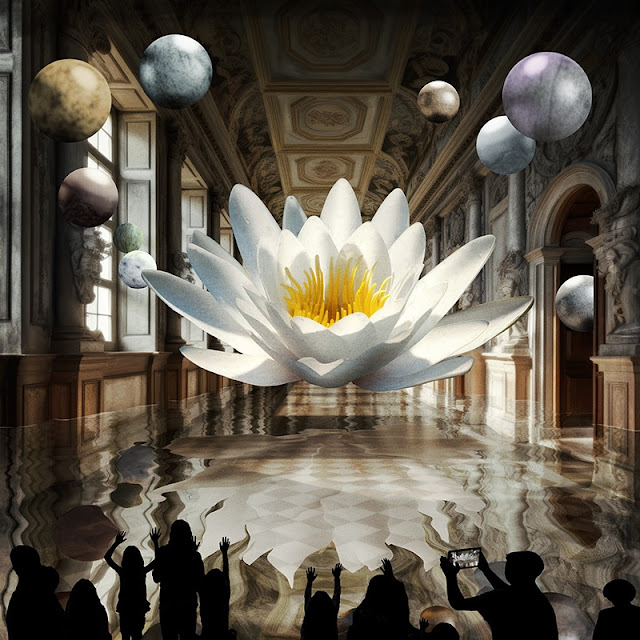
photo-eye Gallery New Images by Artist Maggie Taylor! Jovi Esquivel photo-eye Gallery is thrilled to unveil a collection of five new images by represented artist, Maggie Taylor!

Maggie Taylor, The Next Big Adventure, Archival Pigment Print, 22x22", Edition of 10, $5,000

photo-eye Gallery is thrilled to unveil a collection of five new images 

by represented artist, Maggie Taylor!


Amidst the captivating ensemble of five images, one has deeply stirred my senses — The Next Big Adventure. This spellbinding tableau unveils a scene that is both curious and magical, inviting us to lose ourselves in its intricate tapestry of history and fantasy.

A young boy stands within an era-defying tableau. By his side, a canine companion adorned in whimsical 17th-century attire forms a charming pairing, sparking intrigue and igniting the imagination.

The foreground is dominated by a platform lavishly adorned in resplendent jacquard fabric, a touch of opulence that underlines the scene's grandeur. Upon this platform, his regal companion takes his seat. Yet, what truly captures the essence of this mesmerizing artwork is the juxtaposition it presents — an old wooden boat rests on one side of the platform, while the other is graced by the presence of the charming duo that stares back at the viewer. The interplay between past and present, of reality and the ethereal, infuse the piece with layers of meaning waiting to be unraveled.

As your gaze ventures beyond this intriguing tableau, the background unfolds a dreamlike tapestry reminiscent of a 17th-century masterpiece. Graceful sailboats adorn the bay, evoking a sense of timeless beauty, while a surreal and whimsical sky unfurls - a canvas of stars and a moon borrowed from the realm of dreams transport us. It's as though we're peering into a portal, catching a glimpse of the boy's very own fantasy world.

But what anchors us firmly in this captivating scene are the vibrant, red-tinted goggles, worn by both the boy and his four-legged companion. A visual thread connecting past and present, these goggles draw us back to the ornate tapestry in the foreground, weaving the elements of the image into a harmonious whole.

As you venture deeper into this collection of new images, each image will unravel another layer of Maggie Taylor's enigmatic vision, inviting you to wander through a landscape where reality and imagination entwine. 

>>New Work & AI: Interview w/ Maggie Taylor | BLOG <<


Maggie Taylor, The Gatekeeper, Archival Pigment Print, 15x15", Edition of 15, $3,200


Maggie Taylor, The Daydreamer, Archival Pigment Print, 15x15", Edition of 15, $3,200


Maggie Taylor, It's My Party, Archival Pigment Print, 15x15", Edition of 15, $3,200


Maggie Taylor, Welcome to the Water Planet, Archival Pigment Print, 8x8", Edition of 15, $1,700


photo-eye Gallery is proud to represent artist Maggie Taylor.


>> More Images by Maggie Taylor <<


>> Buy Maggie Taylor's book Internal Logic <<


*    *    *

The prints from this series are Archival Pigment Prints 

8x8", Edition of 15, Starting at $1,700
15x15", Edition of 15, Starting at $3,200
22x22", Edition of 10, Starting at $5,000
36x36", Edition of 9, Starting at $9,000

(Select images are also available 48x48" as dye sublimation on aluminum for $12,000)
(Select images are also available 58x58" on paper for $15,000)


PRINT COSTS ARE CURRENT UP TO THE TIME OF POSTING AND ARE SUBJECT TO CHANGE.

*    *    *

For more information, and to reserve one of these unique works, please contact
Gallery Director Anne Kelly or Gallery Assistant Jovi Esquivel.

You may also call us at (505) 988- 5152 x202


photo-eye Gallery

1300 Rufina Circle, Unit A3, Santa Fe, NM 87507
Tuesday– Saturday, from 10am– 5:30pm


photo-eye Gallery photo-eye Conversations: Live w/ Mitch Dobrowner PHOTO-EYE GALLERY photo-eye Gallery is happy to share the recording of our live Zoom conversation with Mitch Dobrowner, the first segment of photo-eye Conversations: LIVE

Mitch Dobrowner, Supercell Swirles & Lightening, Clayton, New Mexico, 2022, 20x30", Edition of 25, $2,500

In case you missed it, we're happy to share the recording of our live Zoom conversation with Mitch Dobrowner, the first segment of photo-eye Conversations: LIVE!

The Zoom gathering was a relaxed chat between Gallery Director Anne Kelly and photographer Mitch Dobrowner, followed by a Q&A. 

Dobrowner has been traveling across the country with professional storm chasers for over a decade with the goal of capturing the calm amidst the storm. Though this seems counterintuitive, Dobrowner's hyper-technical approach and incredibly focused compositional eye enable him to find a sense of grounding even during the most extreme weather events. The translation of this imagery into flawless black-and-white prints provides the viewer with that same sense of peace, even among the chaos, a moment of stillness can always be found.


Mitch Dobrowner was born in 1956 in Long Island, Bethpage, New York. Worried about Mitch's future and the direction his life will take, his father decided to give him an old Argus rangefinder to fool around with—little did he realize that it would become a significant gesture for Mitch. After doing some research, and seeing work by Minor White and Ansel Adams, Mitch quickly became addicted to photography.

Years later, in early 2005, inspired by his wife, children and friends—he again picked up his camera. Working with professional storm chaser Roger Hill, Dobrowner has traveled throughout Western and Midwestern America to capture nature in its full fury; making extraordinary images of monsoons, tornados, and massive thunderstorms with the highest standard of craftsmanship. 

Dobrowner’s Storms series has attracted considerable media interest from National Geographic, Time, and New York Times Magazine, among others. In August of 2022 a print of the image Rope Out, from a private collection, has been acquired by the Philadelphia Museum of Art. Other museums that have acquired Mitch's work include The Center of Creative Photography, Tucson AZ; The National Gallery of Art, Washingon D.C.; The Museum of Fine Art, Houston TX; Cleveland Museum of Art, Cleaveland OH; Portland Museum of Art, Portland OR; Santa Barbara Museum of Art, Santa Barbara CA; and the Middlebury Museum of Art, Middlebury VA. 

He lives with his family in Studio City, California.


photo-eye Gallery is proud to represent artist Mitch Dobrowner.


*      *      *


SAVE THE DATE!


photo-eye Conversations: LIVE w/ Kate Breakey


August 17, 2023  /  @6pm MT

via Zoom

RSVP


*      *      *

PRINT COSTS ARE CURRENT UP TO THE TIME OF POSTING AND ARE SUBJECT TO CHANGE.

*      *      *

If you are in Santa Fe, please stop by during gallery hours or schedule a Virtual Visit HERE.  

For more information, and to reserve one of these unique works, please contact 
Gallery Director Anne Kelly or Gallery Assistant Jovi Esquivel.

You may also call us at (505) 988-5152 x202


photo-eye Gallery

1300 Rufina Circle, Unit A3, Santa Fe, NM 87507
Tuesday– Saturday, from 10am- 5:30pm

photo-eye Gallery Kate Breakey Exhibition & Artist Reception; July 29th, 2023 photo-eye Gallery Discover the enchantment of Kate Breakey’s upcoming gallery exhibition. Hand-colored photographs and mesmerizing orotones unveil the beauty of everyday objects with intricate detail and a radiant, three-dimensional allure.

Kate Breakey, White Swan, Hand-colored Archival Pigment Print, 24x32", Edition of 20, $2,000

photo-eye Gallery is pleased to announce

KATE BREAKEY  /  Wondrous Things


Artist Reception: 4-6pm, July 29, 2023
On View July 29- September 30, 2023


“Making images of these things is a natural extension of being fascinated, touched, or intrigued by them. This process of seeing, and recording transforms me. It is how I express wonder and love, a form of dedication. It is also a record of my life and my desire to connect myself to all other things, the acknowledgment of a search for an explanation, for meaning and significance, a primal longing to grasp things which are unknowable.”
— Kate Breakey

Kate Breakey is an artist who finds inspiration in the beauty and complexity of nature. Her career has spanned 40 years, during which she has created art that celebrates the wonder of the natural world. As a child growing up in coastal Australia, Kate was fascinated by the ocean, big skies and the wildlife that surrounded her. Frequent visits to the natural history museum further fueled her curiosity, as she marveled at the labeled and classified displays of birds and shells in glass cases. The diversity of life filled her with amazement and wonder.


Clockwise from center: Night Snake, Scotch Bonnet Shell, Vervet Monkey Skull, Kelp, Money Tree Leaf, Mexican Bird of Paradise, Horned Lizard, Leopard Moth, Horseshoe Crab, Cicada

This exhibit showcases a collection of recent hand-colored photographs and contemporary orotones. The images capture the beauty of everyday objects, including still-lifes, dried flowers, insects, lizards, ravens, landscapes, fruits, vegetables and even the moon. Each piece is unique and incorporates handwork, blending photography and painting. The hand-colored images exhibit intricate detail, drawing the viewer in to appreciate every aspect, from petals to feathers. The framed orotones are stunning objects, radiating a warm hue even in dimly lit settings. The combination of glass, image and gold leaf creates a unique three-dimensional quality.


Kate Breakey, Plum Creek, Texas I, Hand-colored Archival Pigment Print, 24x36", Edition of 20. $2,000


photo-eye Gallery is proud to represent artist Kate Breakey.


*      *      *


Kate Breakey was born in Adelaide, Australia, and received her MFA in photography from the University of Texas, Austin in 1991. Breakey is known for working in a multitude of photographic techniques, including large-scale, hand-colored archival pigment prints, gold-leaf-backed Orotones printed on glass, and hand-embroidered images printed on silk. Since 1981 her work has appeared in more than 120 solo exhibitions and more than 50 group exhibitions in the United States, France, Japan, Australia, China, and New Zealand.


>> See more images by Kate Breakey <<

>> Learn more about Kate Breakey <<


PRINT COSTS ARE CURRENT UP TO THE TIME OF POSTING AND ARE SUBJECT TO CHANGE.

*      *      *


If you are in Santa Fe, please stop by during gallery hours or schedule a Virtual Visit HERE.  

For more information, and to reserve one of these unique works, please contact 
Gallery Director Anne Kelly or Gallery Assistant Jovi Esquivel.

You may also call us at (505) 988-5152 x202


photo-eye Gallery

1300 Rufina Circle, Unit A3, Santa Fe, NM 87507
Tuesday– Saturday, from 10am- 5:30pm


photo-eye Gallery Hot off the press, from Julie Blackmon! Jovi Esquivel photo-eye Gallery is pleased to share Julie Blackmon’s latest photograph! “Riverside,” invites us into a tranquil scene filled with wonder.

Julie Blackmon, Riverside, 2023, Archival Pigment Print, 26 x 33½", Edition of 10, $4,000

In her latest mesmerizing photograph, aptly titled Riverside, acclaimed artist Julie Blackmon invites viewers into a scene brimming with youthful tranquility and contemplation. Set against the backdrop of a concrete landing next to a river, a group of children find respite from the outside world, each immersed in their own unique moment of repose.

At the center of this captivating tableau, a young girl lies comfortably on a towel, engrossed in the powerful words of Margaret Atwood's renowned novel, The Handmaid's Tale. With her mind traversing distant realms of dystopian fiction, she finds solace in literature while becoming a symbol of intellectual curiosity and the potential for change.

Directly in front of her, another child rests, captivated by her presence. The boy's gaze, filled with wonder and admiration, reveals a quiet appreciation for her individuality and the significance of personal interests. It is through this subtle connection that Blackmon highlights the power of human connection and the way in which our individual passions can inspire and influence those around us.

Through her masterful composition and thoughtful depiction of these serene moments, Blackmon continues her exploration of childhood and the complexities that lie beneath its seemingly simple surface. She effortlessly captures the delicate balance between introspection and shared experiences, inviting viewers to reflect upon their own memories of youthful wonder and the importance of fostering a nurturing environment where imagination can flourish.


photo-eye Gallery is proud to represent artist Julie Blackmon.


*      *      *

The Prints from this image are Archival Pigment Prints and are currently available in the first tier.

22x29", Edition of 10, Starting at $4,000
 32x42", Edition of 10, Starting at $6,500
40x50" Edition of 10, Starting at $9,000

>> See more images by Julie Blackmon <<

>> Learn more about Julie Blackmon <<


PRINT COSTS ARE CURRENT UP TO THE TIME OF POSTING AND ARE SUBJECT TO CHANGE.

*      *      *

If you are in Santa Fe, please stop by during gallery hours or schedule a Virtual Visit HERE.  

For more information, and to reserve one of these unique works, please contact 
Gallery Director Anne Kelly or Gallery Assistant Jovi Esquivel.

You may also call us at (505) 988-5152 x202


photo-eye Gallery

1300 Rufina Circle, Unit A3, Santa Fe, NM 87507
Tuesday– Saturday, from 10am- 5:30pm

  photo-eye Gallery   The Day May Break, Chapter Two: An Interview with Nick Brandt    photo-eye Gallery       Gallery Director Anne Kelly and represented artist Nick Brandt discusses the evolution of his artistic vision, tracing its trajectory from his early days in Africa to his recent explorations in Bolivia.
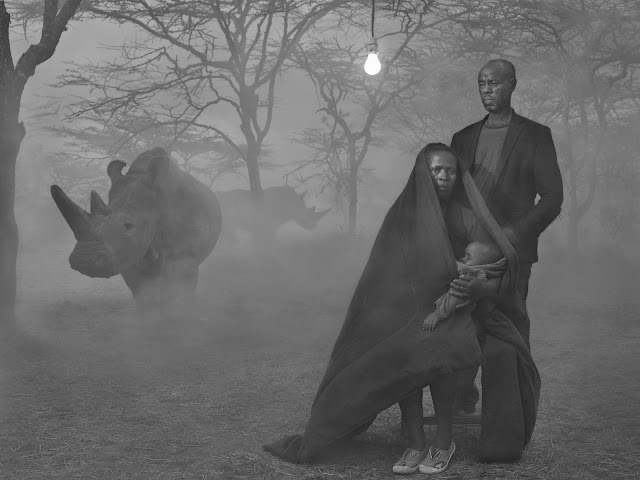
Nick Brandt, Alice, Stanley and Najin, Kenya, 2020

Nick Brandt, an accomplished artist known for his stunning photographs of Africa, has embarked on a remarkable journey spanning over two decades. His latest project, The Day May Break, a global series, takes him beyond the borders of Africa to Bolivia. With the release of his new book, The Day May Break, Chapter Two, Brandt's career reaches a significant milestone, offering a chance to reflect on his artistic evolution and delve deeper into his current works.

In a captivating interview with photo-eye Gallery Director Anne Kelly, Brandt discusses the evolution of his artistic vision, tracing its trajectory from his early days in Africa to his recent explorations in Bolivia. Their conversation also highlights Brandt's influential conservation organization, Big Life Foundation, which has made a profound difference in preserving wildlife habitats in one of Africa's key ecosystems. 

The interview delves into Brandt's global series, which addresses urgent environmental concerns, particularly climate change. Through his mesmerizing photographs, Brandt captures the awe-inspiring beauty of the natural world while emphasizing its vulnerability to human-induced threats.

This interview and the release of Brandt's new book offer a unique and celebratory opportunity to appreciate the legacy of an extraordinary artist, immerse ourselves in his artistic journey and achievements, and contemplate the promising directions that lie ahead for Nick Brandt's illustrious career.
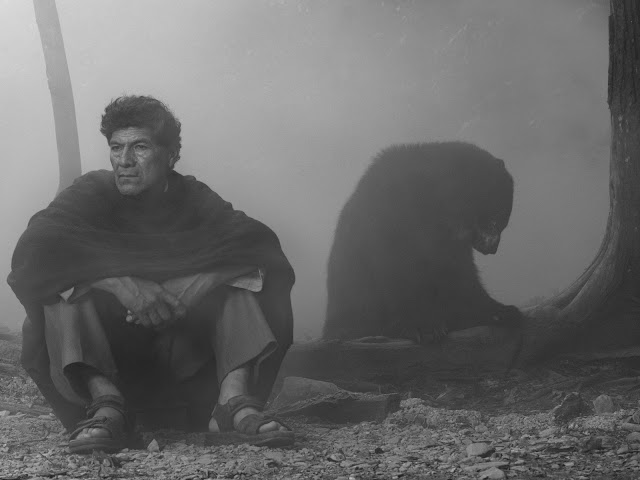

Nick Brandt, Lucio and Tarkus, Bolivia, 2022

Anne Kelly: Over 20 years ago you started photographing in Africa, this began with what grew into a trilogy of monumental portraits of East African Animals. Conservation was the goal from day one, but the trilogy was just the beginning. The time spent in Africa photographing was the direct path to the creation of your conservation organization Big Life Foundation—followed by several other call-for-action projects, including Inherit the Dust and This Empty World, leading to the multi-part global series that you are working on today. Would you have anticipated the trajectory of your work when you started photographing in Africa 20 years ago?
Nick Brandt: Good question. I don’t think I would have anticipated this trajectory back at the beginning, but that is an answer I am not happy about. I feel that I spent far too many years on the early work. I really only finally found my voice in 2014 with Inherit the Dust and from there, work that I feel is much more complex and ambitious than the early work.

Nick Brandt, Jame with People in Fog, Bolivia, 2022

AK: Your current series, The Day May Break, calls attention to climate change and environmental destruction globally. The images are made in carefully selected sanctuaries and your subjects are survivors, both human and animal. The humans have lost their homes and or livelihoods, and the rescued animals can’t be introduced back into the wild. In this series animals and humans are photographed together in the same frame and seen as equal. Please go into the transition from Inherit the Dust and This Empty World, to your current work.
NB: With every series, you can see people becoming more and more prominent in the photos. With The Day May Break, I went much further again. This was because this series (finally) addressed climate change. And with its direct impact on humans—especially those in poor rural areas of countries, with their low carbon emissions, bear the least responsibility—this concept grew out of that. So this series conceptually developed out of the desire to address climate change and to find a way to show both the most vulnerable humans and animals sharing the same fate. 

Nick Brandt, Lineth and Kini, Bolivia, 2022

AK: While your new works look at some difficult topics, hope is magnified in the new work.  Please expand.
NB: All these people and animals have been through trauma and dramatic hardships. But they survived. They are all still alive. And so in that, there is still hope and possibility.  It’s as the title of the series, The Day May Break, implies– The earth could shatter, or dawn still comes.
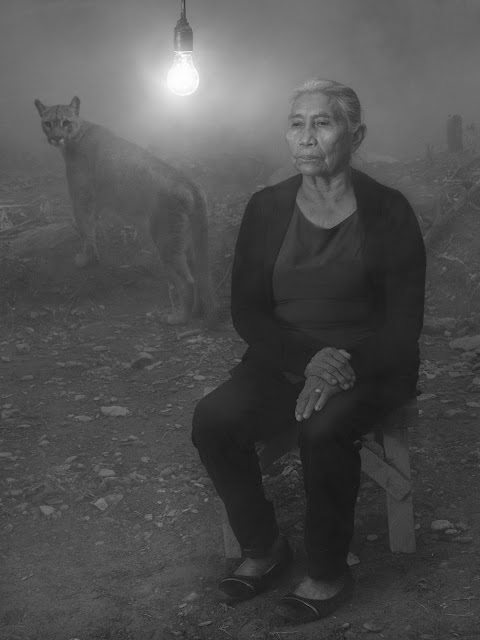
Nick Brandt, Juana and Nayra, Bolivia, 2022

AK: After working with animals in the wild for the early years, I imagine that the process of working with animals that are habituated to humans is a very different experience. Beyond the obvious, how does working with sanctuary animals compare to working in the wild?
NB: Thanks to their wonderful caretakers, many of the animals are so habituated to humans that they are very relaxed and with a little encouragement in the form of a mulberry leaf here, a carrot, or a nut there, hit their marks with impressive regularity. But regardless, one thing does not change—my photographing animals as sentient creatures, creatures that I view no different than humans. So I wait for those indefinable moments when they appear to present themselves for their portraits.

AK: Let's talk about your method of working. All of the images from the series On This Earth Trilogy were shot in the African wild - quietly watching and waiting for the right moment, and typically for long periods. Inherit the Dust, Empty World, and The Day May Break are high-production projects that involve a bit more control. However with these projects, after the scene is set, you take off your "director hat" and go back to patiently watching and waiting for "the moment". Why does that method of working appeal to you?
NB: I like working very loosely. I feel that what happens in real life is superior to what I might pre-script in my head, although of course, yes I do pre-visualize some photos, like for example, Richard and Sky, with Richard up a tall ladder so that his head and the giraffe's head (Sky) are a similar height in frame.
  
But during The Day May Break photo sessions, I frequently swapped out people with each respective animal until it felt like somehow, emotionally, the right combination. I like seeing what unexpected serendipity might unfold. For me, it was like a kind of photographic jazz.

Even in the earlier projects, it’s very loose. In Inherit the Dust, for example, the life-size portraits on panels were set in place in each location, and then I stayed there long enough that the local people were no longer interested that I was there and just went about their lives. At the start of that project, I had tried hiring people and shouted action but it was just terrible and I quickly realized I would get better results just letting the local people do their thing. Besides waiting for clouds, those photos were just a kind of elaborate street photography.

AK: Chapter Two was photographed in a sanctuary in Bolivia—this was your first significant project outside of Africa. Why did you select Bolivia specifically?
NB: The original plan had been to go to Brazil, which for the last five years, under eco-terrorist thank-god-former President Bolsonaro, has become the poster child for the apocalyptic ever-escalating destruction of the Amazon rainforest.

However, in Brazil, there were only a few habituated species in each sanctuary and those sanctuaries were spread out the length and breadth of the vast country. This would have necessitated many days of flying and driving between each: expensive, wasteful, and likely created the need to find a new crew in each new area that we visited.

Fortunately, to Brazil’s west, in Bolivia, is the home of Senda Verde Animal Sanctuary. Senda Verde is not just a wonderful animal sanctuary and non-profit organization, but also practically speaking, it is home to rescued members of almost all of the key South American species. This meant that I was able to photograph the entire Chapter Two part of the project in this one location. They’re wonderful people working on a tiny budget and despite that, never turn away a reduced animal, from bears down to birds and baby monkeys.
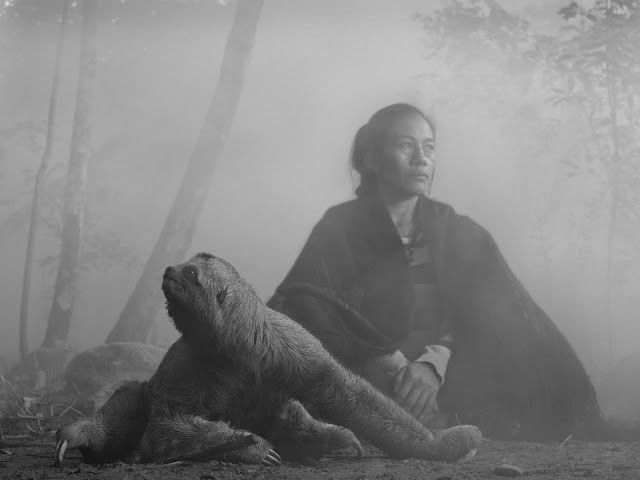
Nick Brandt, Ruth and Zosa, Bolivia, 2022

AK: A percentage of proceeds from print sales go to the people and sanctuaries that you are photographing at. I know that this has already made a big difference. Please share a few stories about this.
NB: The impact of those proceeds has had the most impact in Kenya and Zimbabwe because, at this point, that work has been out for 1 1/2 years. Regardless of who is the subject of each photo, the proceeds have been evenly divided among the people on a biannual basis, a kind of royalty payment. But in addition, certain buyers have donated a further amount to the people featured in the actual prints that they bought.

As a result, three of the young girls have their education paid for for the next six years; several couples have been able to start their own businesses after having their lives ruined by the impacts of climate change, and homes or parts of homes have been rebuilt that were destroyed by floods and cyclones.

AK: Some viewers (mistakenly) assume that the photos from The Day May Break are composites, which they are not. It is important to you that people understand that the image is made "in camera”. Why is this method of working important to you?
NB: Yes, there seems to be widespread thinking these days that anything visually unexpected or apparently hard to execute must have been photoshopped into creation - or god help us now - A.I generated. I could make my life much easier, and save a ton of time and thus money if I went the Photoshop route, but there is so much more aesthetic and emotional integrity to these portraits when the people and animals are photographed together, at the same time in the same frame. If I just stitched two separate elements together, it would never be as organic, as surprising. A photo like Kuda and Sky II, where Sky the giraffe unexpectedly leans down over Kuda as she sits at a table, I would never have dreamed that up.
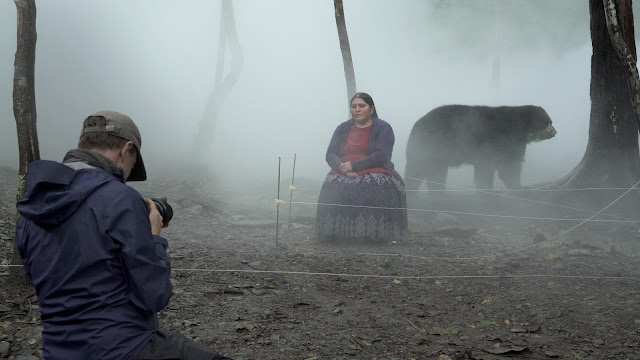
The Day May Break, Chapter Two, Nick Brandt photographing Carmen and Tarkus

AK: The subjects in your images are typically not looking directly into the camera, they seem to be in their own world and are seemingly unaware of your presence. In the case that the subjects are looking in your general direction, it is almost as though they are looking through you or over your shoulder. I imagine that this is a result of your method of working, but I sense that there is more to it. Please expand.
NB: As a kind of an aside, the humans and animals are deliberately never looking at each other. They share the same frame, of course, sharing the same universe, but remain disconnected from one another.

Meanwhile, there are the young girls, the future & to generalize massively, the more empathetic of the sexes (noting that there are the Marjorie Taylor Greenes, Lauren Bohberts, and Amy Coney Barretts of the world to contradict that). They usually look the strongest the most determined and defiant, looking directly into the camera.

In Marisol’s defiant look, I am reminded of Greta Thunberg. This planet urgently needs a million Gretas. If one young girl can start alone with just a placard on a street in Stockholm, so can we all.
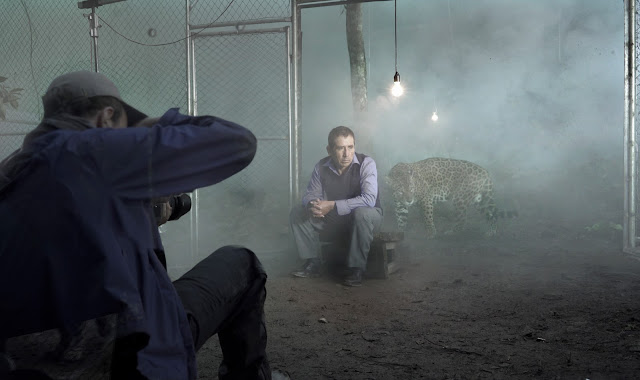
The Day May Break, Chapter Two, Nick Brandt Photographing Luis and Hernak

AK: What has been the largest technical challenge shooting the new work?
NB: As so often in my work, the largest technical challenge is caused by the wrong kind of weather. So, on The Day May Break, Chapter One, I went in the rainy season, as I so often do, not just to take advantage of cloud cover, always my preferred aesthetic, but also to have enough moisture in the air for the water-based fog machines that we used to work effectively.

When you have weeks of baking, bone-dry heat and winds, and cloudless skies, the fog coming out of the machines evaporates almost immediately. So for two weeks in Zimbabwe, we were only able to photograph for thiry minutes before sunrise and thirty minutes after sunset.
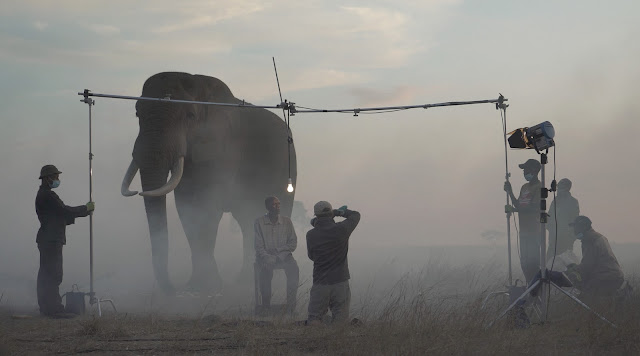
The Day May Break, Chapter Two, Nick Brandt photographing Mathew and Mak

AK: You note in your book that this is a Carbon Neutral project. Please expand on the actions that you are taking.
NB: I feel that if I make a project that is significantly about climate change, the project itself needs to be carbon neutral. So as imperfect as the system of Carbon credit is, I paid for carbon credits equivalent to all the fuel consumption from transport, generators, etc. from my shoot toward an African reforestation program. 

AK: Let's talk about the process of making books, you have published a few, do you have advice for someone that is considering publishing their first?
NB: For me, publishing a book is invaluable. It can generate publicity about your work in so much more effective way than having no book. No one in the media knows or cares whether your print run is 500 or 10,000 - the book exists. And if it’s well printed, it acts as a very useful portfolio. To me, it’s worth doing even if you have to put in your own money, which is increasingly inevitable. In these days of social media, print runs have dropped dramatically, so it’s pretty hard to make any kind of profit.
  
Once you have a publisher, do everything you can to not cave in to compromise. Every time I have done it –to not appear difficult, to not want to be unpopular– I have ended up in earlier years with poor results and deeply regretted that I did not push harder with my concerns. Visual creators live and die by how our work is presented (this is why for me, Instagram is so inadequate - visually complex detailed imagery reduced to this depressing minuscule size on a phone, and in the hands of others, often randomly cropped.

AK: In the back of the book, you have included the personal stories of each animal and person involved in the project.  Who was responsible for locating all of the humans that participated and recording their stories?
NB: For many weeks in advance, researchers went out across the country, especially in Zimbabwe and Bolivia, looking for and meeting people who had stories to tell of lives devastated by climate change. Once chosen by me from their photos and stories, they then traveled to the sanctuaries and conservancies to be photographed with the animals.

AK: The text in your recent book, The Day May Break, Chapter Two, is written to the reader/readers of the future. I know that text isn't written to me specifically, but it feels inclusive and engaging, as opposed to text that is written "at" the reader.  I like that.
NB: Well, I guess because I fervently believe that all of us can do something. As I wrote in the essay: 
“We need to all become good ancestors. We need to adopt a way of life that reduces the environmental impact that our actions will have on those billions of unborn yet to come. Can we show that we care about the humans and animals and trees that we will never live to see?”

AK: What is next?
NB: I just returned from photographing Chapter Three of The Day May Break in Fiji. All being well, this will be released in September, with the book to hopefully follow in 2024.


The Day May Break, Chapter Two by Nick Brandt

>>Purchase Book <<


Signed copies are available!

About the Limited Editions:
Four Limited Edition Prints are available in editions of 25 each, signed and numbered on a label affixed verso on a beautiful matte, archival paper.

Each print is presented in a handsome display folder with the print easily removable for framing. A signed copy of The Day May Break: Chapter Two is included with each print.
(8⅝ x 11½" image on 9⅝ x 12½" matte paper. Edition of 25, each.)

Clockwise, from top left: Carmen and Zosa II, Jame and People in Fog, Lucio and Chascas, and Lineth and Kini


*      *      *

If you are in Santa Fe, please stop by during gallery hours or schedule a Virtual Visit HERE.


For more information, and to reserve one of these unique, extraordinary new works,
please contact photo-eye Gallery Director Anne Kelly or Gallery Associate Jovi Esquivel.


photo-eye Gallery

1300 Rufina Circle, Unit A3, Santa Fe, NM 87507
Tuesday– Saturday, from 10am– 5:30pm

You may also call us at (505) 988- 5152 x202