PHOTOBOOK REVIEWS, INTERVIEWS AND WRITE-UPS
ALONG WITH THE LATEST PHOTO-EYE NEWS

Social Media

Showing posts with label Hans Gremmen. Show all posts
Book Review There will be two of you Photographs by Michael Ashkin Reviewed by Arturo Soto "The New Jersey Meadowlands — a swampy territory accommodating the landfills, junkyards, processing plants, and factories necessary to upkeep Manhattan’s world of appearances — are frustrating to traverse if you’re late to Newark Airport, but fascinating as evidence of capitalism’s environmental impact..."

There will be two of you by Michael Ashkin.
https://www.photoeye.com/bookstore/citation.cfm?catalog=IZ182
There will be two of you
Photographs by Michael Ashkin

Fw: Books, 2023. 208 pp., 9½x11".

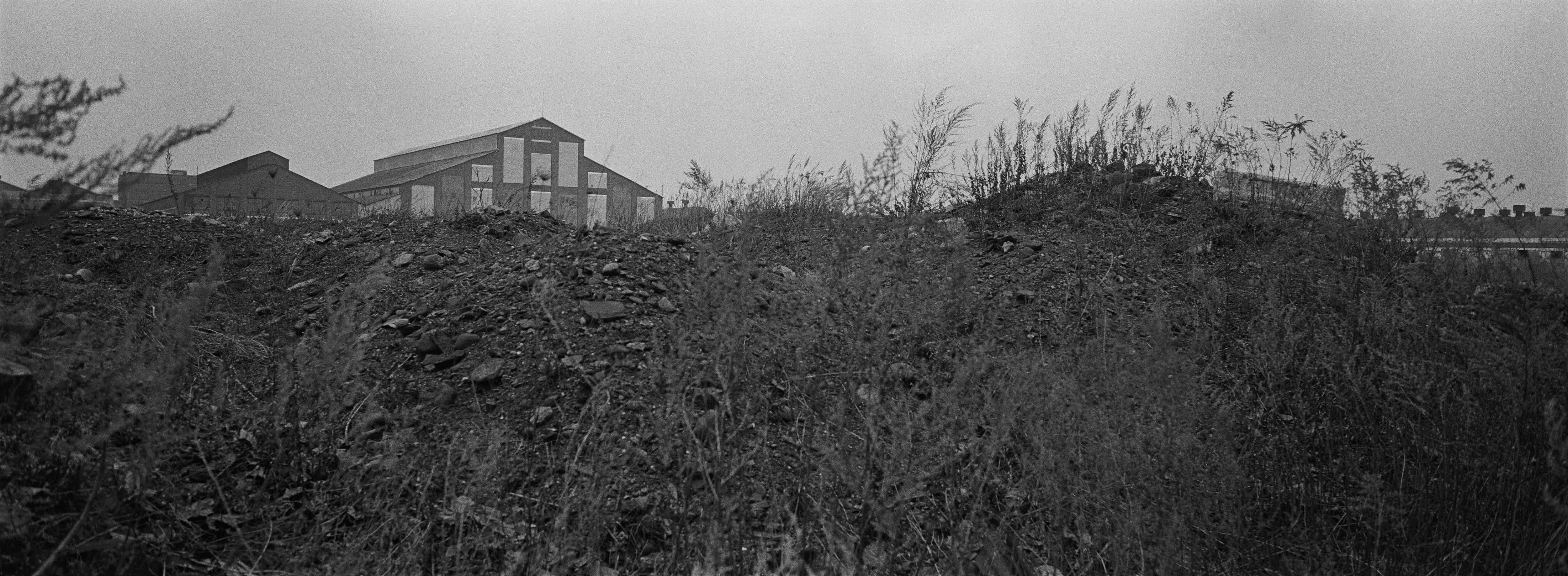
The New Jersey Meadowlands — a swampy territory accommodating the landfills, junkyards, processing plants, and factories necessary to upkeep Manhattan’s world of appearances — are frustrating to traverse if you’re late to Newark Airport, but fascinating as evidence of capitalism’s environmental impact. Their increasing geographical precarity can be summarized by the fact that some of its neighborhoods are still recovering from Hurricane Sandy more than a decade later. Far from picturesque, most avoid the meadowlands if possible. The artist Michael Ashkin experienced this landscape from a young age, developing an unexpected empathy toward it. That he witnessed it mainly through the car window might explain how he would later come to render it visually. Ashkin’s photobook There Will Be Two of You confronts us with spaces in the meadowlands that might seem purposeless or devalued but have a long history of exploitation by the array of colonizers, governments, corporations, and mafias that have ruled the Garden State.

The area depicted looks like a real-life maze with no landmarks or prominent points of reference. According to Ashkin, his first pictures of the meadowlands didn’t reveal anything, pushing him to experiment with several formats and styles before finding a methodology that reflected its intricacies. He adopted the panoramic format because he felt it resonated with his experience of the landscape. One of my undergrad lecturers, Craig Stevens, loved to say that all great photographers eventually use the panoramic format. Beyond debatable definitions of greatness in photography, I take Stevens’ dictum to mean that the artist’s choice of tools to render their subject matter can make or break the images they produce. 


Applying the panoramic format to still images is challenging because it creates a nearly unavoidable sense of unity, making things appear as if they naturally fell into place within the frame. The more elongated the rectangle, the harder it becomes to find variations that break up the pictorial space — a problem that cinema resolves by moving the camera, the subjects, or both. As such, the marked impression of chaos that the pictures in There Will Be Two of You give is unusual. Ashkin’s varied compositional strategies underline his effort to resist the aesthetic constraints of the format and the grittiness of the terrain in a constant flow between the raw and the cooked that is integral to his work (and the primary source of this book’s vitality). 


In an interview, Ashkin described trespassing as a cheap thrill he enjoyed, which tells of his complex relationship with some of these spaces and hints at the difficulties behind making the pictures. It’s possible to imagine Ashkin being chased by a dog or a gatekeeper, confused about why someone would want to photograph a pile of tires (this has to be the book with the most tires and containers in it). While we will never know which ones were dangerous to make, the pictures collectively describe the desolation of a postindustrial landscape affected by the whims of a rapidly changing world. Unlike other series about suburban wastelands that overplay the pictorial transformation of ruin into beauty, There Will Be Two of You forges an organic link between these unspectacular spaces and the style utilized to subvert our assumptions of them. The density of information in these pictures is peculiar, given that most people think of this area as empty. The contradictions between what we think we see and what is actually there have long been of interest to Ashkin, particularly how our point of view determines the ways we apprehend ordinary spaces. He has often explored this aspect in his sculptural works, big architectural maquettes that replicate non-places such as parking lots or highways.

In a story at the end of the book, an unnamed narrator tells — in the second person singular — how two people break into an abandoned complex and have a transcendental experience when they see a beam of light creeping into a building. This grammatical tense can cause a feeling of dislocation when used narratively. Here, it insinuates our failure to communicate the significance of sensory experiences with words: “You will sense the insufficiency of your description. You will expand on it without satisfaction. Your language will reveal a crisis of scale. Your language will separate itself from you. You will have lost the event.” Something similar happens with the pictures. They are the outcome of an immense physical effort, but they cannot encompass the complexity of a territory that is haunting because of its apparent dullness. The text made me think of the pictures differently, more psychologically, as the work of someone who wanted to be alone but was also sickened by the solitude of the landscape in front of him. 


The overall purpose of the text is vague, ringing like an indeterminate allegory that nevertheless resonates with the book’s title to suggest a few possible doublings. Firstly, as an homage to the other explorer, the friend who often accompanied Ashkin on many outings. Then there is the potential mirroring of the author in time, as if the making of the book confronted Ashkin with his former self that made the pictures (perhaps inevitable when revisiting one’s archive). Yet another way of reading the title is through the eternal rivalry between the twin states of New Jersey and New York, and how the fate of one directly influences the other.

It’s not easy to make a book exclusively with panoramic pictures. When such collections get published, the books tend to be large, horizontal, and with too many foldouts. Hans Gremmen, the designer of FW Books, found ingenious solutions to avert those characteristics. The pictures in most spreads are small, up to three to a page, but in varying configurations. Every so often, a picture is split into three full-page sections, meaning you can only see the whole of it by turning the page. This arrangement begins at the cover, printed on a blue stock that looks like a folder you might encounter in a real estate agency or government office conducting a land use survey.


Despite the archival insinuations of the cover, these pictures come with a consummate pedigree: the esteemed curator Okwui Enwezor commissioned the series for Documenta 11 in 2002. It is strange how current the book feels, given the pictures were made more than twenty years ago. While certain kinds of urban devastation might appear timeless, the book’s traction has to do with the attributes of the photographs and the way its design exploits their graphic magnetism. As in Ashkin’s previous books, there is much visual pleasure to be found here, even if it doesn’t materialize conventionally. I always get a strong feeling of singularity whenever I engage with his books, like listening to someone explaining things distinctively, structuring their argument in a way that makes you appreciate the mental choreography required to reach a conclusion that, through their punctual use of rhetoric, feels not only convincing but also immensely gratifying.

Purchase Book

Read More Book Reviews


Arturo Soto is a Mexican photographer and writer. He has published the photobooks In the Heat (2018) and A Certain Logic of Expectations (2021). Soto holds a PhD in Fine Art from the University of Oxford, and postgraduate degrees in photography and art history from the School of Visual Arts in New York and University College London.
Book Review Encampment, Wyoming Selections From The Lora Webb Nichols Archive 1899-1948 Reviewed by Blake Andrews “Lora Webb Nichols was born in 1883 and died in 1962. For most of the years between (apart from a mid-life spree to Stockton, CA) she lived in Encampment, Wyoming, a small town on the eastern frontier of the Rockies. Webb was a devoted journal writer from pubescence until death. Beginning around 1899 (her camera a gift from the man she would marry) she was a prolific photographer too, first in an amateur capacity and later as a working pro..."

Encampment, Wyoming. By Lora Webb Nichols.
https://www.photoeye.com/bookstore/citation.cfm?catalog=IB964
Encampment, Wyoming
Selections From The Lora Webb Nichols Archive 1899-1948

Fw:Books, 2020. 108 pp., black-and-white illustrations, 8¾x11".

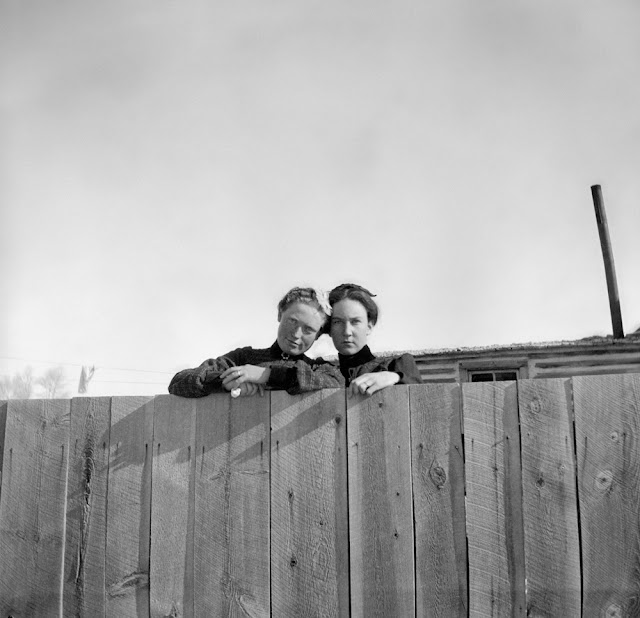
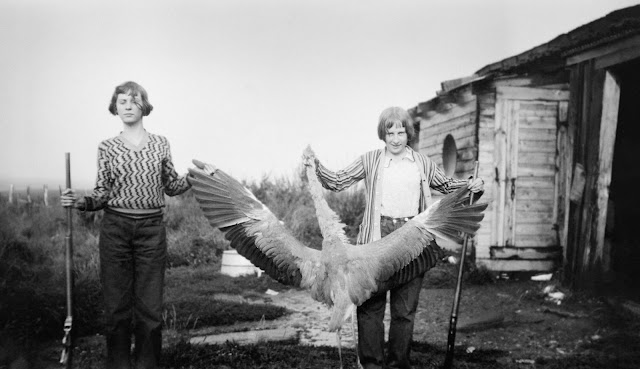
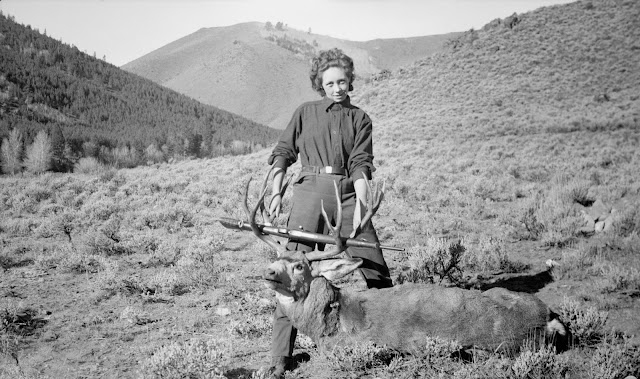
Lora Webb Nichols was born in 1883 and died in 1962. For most of the years between (apart from a mid-life spree to Stockton, CA) she lived in Encampment, Wyoming, a small town on the eastern frontier of the Rockies. Webb was a devoted journal writer from pubescence until death. Beginning around 1899 (her camera a gift from the man she would marry) she was a prolific photographer too, first in an amateur capacity and later as a working pro. She founded her own studio, making commercial pictures as well as photo finishing, while always just barely keeping the creditors at bay. And, oh yes, she also supported two husbands and mothered six kids along the way. All in a day’s work.

Her photographic output totaled some 24,000 negatives, a massive quantity for the time. Nichols’ photographs and journals might be considered dual legacies of the same impulse, to affirm her presence by the power of careful observation. “I know I don’t amount to much,” she wrote disarmingly in her diary, “I don’t cut much figure. I can’t seem to do any good in the world… Nevertheless I’m here and will have to keep pegging away trying to make myself useful…”


Perseverance furthers. Today her archive is a treasure, providing both a detailed record of one person’s daily activities and a glimpse into early 20th-century frontier life. But Nichols’ photographs have another surprising dimension. Many transcend a mere functionary role, elevated into art by her uncommon camera talents. They would have been lost to history were it not for Nancy Anderson, a neighbor who befriended Nichols toward the end of her life and arranged to house her archive in what would become the Encampment Museum. They were a civic novelty but attracted little outside attention. Fast forward a half-century, when the Nichols photo archive was discovered in 2012 by Nicole Jean Hill. The archive was too unwieldy for the museum. It was poorly stored and disorganized. But Hill recognized seeds of promise. With Anderson’s help, she undertook a multi-year effort to digitize, organize, and curate Nichols’ photos.

The result is the recent monograph Encampment, Wyoming: Selections from the Lora Webb Nichols Archive, 1899-1948. Although Nichols shot a range of subject matter, this book focuses on her portrait work (future curations may feature other material). Designed by Hans Gremmen and published by his Fw:books imprint late in 2020, it became a sleeper hit last winter, making several year-end lists. The first and second printings have sold out, with a third now on the way.


All three contributors — Nichols, Hill, and Gremmen — have joined forces to create a minor classic. That said, it is mostly Nichols’ show, as Hill and Gremmen wisely steer clear and let her photos take the lead. Frontier Wyoming comes alive before her camera, with a life force and casual aesthetic that feels quite contemporary. Gun-toting fur-lined grannies, fuzzy banjo players, hungry cats, balloons on Christmas trees. It all looks like a grand old time, and a weird one too. This is not the staid old west of C.S. Fly and Carleton Watkins, but one much closer to contemporary mores.

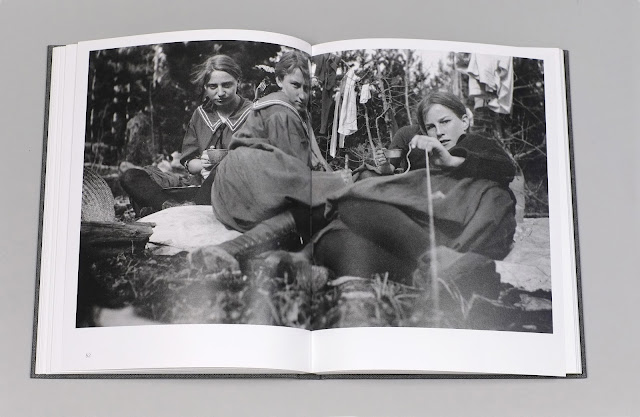
The book jumps into the photographs without a prelude. There are 115 in total, appearing in a range of sizes and layouts, one or two per spread. They bounce around in time and place. The reproductions are generally excellent. Scratches, hairs, and chemical artifacts of age have been cleaned up. Presented without theme or caption, the pictures have a time machine purity. The reader can sit on Nichols’ shoulder and encounter the world roughly as she saw. In addition to her photos there are some images by others included. These were gathered by Nichols as part of her collection, and they fit seamlessly into the mix although the authorship is separate. For those who want to sort photographers, dates, and locations, a helpful rear index lists that information, or at least what is known.


It’s worth lingering on the rear index a moment. It is one component of a sprawling text section that comes at the end as a design marvel. Nancy Anderson contributes an essay, followed by Hill’s story of discovery. Both women are openly enamored with Nichols, referring to her as “Lora” by first name. “I didn't want to initially include pictures that I wasn't confident were perfect in terms of both form and content,” explains Hill, “or could be labelled as a collection of snapshots, because I really wanted to the photo world especially to take Lora seriously as a photographer.” A plate listing and brief bios close out the writing. Several photographs are inserted in the essays, including a few of Nichols herself. The entire section is printed on silver ink against black matte paper, an abrupt departure from the white polish of the main body. The photographs shimmer with a ghostly glow, and even the words seem photographic in their vibrancy. One almost wishes the entire book could be this way. Almost. On second thought it’s fine as-is.

The photo world has experienced a tidal wave of similar projects in recent years, as contemporary photographers and curators mine and reappropriate old film archives in new ways. Compared to most, this one offers a relatively unfiltered channel to a bygone era. The design is dowdy, with a grey clothbound cover and plain san-serif typeface. The main body’s division into white paged photographs and black matte text section shows a flared reserve. The structure is conservative, functional without taking centerstage. The reader’s attention is directed to Nichols and her extraordinary legacy.

Purchase Book

Read More Book Reviews


Blake Andrews is a photographer based in Eugene, OR. He writes about photography at blakeandrews.blogspot.com.