PHOTOBOOK REVIEWS, INTERVIEWS AND WRITE-UPS
ALONG WITH THE LATEST PHOTO-EYE NEWS

Social Media

Showing posts with label Edward Ranney. Show all posts
Book Review Martín Chambi: Photography Photographs by Martín Chambi Reviewed by Edward Ranney "This publication of the photographs by Martín Chambi in the Jan Mulder collection, Lima, is a welcome addition to books dedicated to this Cuzco photographer, who lived from 1891 until 1973..."

https://www.photoeye.com/bookstore/citation.cfm?catalog=DU350
Martín Chambi: Photography
Photographs by Martín Chambi

Editorial RM, 2022. 194 pp., 170 illustrations, 9½x11¼x¾".

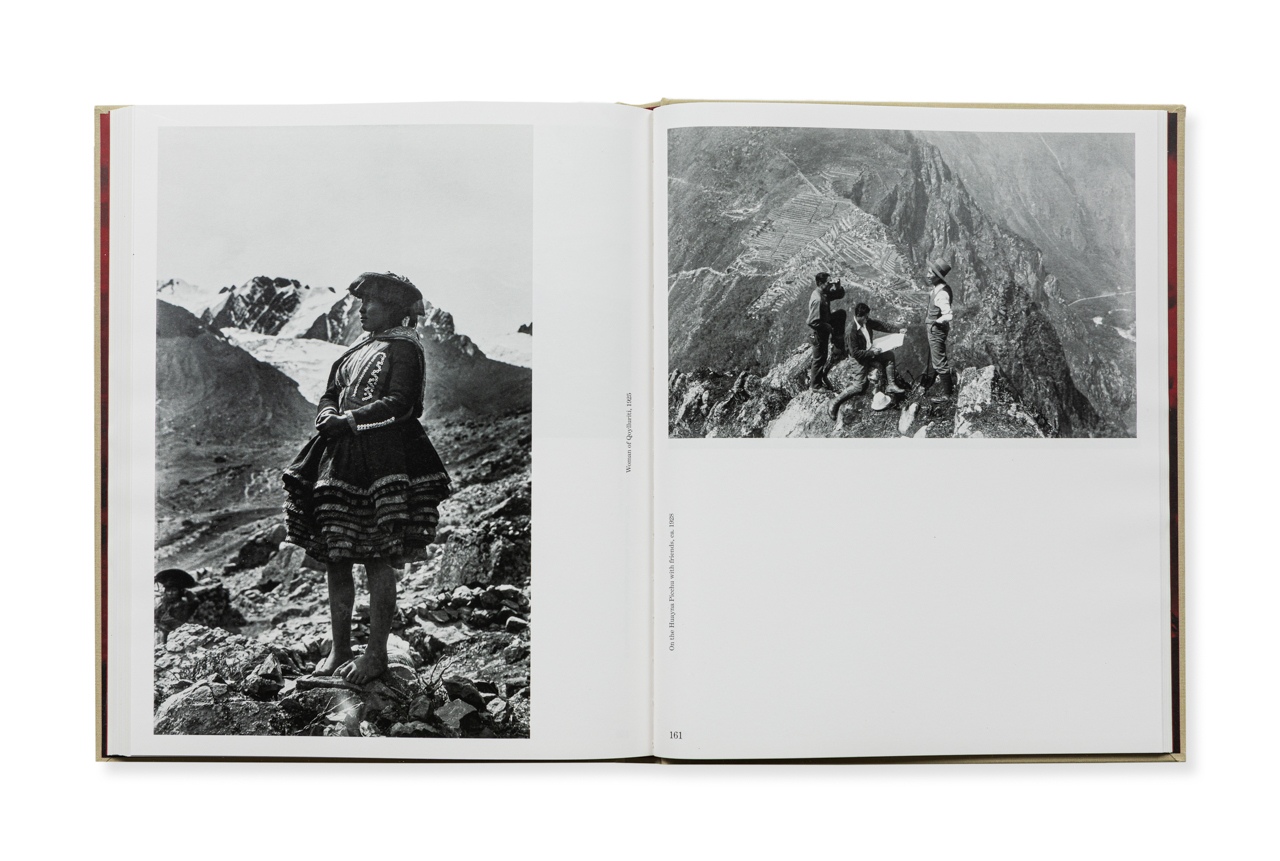
This publication of the photographs by Martín Chambi in the Jan Mulder collection, Lima, is a welcome addition to books dedicated to this Cuzco photographer, who lived from 1891 until 1973. This nicely printed collection of over one hundred photographs is organized in three sections: The first thirty photographs are devoted to Inca archaeological sites, with some twenty focused on Machu Picchu. A second group, also of thirty pictures, is predominately focused on well-selected views of Cuzco. The third sequence is then dedicated to mostly portrait work, with fifteen of these pictures being self-portraits.

Particular attention has been given in the book’s production. Numerous vintage prints are reproduced with the warm tonalities associated with materials used in the early twentieth-century, when most of Chambi’s images were made. This strategy is particularly successful in rendering his large plate views of Machu Picchu and Cuzco. It is to Mr. Mulder’s credit that he has chosen to emphasize these well-chosen vintage works, and to the publisher, Editorial RM, for committing the resources to give readers the pleasure of seeing these early prints in convincingly appropriate tonalities.

Chambi is quoted as being especially concerned with making the legacy of the Inca remains known to the general public through his photographs. This book goes a long way to emphasize his personal, even spiritual, identification with the legacy of Inca culture. But an equally strong case should be made for his commitment to documenting the Quechua culture of which he was a part. He began serious documentation of indigenous life in the early 1920s, supported in part by his role as graphic correspondent for Lima publications la Crónica and Variedades. Over the next thirty years, he continued to photograph native Quechua people, their villages and festivals throughout the Cuzco region. These pictures comprise a unique and irreplaceable archive of Peru’s Quechua culture, and much work still remains to be done in organizing and publishing them. Unfortunately, only a handful of ethnographic views appear in this book, causing a very important aspect of Chambi’s work and personal life to be only passingly referenced.


One unusual aspect of Chambi’s archive featured in this book, however, is a selection of self-portraits that he made throughout his life. It has been known for some time that he took great interest and pride in recording not only his expeditions, exhibitions, studio work and gatherings, but also in portraying his own personality and personal activities. In the book’s final essay, Horacio Fernandez examines Chambi’s self-portraiture within the context of an engaging and well-informed discussion of his life and work. He explains how many of Chambi’s self-portraits were precisely staged and executed, how some required a collaborator, and how some emphasized important aspects of his personality. Fernandez writes, “As we have seen, he synthesized his life story as a pilgrimage in search of Quechua culture in contemporary life, colonial fusions, and Inca ruins. In addition to these themes, there were also the characters, the roles — traveler, explorer, Indian — he played for the camera in other self-portraits.”


Juxtaposed against some telling examples of Chambi’s commercial studio work and some ethnographic pictures, these self-portraits give us a vibrant sense of Chambi himself and his relationship with the world in which he lived and worked. Fernandez also addresses important issues, such as our contemporary impulse to define an artist’s agenda based on only a few selected images. He has picked up on the need to distinguish Chambi’s work from that of his contemporaries, particularly of his colleague Juan Manuel Figueroa Aznar, with whom he worked at Machu Picchu in 1928. Almost all of their pictures published in the 1934 book Cuzco Histórico, for instance, were reproduced without author attribution, resulting in a confusing scenario for understanding each photographer’s work. He also does not shy away from discussing the cultural complexities associated with the now well-known pictures of Cuzco Indigenous subjects by the celebrated New York portraitist and fashion photographer Irving Penn, who worked briefly in a rented Cuzco studio in 1948.


Other texts in this book provide additional, informative back matter, but nearly every text page is marred by a design strategy where a number of the words ending a paragraph are not aligned with the left text margin. The appearance of these words, centered and floating below blocks of text, is both confusing and unattractive. Mulder’s introductory text outlines his growing fascination as a collector with preserving and understanding Chambi’s work and Peru’s photographic legacy. Andres Garay’s assessment of Chambi as “A Photographer Made to the Measure of Cuzco” gives us an authoritative summary of the beginnings of Chambi’s career in Arequipa and his successful early work upon settling in Cuzco. As one of Peru’s leading photo-historians, Garay’s commitment to investigating Chambi’s work and early 20th-century Peruvian photography exemplifies the kind of serious research into the country’s photographic history that has been sorely needed. The contribution by the Ecuadorian writer Francois Laso, “The Silent Progress of Martín Chambi’s Photography”, does not match the qualities of the two other essays, but does provide an appreciative eye regarding different aspects of Chambi’s work as seen from a neighboring Andean country.


The pictures, of course, are the enduring reason for this publication, and the layout and tonal quality of the prints will hold attention over many viewings. In particular, the four-page fold-out of Chambi’s stunning panorama of Machu Picchu, made circa 1940 with two joined 18 x 24 cm glass plates, is especially impressive, and even though cropped slightly at the top of the image, is a remarkable, unprecedented achievement in the publication of Chambi’s work.

Purchase Book

Read More Book Reviews


©Krista Elrick
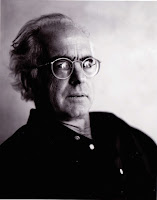
Edward Ranney visited Peru in 1961 and returned on a Fulbright Fellowship in 1964-65 to study literature and anthropology. Entranced by the landscapes and archaeological sites he saw, he exchanged his academic studies for photography and has returned to photograph in Peru for over 60 years. His exquisite large format photographs of both famous and little-known Inca sites, earlier Chimú architecture, and the mysterious Nazca Lines evoke a sense of beauty and fresh awareness of time.

photo-eye Gallery LOCAL EIGHT: Jamey Stillings & Edward Ranney Jamey Stillings and Edward Ranney's images in LOCAL EIGHT both prominently feature New Mexico as a subject, but with exceedingly different intent, experience, and aesthetics. We reached out to Stillings and Ranney for some insight and information about their photographs and we're pleased to share their thoughts with you here. LOCAL EIGHT is on view through this Saturday, April 22nd.


photo-eye Gallery's LOCAL EIGHT is a diverse exhibition featuring work from represented artists who live in northern New Mexico. Jamey Stillings and Edward Ranney's images in LOCAL EIGHT both prominently feature New Mexico as a subject, but with exceedingly different intent, experience, and aesthetics. We reached out to Stillings and Ranney for some insight and information about their photographs and we're pleased to share their thoughts with you here.  LOCAL EIGHT is on view through this Saturday, April 22nd.

Jamey Stillings
© Jamey Stillings – #10183, 9 September 2015, Bisti Badlands, New Mexico 

"Since 2010, when I first photographed over Ivanpah Solar in the Mojave Desert of California, I have been working on a long-term project, CHANGING PERSPECTIVES, about renewable energy development. As this project gradually builds into a global project, I also want to document energy development closer to home in New Mexico.

The San Juan Basin of New Mexico is a region of incredible beauty and geologic diversity. The ancestral Pueblo peoples, who lived in and around Chaco Canyon and throughout the Basin from around 850 to 1250 A.D., represent an important example of a highly developed native culture in North America prior to European contact. The San Juan Basin is also a region with significant fossil fuel resources in the form of coal, petroleum and natural gas that have been tapped from the 1920's to the present.

© Jamey Stillings – #10292, 9 September 2015, Bisti Badlands, New Mexico 
© Jamey Stillings – #11071, 9 September 2015, Chaco Canyon, New Mexico 
As might be expected, the area's natural beauty, the livelihood of native and non-native peoples, and invaluable anthropological sites compete with our contemporary culture's thirst for energy. Energy exploration, mining, and drilling continue to encroach on limited water resources, scar the land, disrupt its natural beauty, and impact the region's people in complex ways, both positive and negative.

The work I shot over the San Juan Basin looked at the area's diversity from coal-fired power plants west of Farmington, to oil and natural gas exploration around Navajo Lake, to the protected lands of Chaco Culture National Historical Park and the Bisti/De-Na-Zin Wilderness.

This group of four images selected for this exhibition shares the natural beauty of mystique of Chaco Canyon and the Bisti Badlands. While you may not have the opportunity to experience these incredible sites from the air, I hope you will make the point of visiting them and savoring their natural beauty on the ground."

–– Jamey Stillings


Edward Ranney
© Edward Ranney – Chaquaco, NM 1973–2017
"I was intrigued to learn recently, when asked to make some comments regarding the four photographs I had chosen to exhibit in photo-eye gallery’s recent show called “Local Eight”, that the pictures resonated, surprisingly, with a preoccupation of Dorothea Lange. Invited in 1957, toward the end of her working career, to teach a course at the California School of Fine Arts (now the San Francisco Art Institute), she often asked her students to make photographs in response to the question, “Where do I live?”.  Her interest was not to have her students make portraits, or depict human interaction, but to photograph the “most meaningful and personal place” of their environment, and in doing so to look inward, not away from themselves.

© Edward Ranney – Chaquaco, NM 1973–2017

        Beginning in 1973, my wife and I settled at a rural homestead south of Santa Fe known as Chaquaco, previously occupied by cattle ranchers and earlier settlers who had raised sheep. While we raised our three daughters there, I photographed our life in this isolated setting, recording changes in the surrounding landscape and subtle nuances of light around the house, in the process becoming adept at using the large format camera in a way that has informed my work at ancient sites of the Andes. The pictures run the gamut from some surprising successes to many of inconsequence. But at their best, they correspond to a comment recollected by one of Lange’s students, as published by Milton Meltzer in his biography of Dorothea Lange." – Edward Ranney

        “We ought to know beyond a doubt that the things we look at in these pictures are the most important things in the world, that to the photographer this desk, this garden, is home. And by the time we have looked at all these pictures, we ought to feel that our own homes, our own hearts - by the view we have been given of the hearts of others - are not what they were when we began to look.” 
– Nancy Walker Katz As quoted in Dorothea Lange, A Photographer’s Life, by Milton Meltzer, pg 305, Farrar, Straus, Giroux, NY, 1978


For more information, and to purchase prints please contact photo-eye Gallery Staff at 505-988-5152 x 202 or gallery@photoeye.com.

LOCAL EIGHT is on view through this Saturday, April 22nd at photo-eye Gallery.

photo-eye Gallery From Local Eight: Works by Steve Fitch and Edward Ranney Represented artists Steve Fitch and Edward Ranney share insights about their process as well as some behind-the-photo stories for two works included in photo-eye Gallery's group exhibition LOCAL EIGHT – on view at photo-eye Gallery through Saturday, April 22nd.


photo-eye Gallery's current exhibition LOCAL EIGHT features a diverse selection of works from a passionate community of represented artists living in Nothern New Mexico. Even though Steve Fitch and Edward Ranney, two of the eight photographers featured in LOCAL EIGHT, both create anthropologically-based landscape images using large-format cameras their fundamentals, intentions, and experience are wildly different. 

Ranney's images are distanced and lyrical observations primarily focused around humanity's impact on the natural world, while Fitch trains his keen and detailed eye on the eccentricities within an environment people make for themselves. Both sets of prints are beautiful and fascinating. photo-eye Gallery is excited to share insights from both Ranney and Fitch about their process as well as some behind-the-photo information for a couple of the works included in LOCAL EIGHT – on view at photo-eye Gallery through Saturday, April 22nd.

STEVE FITCH

Royal Motel, Highway 66, Elk City, Oklahoma, 1973 – © Steve Fitch
"In 1972 after I had been making pictures along the highway for about a year I reflected upon all the pictures that I had made so far and realized that something was missing. I had photographed tourists, truck stops, motels, billboards, truck drivers and waitresses, snake-pits and dinosaurs but some crucial aspect of the American highway was missing. It dawned on me that I needed to make some photographs at night. So much of the experience of traveling our highways had to do with driving at night, listening to funky AM radio stations and pulling into towns that you could see coming twenty miles away because of all the neon. So, on the next highway trip, I decided to try making some photographs at night—something that I was not even sure was possible. In Deadwood, South Dakota I spotted a homely little motel at dusk, with a row of bare light bulbs and a neon sign. Through the window, I could see a neon-rimmed clock. Over the next hour, as it got dark, I shot a roll and a half of 120 film, bracketing my exposures. Two weeks later, back in Berkeley, I developed the film and was excited. The photographs of that motel looked great! I picked one to print and it is in Diesels and Dinosaurs. I love the quality of light at dusk and in this photograph, the clock visible through the window tells me what time the photograph was made (8:20), and the second hand is blurred for about a second so it also tells me how long the exposure was. Ever since I have been very fond of photographs with clocks in them!"
– Steve Fitch


EDWARD RANNEY

Wastwater from Whinn Rigg, Cumbria, England, 1981 – © Edward Ranney

"Northern England, of course, is an entirely different world from Peru’s desert, and I made the picture of Wastwater over 20 years earlier than the desert picture. Nevertheless, the same outlook regarding vantage point is relevant, especially in an area where quickly changing weather can give one an unexpected insight at a particular spot, or render a successful picture impossible. I considered rather carefully the conditions that would keep me from getting drenched by rain as I hiked up the area near Scafell Pikes and Great Gable in the western sector of the Lake District and found that by prowling around the cliff above Wastwater, there were hints of light conditions and vantage points that might give me something special. It took some time, but the structure for the image gradually developed and finally became clear from a certain spot, much as a drawing might develop as one sketches in the landscape. In addition, I saw the shapes of the fields below to be of some importance, along with the role the elegant little house plays in the picture. Different elements can play integral parts in a successful landscape, but overall what we’re after, I suppose, is a view that can help us discover what Robert Adams suggests is the 'significance of a place.' Hopefully, that is open to as many interpretations as there are viewers of the picture."
—Edward Ranney

Read Lucas Shaffer's 2014 interview with Edward Ranney
Purchase Books by Edward Ranney
View LOCAL EIGHT


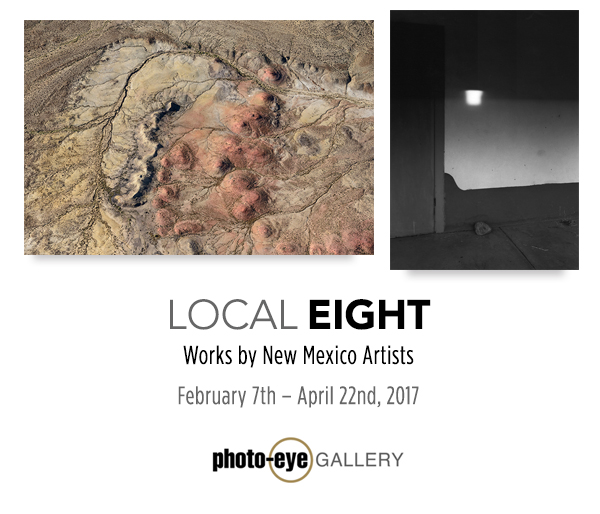
LOCAL EIGHT: Works by New Mexico Artists
On view through Saturday, April 22nd

For more information, and to purchase prints, please contact Gallery staff at 505-988-5152 x 202

About LOCAL EIGHT:
Northern New Mexico and Santa Fe is home to a vast, varied and thriving artist community. Local Eight is a group show focused on the diversity of style represented by eight area photographers exhibiting wide-ranging conceptual and material practices.

The artist excerpts from this post were originally authored by photo-eye Gallery as promotional content during solo exhibitions for Fitch and Ranney.

photo-eye Gallery Local Eight: Works by New Mexico Artists - On View Feb. 7th – April 22nd photo-eye Gallery is pleased to announce Local Eight a group exhibition of photographs featuring eight represented artists from Santa Fe and Northern New Mexico. On view at photo-eye Gallery beginning Tuesday, February 7th, an Opening and Artist Reception will take place on Friday, February 24th from 5 – 7 PM in correspondence with the Railyard Art District’s Last Friday Artwalk.


LOCAL EIGHT
Works by New Mexico Artists

ON VIEW:
February 7th – April 22nd, 2017
OPENING & ARTIST RECEPTION:
Friday, February 24th 5–7pm

photo-eye Gallery is pleased to announce Local Eight a group exhibition of photographs featuring eight represented artists from Santa Fe and Northern New Mexico. On view at photo-eye Gallery beginning Tuesday, February 7th, an Opening and Artist Reception will take place on Friday, February 24th from 5 – 7 PM in correspondence with the Railyard Art District’s Last Friday Artwalk.

Northern New Mexico and Santa Fe is home to a vast, varied and thriving artist community. Local Eight’s collection of works showcases not only the diversity of style within the area’s photographic community but exhibits the wide-ranging conceptual and material practices represented by photo-eye’s artists.

Subject matter in the exhibition runs the gamut, covering topics such as climate change, dreams, American highway culture, and landscape all while expressing these ideas utilizing an impressive array of photographic materials, including the albumen print, platinum, traditional silver gelatin, as well as the ubiquitous archival pigment print.


ABOUT THE ARTISTS

Motel, Highway 66, Holbrook, Arizona, 1973 – © Steve Fitch
•      Steve Fitch — Pena Blanca based photographer focusing on American Highway Vernacular and topologies including the American Motel, the Drive-In theater, and Signal Towers. Most recently Fitch released the monograph American Motel Signs published by The Velvet Cell, London.


Bottle with Sharon's Seeds, 1998 – © James Pitts
•      James Pitts — Santa Fe-based studio photographer creating delicate and expressive floral still-lifes. Pitts primary focus for 20 years was creating hand coated platinum prints from large format negatives.

View Additional Work by James Pitts

Read More About James Pitts

View Arizona Pitt's self-published 2015 monograph


River Lune, Cumbria, England, 1981 – © Edward Ranney 
•      Edward Ranney — Santa Fe-based internationally recognized photographer working with the natural and man-altered landscape for over forty years. Ranney's latest exhibition with photo-eye, Two Landscapes: England and Peru, opened in the Fall of 2015 and showcased work never before seen in the United States. A few of those works, including River Lune, Cumbria, England pictured above, are featured in Local Eight.

View More Work by Edward Ranney

Read More About Edward Ranney

Purchase Books by Edward Ranney


#10292, 9 September 2015, Bisti Badlands, New Mexico – © Jamey Stillings
•      Jamey Stillings — Santa Fe-based landscape photographer working with issues of sustainability and a special focus on renewable energy development and water. San Juan Basin aerials are included in the exhibition. Stilling's 2015 monograph, The Evolution of Ivanpah Solar published by Steidl, received numerous Book of the Year nominations and Stillings himself received the 2016 International Photography Award for Book Photographer of the Year.


Purchase Books by Jamey Stillings


Cloud No. 3655/3652 (diptych) – © Laurie Tümer
•      Laurie Tümer – Espanola-based photographer who’s ongoing cloud series is a healing meditation on beauty and sublimity that lessens everyday ills by looking outward. Tümer recently self-published a monograph of the series, aptly titled Clouds, and copies are available to order during the exhibition.


Cross-Pollination, 1992 – © Jo Whaley
•      Jo Whaley – Santa Fe-based photographer Jo Whaley’s series Natura Morta draws from 17th Century Vanitas still-lifes to craft scenes that expose ironies between urban culture and nature.


Purchase Books by Jo Whaley


The Glass Wall #12, Santa Fe, NM, 2010 – © Brad Wilson
•      Brad Wilson – Santa Fe-Based, Brad Wilson is most well known for his series AFFINITY photo-eye Gallery's most recent exhibition. For Local Eight, Wilson showcases work from two earlier projects, The Glass Wall, and Relics.

View Additional Work by Brad Wilson

Read More about Brad Wilson

Purchase Wild Life by Brad Wilson


Fledgling, 2016 – ©  Zoë Zimmerman
•      Zoë Zimmerman — Taos-based studio photographer utilizing metaphor to subvert the Everyday and provoke the viewer’s subconscious. In 2015, Zimmerman released her first monograph, Of Men: Strength and Vulnerability, a three-part series examining fraternal intimacy and physicality among men. Images in Local Eight include new work from Zoë's Her Dream series.


Local Eight is currently on view at photo-eye Gallery and runs through April 22nd, 2017.
For more information and to purchase prints please contact Gallery Staff at 505.988.5152 x 202 or gallery@photoeye.com.


photo-eye Gallery On View at photo-eye Gallery: Mitch Dobrowner & Edward Ranney Edward Ranney and Mitch Dobrowner discuss their photographs currently on view at photo-eye Gallery.

Edward Ranney, Star Axis, NM, 1-7-83 and
Star Axis, NM, Looking North 1-6-83

Toned Silver-Gelatin print, 14"x9" $4,000
Conventional Entropy, featuring photographs by Kevin O'Connell, runs at photo-eye Gallery through April 5, 2014. View our video interview with Kevin O'Connell here. In addition to this exhibition, photo-eye Gallery is also showing a selection of work from our represented artists including Mitch Dobrowner and Edward Ranney, whose works in the show are featured in New Mexico Magazine's January 2014 issue, which can be read online here and here. We asked Ranney and Dobrowner to discuss their photographs currently on view in the gallery.
Currently on Display is our on-going seven-part feature investigating the individual works that are included in the show currently on display at photo-eye Gallery. These artist features include the images selected for this exhibition as well as the artists' thoughts and inspirations behind the individual image or images.

The featured images this week are: Edward Ranney’s Star Axis, NM, 2-25-89, 1989 and The Bridge at Hoover Dam, Nevada Pier Construction, November 24, 2009 by Jamey Stillings

Edward Ranney
Star Axis, NM, 2-25-89, 1989 by Edward Ranney
"Over the years as I have photographed the growth of the earth sculpture Star Axis, I have periodically made pictures from this vantage point, looking north up the slot of what its creator, Charles Ross, has called the Star Tunnel. Now, some 22 years later, the lower Tunnel is completed, and Ross has nearly completed the Solar Pyramid, which encloses the upper tunnel and stairway oriented to the North Star. As with a number of the approximately 1,500 large format pictures I have made at Star Axis since 1979, this photograph addresses the complexities of scale that are now an integral part of the site. Monumental, yet still often intimate in feeling, the sense of space which one experiences here seems to constantly change, depending on where one stands, and how the weather, and in particular, the sun, delineate form and space. Both expansive and contained, with ancient as well as contemporary overtones, Star Axis has gradually grown out of its own ruin, remaining an enigma waiting to reveal itself as a sculpture to observe the stars. I have in the past described the process of photographing construction and change at the site as a kind of archaeology in reverse, an excavation of the present intended to give insights to the future as well as to the past. The cultural historian JB Jackson once commented that certain qualities of the New Mexico landscape suggest that it gives us another way of measuring time - that '...even the newest of man-made structures are contemporary with the primeval.' The process of chronicling the changing light and space at Star Axis gives this insight ongoing relevance." –Edward Ranney

See more images from Edward Ranney here.


Jamey Stillings
The Bridge at Hoover Dam, Nevada Pier Construction, November 24, 2009 by Jamey Stillings
"During November 2009, I called the Federal Highway Administration, watched construction web cams and called my friend at the dam. I wanted to photograph installation of the bridge's final column segments. With six segments remaining on the final two columns, I arrived. Beginning early in the morning and throughout the day, I photographed from various angles as new segments were added. I positioned myself near the Colorado River on the Arizona side of the dam's powerhouse to follow the final moves. Mid-afternoon the action stopped and I made a phone call. 'Are you going to fly the final segment today?' I asked. 'We are waiting on a few parts!' was the reply. So I followed the evening light down from a wonderful and dramatic angle, the Las Vegas metro area lighting the sky and the bridge's construction lighting providing the rest." –Jamey Stillings

See more images from Jamey Stillings here.


Part seven concludes this Currently on Display blog series. Thank you for following the series and I hope that it helped you obtain a more personal understanding of the images. Though this exhibition is coming to an end, you can always view the work on our website or, if you are in Santa Fe, stop by the galley and I will be more then happy to pull the prints from our flat files.

I am excited to announce that Friday April 8th we are opening a solo exhibition of Jamey Stillings' photographs of The Bridge at Hoover Dam with an artist reception from 4-7pm. The exhibition runs through May 20th. We had a smaller exhibition of Stillings' work in October of 2009, when Jamey had just started his project. This upcoming exhibition covers the last 30 months of the construction up to completion. The work that we will be showing is a selection from a larger exhibit that is scheduled to travel for the next two years. The next stop is the Phoenix Art Museum.

Please contact me if you would like additional information or would like to receive email updates about Edward Ranney, Jamey Stillings or any of the artists that we represent.

Anne Kelly, Associate Director photo-eye Gallery


Read the first six posts:
PART ONE - Jo Whaley and David Trautrimas
PART TWO - Tom Chambers and Laurie Tümer
PART THREE - Hiroshi Watanabe, Michael Levin and Julie Blackmon
PART FOUR –Zöe Zimmerman, James Pitts and Kevin O’Connell
PART FIVE- Nick Brandt and Raymond Meeks
PART SIX- Jock Sturges, Mark Klett and Don Hong-Oai
Summer may be winding down, but photo-eye’s artists are busier than ever… Check out some of the things they have been up to:


Tom Chambers’ Night Light is featured on the cover of the November issue of Color magazine. With almost 500 entries and 9,000 images submitted, Color chose to give Chambers the Award of Excellence. Color is available at newsagents now.


Hiroshi Watanabe’s portfolio Suo Sarumawashi has been prominently displayed at Promenades Photographiques in Vendome, France. His image Aikichi 2, Suo Sarumawashi was chosen for the official festival poster.


For those in Santa Fe, be sure to pick up your copy of this week’s (August 25-31) Santa Fe Reporter and check out Rani Molla’s review of PE’s summer exhibition: Elemental. Of the show, she writes: “Elemental’s three complementary photographers—Chris McCaw, Mitch Dobrowner, and Edward Ranney—all focus on nature as their subject, but without an overt environmental message. A show that invokes earth, fire, wind, water and heart can’t stray too far from the Planeteers’ territory – or from fear and love.”