PHOTOBOOK REVIEWS, INTERVIEWS AND WRITE-UPS
ALONG WITH THE LATEST PHOTO-EYE NEWS

Social Media

Showing posts with label Witty Books. Show all posts
Book Review Box of Illusions Photographs by Re’gis de Gasperi Reviewed by Meggan Gould "Photographic series about hands were added to my list of (playfully) banned subjects a number of years ago, where they would join cats and fire hydrants as too cliché-prone, and thus best avoided..."

Box of IllusionsBy Re’gis de Gasperi.
https://www.photoeye.com/bookstore/citation.cfm?catalog=ZJ973
Box of Illusions
Photographs by Re’gis de Gasperi

Witty Books, Italy, 2022. 128 pp., 7¾x9¾".

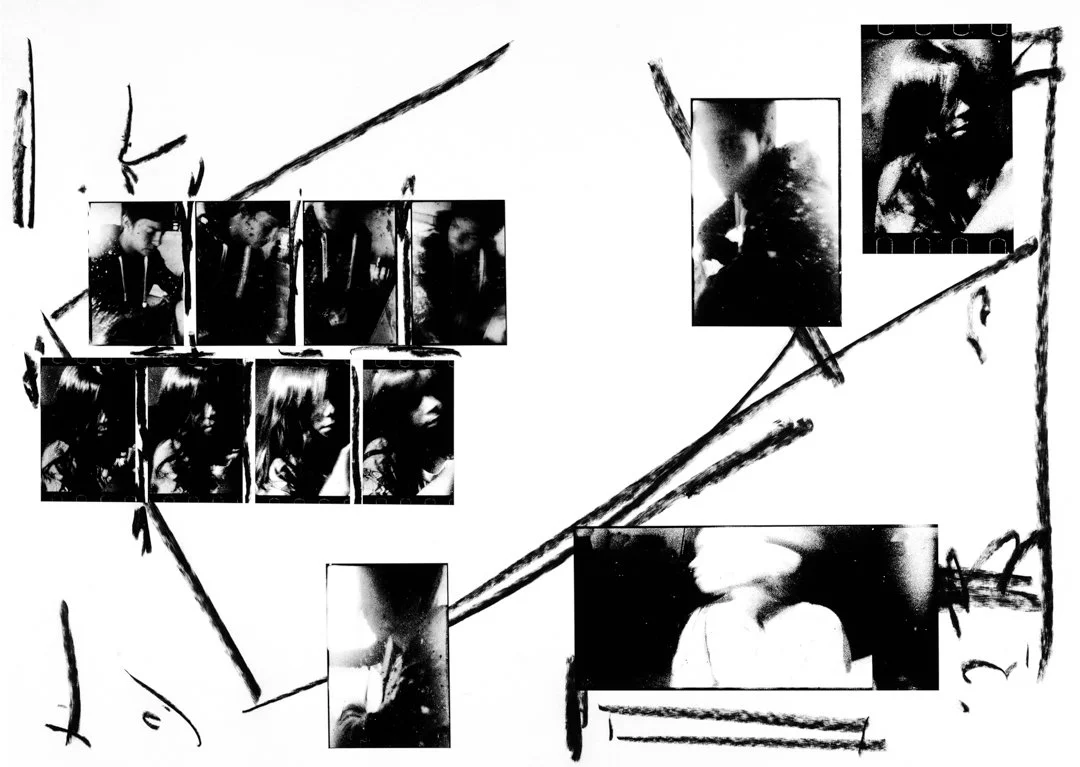
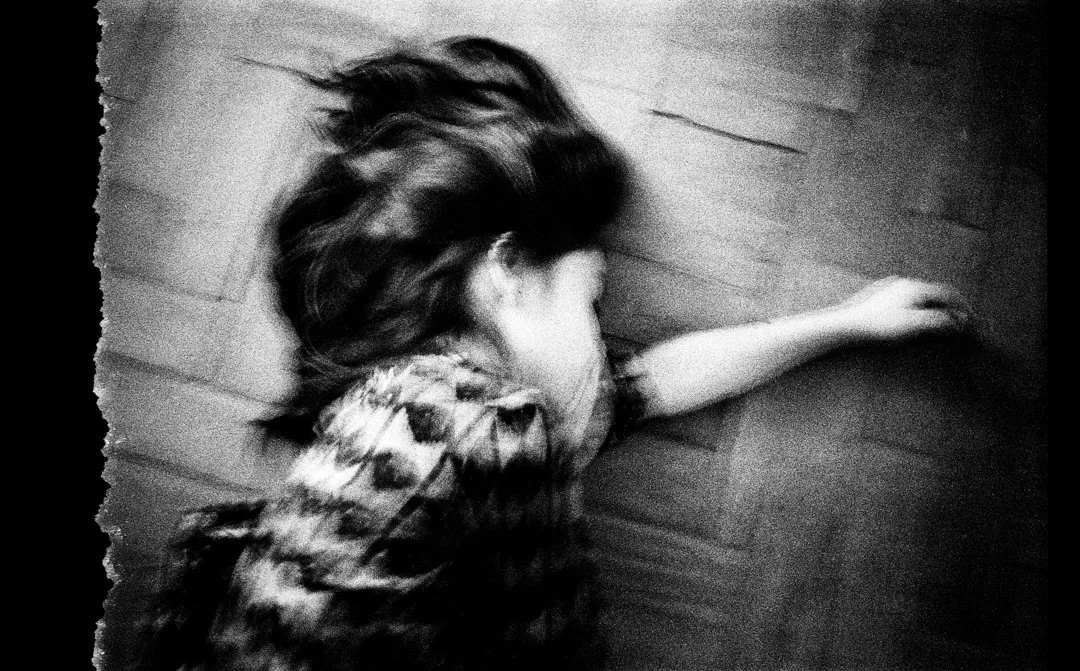
I pick up Re’gis de Gasperi’s Box of Illusions at photo-eye two days before I turn 46 (a detail with only minimal interest here). The book is narrow, elegant, softbound, dark. I am intrigued by the energy emanating from the images on my first flip through: a simultaneous frenzy and calm. Silver grains, unapologetic and brash, sometimes cohere into a recognizable form, other times blur into chiaroscuro abstractions.

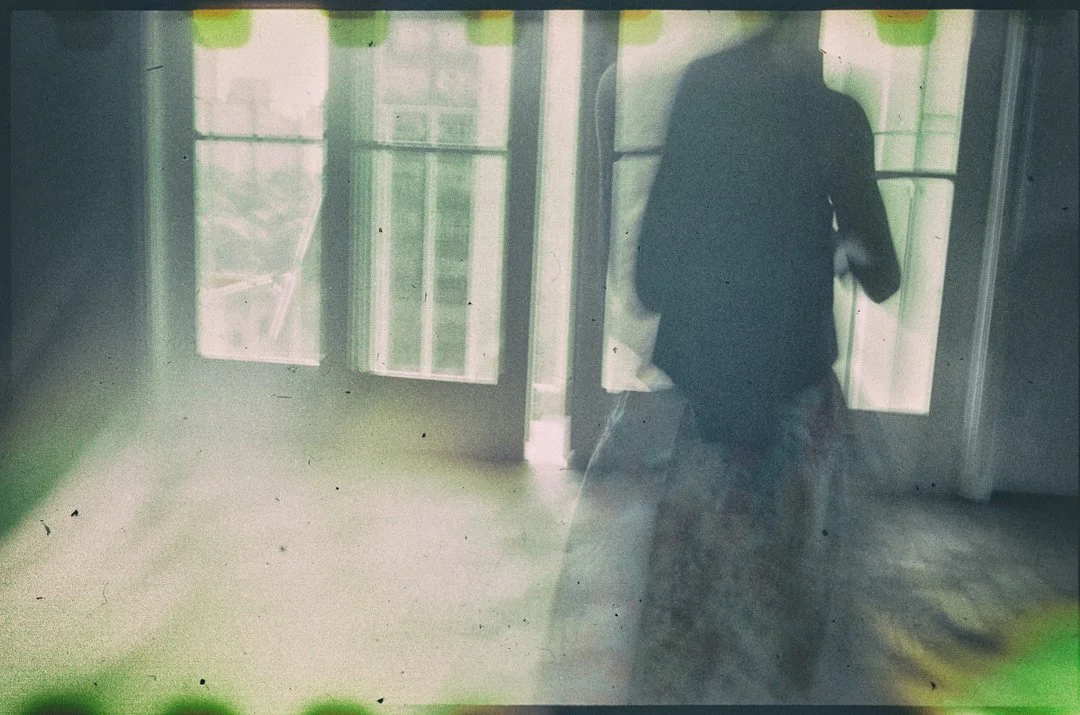
Heat seeps from the images. A child rolls on the floor. Elevated temperatures emanate from dancing bodies, flailing bodies, sun streaming in through windows. I feel the windows as exits and prisons both. Precision is refused; all is blur, blear, bright murk.

A visually subtle, but very precise insertion of language interrupts the initial grainy reverie with an unmistakable date, timestamped on the side of a page: 16.3.2020. Ah, that feeling.

Pandemic parameters arise to surround the images: confinement, the all-too-real limits of a physical space and of our confinement companions. Boredom and the occasional unfocused joy. Moments of beauty and clarity amidst the granular tedium. It feels familiar, how time and space expanded and contracted in unpredictable ways. I note that this quarantine reality feels significantly sexier than my own quarantine reality. Sequences of still photographs splay across the book in multiple configurations, the pacing appropriately irregular. Sometimes we are grounded in the space of a few seconds with multiple feverish frames, other times we are frozen in the slow-motion blur of an extended shutter moment. Charcoal markings show the artist’s hand, holding sequences together or teasing them apart.

I finally turn to the essay, entitled Forty Six (46). In it, the photographer ruminates on the age itself (I indulge in the poignancy of our age overlap), on family, confinement, joy, floating, and dreams. The illusions of middle age are confined (boxed), illusions. The sentence I keep returning to, absurdly: “Lucid until then, the narrator bird flapped its well-structured wings and left the scene.”

The artist’s presence, as editor, voyeur and participant is omnipresent. I try to parse a page of scrawled text, snippets that I want to render poetic, but maybe it’s a grocery list. Annotations, both legible and illegible, in multiple fonts, harsh charcoal drawings, and interspersed English and Portuguese, undergird the sustained loving chaos. There is a sense of inscrutability that feels inevitable; surely no one else could possibly imagine how to make sense of our own individual muddles through this insane pandemic context. De Gasperi bares his own box, of both illusions and delusions, and in it I find comfort and pleasure. I leave the book feeling warmed from the Brazilian sun and chaos, though vaguely wishing that the narrator bird would flap back in to guide my own 46th year.

Purchase Book

Read More Book Reviews


Meggan Gould is an artist living and working outside of Albuquerque, New Mexico, where she is an Associate Professor of Art at the University of New Mexico. She is a graduate of the University of North Carolina at Chapel Hill,, the SALT Institute for Documentary Studies, and Speos (Paris Photographic Institute), where she finally began her studies in photography. She received an MFA in photography from the University of Massachusetts — Dartmouth. She recently wrote a book, Sorry, No Pictures, about her own relationship to photography.
Book Review How to Raise a Hand Photographs by Angelo Vignali Reviewed by Meggan Gould "Photographic series about hands were added to my list of (playfully) banned subjects a number of years ago, where they would join cats and fire hydrants as too cliché-prone, and thus best avoided..."

How to Raise a HandBy Angelo Vignali
https://www.photoeye.com/bookstore/citation.cfm?catalog=ZK118
How to Raise a Hand
Photographs by Angelo Vignali

Witty Books, Italy, 2022. 128 pp., 7¾x9¾".

Photographic series about hands were added to my list of (playfully) banned subjects a number of years ago, where they would join cats and fire hydrants as too cliché-prone, and thus best avoided. A reliable trope of interest among undergraduate students is the flesh of hands, usually tender youthfulness countered by images showing what other flesh has endured over various spans of manual labor or sun.

Clearly, my presumption of inevitable cliché was a mistake. Angelo Vignali’s How to Raise a Hand is a book of fingers and hands, and I could not love it more.

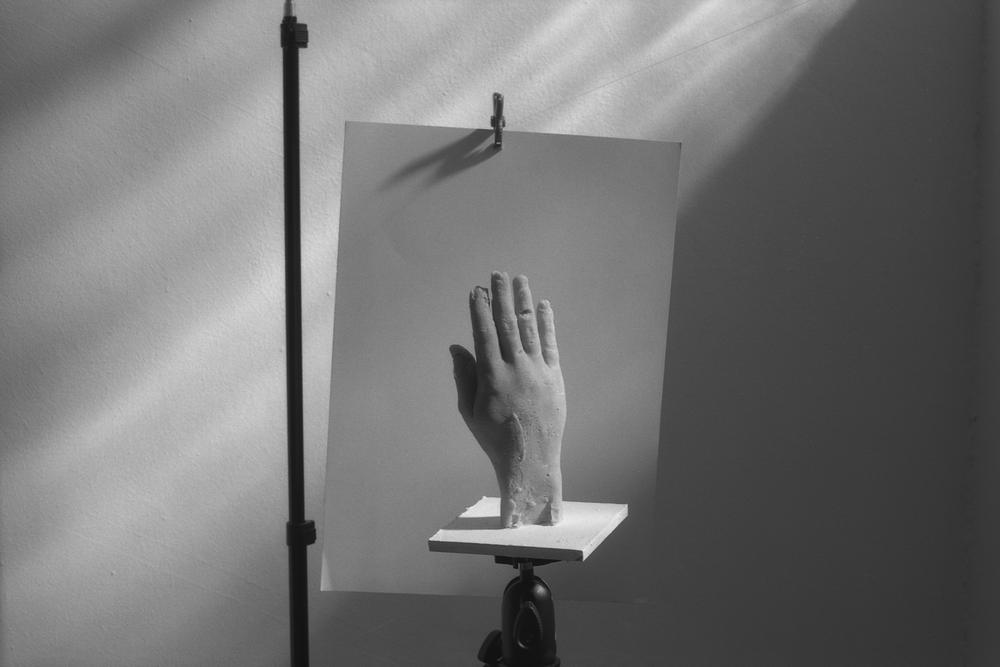
The book is divided into six chapters that are bookended by a prologue and an epilogue. Each chapter is photographed within the space of the artist’s sparse studio, and each is a tight edit on a singular motif. In one, we observe photographs of sculptures representing fingers, in another, improbably large photographs of fingers spill out of a box. We see these photographs pinned to a clothesline, absurd giant fingers dangling in space. We see suit jackets unpacked from bags to be hung neatly on a coatrack, and then joining the fingers, floating on almost invisible line. The jackets lose the mold of the human body they once shielded, as the fingers did through the act of being rendered two-dimensional, flat — armatures of flesh rendered futile.


Chapter IV arrests me, disarms me. No pun intended. The individually printed images of disembodied fingers are montaged together, on page after page, into a pointed cacophony of digits. No pun intended, again. Each is cut out with no apparent underlying logic; some follow the contours of hooked fingers, others are typologically rectangular. The only hints of color in the book lie within this chapter: a few brief moments of yellowing paper hint at black-and-white processing stains, two magenta fingers jolt, tease me. Once the alarm of finger isolation (dissection?) passes, I realize that each finger is displayed by poking upward through a cardboard hole, pushed up and isolated against a sterile background. Some shyly lurk at the hole’s edge, others flop, flaccid, onto their examining table.

Each chapter reads as a delicate study of a specific object, or set of objects, in this quiet studio. Subtle shifts of the camera’s vantage point underline the sense of a sustained study; a redundancy holds us, grounds us, in each chapter’s focused vision. The black-and-white captures are somber, gray, and low key — serious with a tinge of unshakeable melancholy. Three dimensional sculptures, a mirror, three dimensional flesh and blood, all flattened with extraordinary care into a photograph’s two dimensions. The unspoken fourth dimension feels like grief, or yearning, or their potent combination: an attempt (and inability) to reach across time to touch someone.

Benedetta Casagrande’s essay, “Molting, Molding, Mourning,” which closes the book, is a poignant meditation on photographic transformation and material. It confirms, with broad strokes, my initial suspicions as to the underlying loss at stake in the artist’s handiwork (pun, clearly intended). She writes: “Infamously mortifying in its precision, photographs proffer something akin to an insect’s molt: the shell of something that moments before was alive, and that, through shedding, suddenly becomes inanimate.” As the best essays do, it pulls everything together with succinct precision, offering enough of an explanation of the artist’s journey within the book to make me return to the images anew. In this understated and astonishing visual contemplation, there is an evocative mingling of joy and grief as we molt, we mold, and we mourn.

Purchase Book

Read More Book Reviews


Meggan Gould is an artist living and working outside of Albuquerque, New Mexico, where she is an Associate Professor of Art at the University of New Mexico. She is a graduate of the University of North Carolina at Chapel Hill,, the SALT Institute for Documentary Studies, and Speos (Paris Photographic Institute), where she finally began her studies in photography. She received an MFA in photography from the University of Massachusetts — Dartmouth. She recently wrote a book, Sorry, No Pictures, about her own relationship to photography.

Book Review The Missing Eye Photographs by Mattia Parodi & Piergiorgio Sorgetti Reviewed by Christopher J Johnson "It’s that time of year, when I search my mind – not my shelves – for the best books of the year. Why my mind, because books not shelved in my memory do not qualify. This is a difficult task, at once I must admit that what speaks to me grows like vines within the dark of my brainpan, while the same work may fail to sprout in others. There is no objective Good or Great or No-Brainer when it comes to art. I am not a Humian (David Hume); I don’t believe that taste is a thing one can cultivate to be correct — that kind of elitism appalls me..."
https://www.photoeye.com/bookstore/citation.cfm?catalog=ZJ730
The Missing Eye
Photographs by Mattia Parodi & Piergiorgio Sorgetti

Witty Books, 2021. 136 pp., 9¾x12¼".

It’s that time of year, when I search my mind — not my shelves — for the best books of the year. Why my mind, because books not shelved in my memory do not qualify.

This is a difficult task, at once I must admit that what speaks to me grows like vines within the dark of my brainpan, while the same work may fail to sprout in others. There is no objective Good or Great or No-Brainer when it comes to art. I am not a Humian (David Hume); I don’t believe that taste is a thing one can cultivate to be correct — that kind of elitism appalls me.

What is good to an individual falls like a pachinko ball through the pegs of our past experiences before slotting into the stillness of an ‘ah ha’ moment – this moment creates a spark that doesn’t just ignite in us, but it expands us toward others.

A great book, to my mind, must meet the criteria of any book; the two most fundamental of those criteria for me — does the work increase my capacity to love? Does it make me more humane and understanding toward others? There is a final criterion, the most difficult of all, does the work speak to the solitude of my singular experience of thought; that impenetrably dense darkness that transubstantiates into a light by which I can see more of the world and from which the world can see more of me.


So, I must pick a book from these living shelves of my continuous thoughts. This year, Raymond Molinar’s Polaroids increased my capacity to love, so did Fukase’s Sasuke and Meeks’ Somersault. How To Look Natural in Photos increased my sense of others, what they have suffered and what we must safeguard against to prevent such suffering in the future. These were Great Books all. But, very little has spoken to that solitary figure which is the thinker within me. There is one rather unassuming book, however, that increased the shape of me; The Missing Eye by Mattia Parodi & Piergiorgio Sorgetti from Witty Books. Its premise, “Recent studies published by the Cognitive Brain Research have demonstrated, using instruments that measure dream activity, that people blind since birth dream in images.”

I dream very little, though people tell me this isn’t true — that it can’t be. It may be better to say that I remember so few dreams, that those that do lodge themselves in my memory are enormous events in my stream of consciousness; sequences that cannot dissolve. 

The Missing Eye effortlessly creates the sense of a dream through its sequence of seemingly unrelated, though logically linked images. I am reminded of one of Andre Breton’s prose poems, it takes on the animus of a dream, “I took the escalator up to the meadow,” he tells us, among other things. Dreams work from a logic that is obscure to us, it’s 10% surface, 90% subconscious: the icebergs of our cerebral experience. Slideshows in which everything works by a logic of its own and which seems more natural, even, than the progression of our waking lives.

The Missing Eye screams to me, it screams in my eyes, but that’s a comfort. It brings back to me my experience of dreaming, as I wake each day blind to my nightly visions.

It also tries to increase our understanding of others, though this might be more problematic because who among those studied to bring us these findings (that the blind dream in images) can confirm this is their experience or anything remotely like it; for that matter who’s to say that any fan video for The Fall’s song Repetition isn’t a perfect stand-in for this possibility — or any number of Tarkovsky’s rolling montages throughout his films.

But, that goes back to the Humian failure. There’s no correct answer, but I’m willing to believe this is a usable approximation — a guide by which we can start a conversation. A way to bridge the gaps between experiences; those of the sighted, and those whose visual darkness is a cacophony of our other senses heightened. No map is perfect, all geography erodes. But this map may get me to the door of another’s mind; even if I need them to provide the final key for me. And, more than anything, I want to have that conversation. I want to increase my shape. I want to know your solitude as well as I know my own, and though I know it’s impossible I will extend to you my hand.

Purchase Book

Read More Book Reviews

Christopher J Johnson is the recipient of The Mountains West Poetry Series first book publication prize (2016). He has written on photobooks since 2012, and has been a bookseller since 2008. He is currently manager of photo-eye Bookstore.