PHOTOBOOK REVIEWS, INTERVIEWS AND WRITE-UPS
ALONG WITH THE LATEST PHOTO-EYE NEWS

Social Media

Showing posts sorted by date for query Light+Metal. Sort by relevance Show all posts
Book Review The Unseen Saul Leiter Photographs by Saul Leiter Reviewed by Blake Andrews “Saul Leiter felt ambivalent about fame during his lifetime, seemingly content to wile away his years in blissful obscurity. But his posthumous legacy has been a much different story..."

The Unseen Saul Leiter By Saul Leiter.
https://www.photoeye.com/bookstore/citation.cfm?catalog=DU392
The Unseen Saul Leiter
Photographs by Saul Leiter

D.A.P., 2022. 160 pp., 75 color illustrations, 8½x11".

Saul Leiter felt ambivalent about fame during his lifetime, seemingly content to wile away his years in blissful obscurity. But his posthumous legacy has been a much different story. The flame of recognition, first kindled in 2006 with his breakout hit Early Color, has become a bonfire in the 16 years since, raging past his 2013 death to establish him in the photo firmament. Various curations have poured forth since. He was the subject of a 2013 documentary biofilm. photo-eye’s site currently lists 17 monographs of his work and a few more about his apartment. All have been gas on the fire for fans and collectors, provoking not just impressions but questions. But who was this singular artist? What makes his pictures so appealing? And have we yet reached a point of Leiter saturation?

Before you answer that last question, you might want to take a look at The Unseen Saul Leiter. His most recent monograph — but almost certainly not the last — collects 76 slide photos from Leiter’s peak shooting years in New York City, 1948-1966. It’s curated by two people who know his work quite well, the wife/husband team of Margit Erb and Michael Parillo. Erb befriended Leiter just out of college in 1996 through her work at Howard Greenberg Gallery. In subsequent years she helped Leiter organize, store, edit and promote his archive before eventually creating The Saul Leiter Foundation to perform those tasks in perpetuity. She is the current foundation director. Parillo is her assistant.


This couple is as familiar with Leiter’s photos as anyone, and they enjoy ready access to them through the Foundation. That said, the back catalog is huge and unwieldy. Even for Erb and Parillo, it houses secrets among the ~60,000 slides in various boxes. Leiter’s life was intertwined with these containers. They lined his living quarters as he scraped together freelance jobs between artistic endeavors. It was hard enough to keep his pictures safely stored out of harm’s way. Organizing them into a book or show took another level of chutzpah, which he did not achieve until his last years. Even then, it was a small dent in the curatorial puzzle.

Leiter’s unfinished business forms the premise of this book. With the help of Elena Skarke, a German student using his archive as PhD material, Erb and Parillo commenced serious crate digging. Previous books had attempted something similar, but this time the focus was on Leiter’s early slides. He shot them mid-century on various film stocks, Ascochrome, Kodachrome or Ektachrome. They were then mounted in metal, plastic or paper carriers, and stuffed into storage with loosely categorized labels. One box was called “Boats New York”. Another was the “Personal Park Series”. There were boxes for “Workers” and “Street” and one suggestively labeled “Mix”, and so on.


These boxes collected in Leiter’s latter years in a smallish apartment/studio in the East Village stuffed to the gills with art, now the home of the SLF. The book brings his physical environment to the reader immediately, with an opening image of a slide projecting pictures against the apartment wall. We then see boxes and rows of old photographs, followed by a view through the window to its interior, and a contents page laid over an architectural diagram of his studio. The message is clear: this is a book rooted in place, and his home is an entry point to his head space. He spent many hours in these environs, and the opening sequence captures something of what it felt like to be there. Viewed now in the pandemic-era of home confinement, they take on added urgency.

Looking through his tiny digs stuffed with pictures, it must have been quite a chore for Leiter to cart them around Manhattan. He shuffled between living quarters from time to time. He may have discarded other items in the course of these moves, but never his life’s work. They have a very personal character, and Erb asked herself about the propriety of posthumous curation. “I wondered if I was crossing a line…was I meddling?” She and Parillo were on their own. The Unseen Saul Leiter is one of few monographs with no input from Leiter. Its curation might diverge from earlier books but if so, the soul of Leiter remains. Design and edit are subsumed by the power of his pictures.


These take place outside the apartment, of course, on the streets of Manhattan, and they are wonderful. Many photographers have prowled the same grounds, especially during Leiter’s post-war heyday. But his style is distinctive. In fact, Leiter is one of just a handful in history whose New York street work is immediately recognizable in just one or two frames. This might be attributable in part to the tools du jour. Shooting slide film in low light meant open apertures and long exposures, and the singular cast of old chromes colors all of Leiter’s work. But his work possesses a je ne sais quoi that transcends materials.

Reproduced in this handsome book on solid black backgrounds, familiar hallmarks appear in force. Leiter’s shallow depth of field, moody lighting, neon signs and habitual framing through glass or obstacles, his keen nose for serendipity. For a street shooter, he was atypically nonconfrontational. He rarely addressed any subject from a direct frontal vantage. It was always askance, into, adjacent or behind. The cover shot is a prime example, a moving figure shot from distance in dim light, the street lit up by a car’s rear blinker. This picture also captures Leiter’s unusual tendency for verticals, exaggerated to nice effect in the vertical format book. Other pictures range around the city, spanning about twenty years through Manhattan, Harlem, Central Park and the Village. Pedestrians, sedans and street signs pass through various weather. All are reshuffled in the book, seemingly at random, into three new “boxes”. If their curatorial logic isn’t exactly clear, at least they provide nice chapter breaks for essays by Erb and Parillo, in which they discuss the logistical challenges of editing old pictures, Leiter as a color pioneer and production details.


If you’ve browsed or bought previous Leiter monographs, you may be wondering what is new here, and if it’s enough to justify another book. Photographically speaking, this book is more affirmation than expansion. Beyond the fact these are slides, its pictures fit the pre-existing oeuvre seamlessly. There’s nothing here that wouldn’t slot unnoticed into Early Color or Forever Saul Leiter, and Leiter stalwarts will find few new insights. But all of that may well be immaterial. The Unseen Saul Leiter reconfirms — for the umpteenth time? — Leiter’s quiet mastery, and with a photographer of this caliber, that may well be enough. There are 76 new pictures, all well-sifted and considered, with nary a dud in the bunch, and at least a dozen outright bangers. All are previously unseen until now. Their publication is a gift to anyone generally who enjoys strong street work. For Leiter die-hards and completists, it will be required reading.

Purchase Book

Read More Book Reviews


Blake Andrews is a photographer based in Eugene, OR. He writes about photography at blakeandrews.blogspot.com.
photo-eye Gallery The Titans of Salento Jovi Esquivel New Gilded Photographs by Artist Beth Moon

Beth Moon, Nardo II, Pigment on Japanese Gampi & Silver Leaf, 8x10" Image, Paper 15x20", Edition of 15, $1400

For over two decades, Beth Moon has been dedicated to documenting some of the world's oldest and most beautiful trees as an act of preservation, immortalizing these awe-inspiring forms with stunning Platinum prints. 

In 2015, Moon visited ancient Olive Groves in Italy. Many of the trees in these groves have lived for over a thousand years, so it is no surprise that Moon was captivated by their expressive forms and "vacuous trunks as large as caves." The oldest olive tree in Italy is over 3,000 years old, has a trunk that is 40 feet wide, and stands at about 26 feet tall! 

Equipped to handle drought, subzero temperatures, frost, and even fire, olive trees are extraordinarily resilient. Unfortunately in 2013, unknown to farmers for some time, meadow spittlebugs — small insects carrying a bacterium identified as Xylella fastidiosa, were quickly multiplying and infecting each tree they fed on. Since then many olive groves have been ravaged, and in an attempt to contain the virus from spreading into Northern Europe, farmers were ordered to cut down their heritage trees. The result has led to economic catastrophe and heartbreak. It is reported that twenty million trees have been infected to this day. 

Devastated by this news, Moon temporally set the photographs aside. Seven years later, in an attempt to convey the impression of these majestic trees Beth Moon and photo-eye are pleased to release a new portfolio of work entitled Olivi Monumentali del Salento (The Titans of Salento), featuring the ancient olive trees in Italy.

Moon has incarnated the fragility of her subject, using a noble metal as a form of support for a delicate image. This elegant and stunning body of work has been printed onto Japanese Gampi paper, the most luxurious fiber used in making the finest Japanese papers, and is hand-gilded with silver leaf. The process allows for some transparency, allowing the silver leaf to shine, creating a heavenly glow within the image's highlights.

>> View THE TITANS of SALENTO portfolio <<


Beth Moon, Felline, Pigment on Japanese Gampi & Silver Leaf, 8x10" Image, Edition of 15, $1400

"Late one afternoon, a proud farmer welcomes me into his grove with a pot of tea and tablecloth. We sit in the grass under the shade of one of his oldest trees. Dappled light shimmers through silver leaves sparkling like diamonds, and I think, this is what heaven must look like." 
—Beth Moon 

Beth Moon, Ugento III, Pigment on Japanese Gampi paper & Silver Leaf, 8x10" Image, Edition of 15, $1400


Beth Moon, Lecce II, Pigment on Japanese Gampi Paper & Silver Leaf, 8x10" Image, Edition of 15, $1400


Beth Moon, Trepuzzi, Pigment on Japanese Gampi Paper & Silver Leaf, 8x10" Image, Edition of 15, $1400


Beth Moon, Specchia, Pigment on Japanese Gampi Paper & Silver Leaf, 8x10" Image, Edition of 15, $1400


Beth Moon, Ugento II, Pigment on Japanese Gampi Paper & Silver Leaf, 8x10" Image, Edition of 15, $1400 


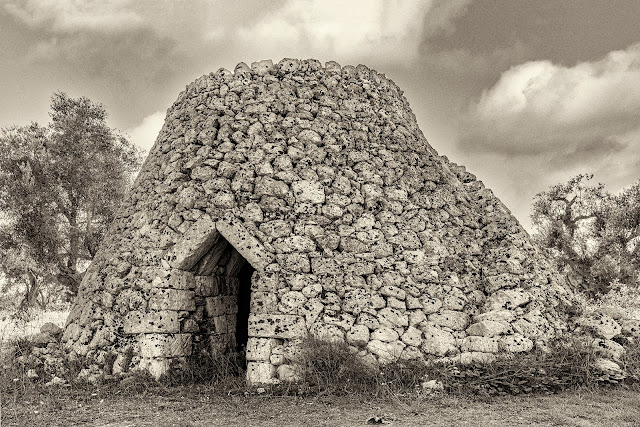
Beth Moon, Apulian Trullo, Pigment of Japanese Gampi Paper & Silver Leaf, 8x10" Image, Edition of 15, $1400


Beth Moon, Olive Press, Pigment on Japanese Gampi Paper & Silver Leaf, 8x10" Image, Edition of 15, $1400


Beth Moon, Olive Cellar, Pigment on Japanese Gampi Paper & Silver Leaf, 8x10" Image, Edition of 15, $1400

>> View THE TITANS of SALENTO portfolio <<


Beth Moon, The Titans of Salento, close-up detail from Nardo II


Beth Moon, detail of print edge on silver leaf, from The Titans of Solento portfolio.


photo-eye Gallery is proud to represent artist Beth Moon.


Print costs are current up to the time of posting and are subject to change.


If you are in Santa Fe, please stop by during gallery hours or schedule a visit HERE.


For more information, and to reserve one of these unique works, please contact photo-eye Gallery's
Gallery Director Anne Kelly or Gallery Associate Jovi Esquivel


You may also call us at (505) 988– 5152 x202


photo-eye Gallery

1300 Rufina Circle, Unit A3, Sant Fe, NM 87507
Tuesday– Saturday, from 10am– 5:30pm


Kate Breakey, Dried Orchid in Jar, Archival pigment print and 24k gold leaf, 6.5 x 5.5", Edition of 20, $1200 (Framed)

photo-eye Gallery is thrilled to present a selection of new images of orotones from Kate Breakey! The artist has been working with this process continuously throughout the last twenty years and all of these pieces are available to view in the gallery.

Kate Breakey is an artist who likes to take her time. Over the last four decades, the artist has amassed an impressive and intricate body of work; from delicately embroidered images printed on silk to the hand-painted negatives that she is known for, Breakey applies a razor-sharp eye for detail and aesthetic harmony to every process that she approaches.

One of the methods of working that Breakey is known for is the orotone. If you were to break it down, an orotone is exactly what it sounds like — an image that is granted luminescent tonality through the use of gold backing. This process is historic with roots in the early history of photography. It was used and refined by the studio of Edward S. Curtis (an inspiration of Breakey's) throughout the mid-1800s; he's often credited as one of the most important innovators of the technique. Breakey's updated technique, which involves producing images on glass plates with an inkjet printer (which are then backed with 24k gold leaf), achieves a similar tonal effect as that of  Curtis'. Breakey allows for her subjects to double as specimens (or stand in as constructed tableaus) and this, too, feels like a nod to some of the early uses of photography as a means of documenting the formal qualities of objects in the natural world in the same vein as Anna Atkins' cyanotypes. 

Though her focus spans the natural world, Breakey's orotones are all photographed in a way that echoes paintings from Dutch and Flemish antiquity. The golden glow emitted by these images draws attention to the subtle beauties in our day-to-day life that hearken back to classical or neo-classical aesthetic principles. The results of her approach are a plethora of images that are beautiful as well as timeless, take a look at more of the orotones that we have on view below!

Kate Breakey, Blue Vase, Red Berries, Archival pigment print and 24k gold leaf, 8.5 x 4.5", Edition of 20, $1200 (Framed)


Kate Breakey, White Koi, 2014, Archival pigment print and 24k gold leaf, 6 x 7.5", Edition of 20, $1170 (Framed)

Kate Breakey, Sprouting Onion, Archival pigment print and 24k gold leaf, 5.5 x 4.5", Edition of 20, $1170 (Framed)

Kate Breakey, Horny Toad Lizard, Archival pigment print and 24k gold leaf, 6.5 x 5.5", Edition of 20, $1200 (Framed)

• • • • • 
 
Print costs are current up to the time of posting and are subject to change.

photo-eye Gallery is proud to represent Kate Breakey.

For more information, and to purchase prints by Kate Breakey, please contact Gallery Director Anne Kelly or Gallery Assistant Delaney Hoffman, or you may also call us at 505-988-5152 x202


photo-eye Gallery New Works from Kate Breakey Delaney Hoffman
This week we're highlighting some beautiful loose prints that have recently arrived in the gallery from represented artist Christopher Colville. Colville is known for his spontaneous compositions made by exploring the possibilities of gunpowder as a photographic tool. Learn more about this process-oriented work and see what's available to view below!
Book Review Zone Eleven By Ansel Adams and Mike Mandel Text by Mike Mandel “On the left is an image of a woman who is seated. She is wearing mostly dark clothing. She has her legs crossed, and though the chair is at an angle, she turns her face toward the camera. We notice that Adams chose a perspective so that the woman sits nicely in front of a middle tone doorway, so..."

Zone Eleven. By Ansel Adams and Mike Mandel.
https://www.photoeye.com/bookstore/citation.cfm?catalog=DU233
Zone Eleven
Ansel Adams and Mike Mandel

Damiani, 2021. 112 pp., 83 illustrations, 11x9".

The following text was sent to us by Mike Mandel explaining in-depth, one page spread from his new book Zone Eleven.  

On the left is an image of a woman who is seated. She is wearing mostly dark clothing. She has her legs crossed, and though the chair is at an angle, she turns her face toward the camera. We notice that Adams chose a perspective so that the woman sits nicely in front of a middle tone doorway, so she jumps out in black and white. But she’s not centered, the photograph also includes a large drawing of a young, full-frontal female nude on the wall above her shoulder. It is not professionally framed but is pinned to the wall with a cut-out mat of poster board. The woman is elderly, at least 70, what is her relationship to the nude? Could she be the artist, or the model, or perhaps just someone interested in art? There is a book lying on a table at the right, and we can make out upside-down BOTTICELLI on the front cover. Botticelli’s Venus is perhaps one of the most famous nudes of the Renaissance. This connects this woman more closely to the idea of art. And for good measure, there is another drawing hanging in the doorway behind her. The woman’s dress and hair suggest a conservative style. I keep going back from the nude to the seated woman whose expression is severe. There is no smile, but rather a confident stare. This may be accentuated by the low position of Ansel’s camera. What year is this? Not being a very good judge of this style of clothing or for that matter the hair, I jump up to the thermostat on the wall. It’s boxy, maybe late 1950s. I look back at the hair and it reminds me of my grandmother when I was about ten, 1960. This is almost everything I can gather from this portrait.


On the right is the frame of a double bed. It’s metal and is Victorian in style, but severe with no headboard or footboard, only thin metal posters that remind me of the bars of jail in a western movie. I am moved in this direction because the bed is sitting outside in a parched depression of land composed of rock and sage on a stretch of desert that slopes at a distinct angle. Ansel has framed the photograph with a sliver of the sky to the left that provides a sense of the space. The bed rests plumb on a cut-out that may have been dug to support a house or a shack where this bed might have lived earlier. The bed takes up most of the frame. It dominates the landscape. The light is strong, shadows from the posters stretch forward toward the camera, and the backlight gives the bed frame a severe, blackened tonality. The metal is more than just a discarded bit of furniture. A couple shared this bed for rest and pleasure. But whatever happened on this bed happened a long time ago, the bed has been cast out. The rail on the left side is curved perhaps from the cumulative weight of the years of its service.

When I put these two photographs next to each other they begin to inform each other. The woman is old, the nude is young. The span of age is the better part of a lifetime. The woman rests quietly and looks directly at the camera. The nude young woman uses her arms to push her breasts forward toward the viewer but demurely turns her head away. The big hard metal in the dirt bursting the frame contains a lifetime of memories of getting up, making love, and lying down. I can’t help thinking about the fragility and temporality of it all. Once we were naked together and flaunted our sex. Before we know it, we’re on the far side and then gone. Every photograph contains a little death, for what was photographed in an instant is already past.

Purchase Book

Read More Book Reviews


photo-eye Gallery From the Flat Files: Cameraless Photography photo-eye Gallery
While a photograph, analog or digital, can be reproduced indefinitely, cameraless photographs are typically one-of-a-kind pieces. This week we explore our favorite cameraless images from our flat files and share them here.

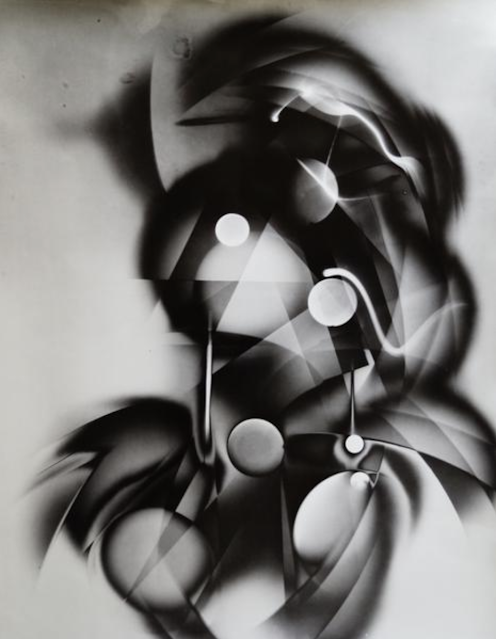
Michael Jackson, Mrs. S, luminogram, 20 x 16 inches, unique, $4000

 
While a photograph, analog or digital, can be reproduced indefinitely, cameraless photographs are typically one-of-a-kind pieces.

These unique images, which do away with the mediation of a camera or a lens, include photograms, photogenic drawings, cyanotypes, luminograms, and chemigrams. All terms that designate the various cameraless processes of those artists who choose to use the primary elements of photography — light, paper, and chemicals — as both their tools and subjects to create the image.

This week we explore our favorite cameraless images from our flat files and share them here. Take a look below.


 VANESSA MARSH


KATE BREAKEY

Kate Breakey, Common Ground Dove, gelatin-silver print, 17 x 14 inches, edition of 7, framed, $1150


To learn more about our cameraless collection and our last show on cameraless photography, take a look at the link below.

» LIGHT + METAL: Closing thoughts from Gallery Director Anne Kelly


• • • • •

For more information, and to purchase prints, please contact Gallery Director Anne Kelly or Gallery Assistant Patricia Martin, or you may also call us at 505-988-5152 x202


photo-eye Gallery Fractured: Mini Interviews William Lesch and Charles Anselmo Welcome back to our mini-interview series! In the last 8 weeks, the artists we've spoken with have enlightened us on the role photographers play in observing, documenting, and healing the fractured landscapes around and within us all. This week we conclude our series with the amazing artists William Lesch and Charles Anselmo.

Exhibition view of Fractured

Welcome back to our mini-interview series! In the last 8 weeks, the artists we've spoken with have enlightened us on the role photographers play in observing, documenting, and healing the fractured landscapes around and within us all. This week we conclude our series with the amazing artists William Lesch and Charles Anselmo.

It takes a moment to orient oneself to the bright, earthy colors and gritty textures of William Lesch’s Earth Remains #45. Lesch's brilliant aerial photomontage of mines and prickly pear cactus pads examines the impact of rampant human development on natural landscapes, and, further, how this unrestrained process has affected our relationship to the environment. Ironically mounted on a byproduct of these mines, a copper plate, his unique perspective makes one pay attention to these important issues.

Working exclusively with a large format camera, Charles Anselmo’s compelling photographs of urban landscapes address the role of memory in man-made environments. In his captivating image, Teatro Campoamor #13, a tropical landscape occupies the center stage of an abandoned theatre. This image offers a powerful metaphor for how memory frames our landscapes and question our ecological notions of wilderness.

Enjoy!

WILLIAM LESCH | Earth Remains


William Lesch, Earth Remains #45, 2020, mixed media mono print, copper sheet, 23 x 23 inches, ready to hang, $1780

What is your process like?
The process for this particular work and others in the same series starts with what to me are an interrelated series of aerial views. By that, I mean views with little to no perspective — views of surfaces, not necessarily views from the air. It could be a view looking down at a one-foot section of desert or a one-inch square of cactus pad, the planet’s surface to the surface of a bug’s wing. What I look for are pieces of a puzzle that has no solution yet. I used to build stonewalls for a living, and the most interesting walls are built by having a lot of stones of various sizes and shapes, all laid out on the ground. You start with one and if you have enough material to choose from, it builds itself by intuition and some sweat. As you transition from a novice to an actual stonemason, the more you are able to look at a jumble of stones and know which one goes where — your mind disconnects as your eyes and body take over.

I try to do the same sort of thing in the computer with photographs, thinking of various pieces like stones in a wall, waiting for that moment when they click into place. There is usually a structure, like a background made up of aerial photographs of mines, but even those are often pieced together from many different photos. For instance, in Earth Remains #45, I fit together photographs of the surfaces of prickly pear cactus pads and skeletal remains of desert plants. They have not only a visual affinity but a physical and an environmental connection.

Print Process
Earth Remains #45 is printed on a thin sheet of 28 gauge copper. I first prepare the copper by grinding, sanding, and polishing. Then I treat it with various poured, painted, and dipped chemical patinas. The result is a random, organic pattern of metallic markings, similar in spirit to what chemicals achieve on aged film or photographic paper. I then pre-treat and coat the metal panel with Ink-Aid White Matte Precoat paint, an acrylic white paint made specifically for printing with pigment printers. I often use several thin coats interspersed with drying the piece in the hot desert sun which causes the paint to contract and create surface cracks and fissures that expose veins of copper below the paint. Next, I run this painted copper sheet through my Epson 9800 with it set to the widest platen setting. After the print has dried, I attach the thin copper panel to a sheet of dibond, form and bend the edges and corners around the dibond. I fasten hanging hardware to the back and half a dozen coats of water-based varnish to the front for a finished piece that hangs on the wall with no need for a plexiglass or any other kind of glass barrier. This is very important to me as I want the immediacy of the physical object, the texture of the paint and the feel of the copper, as opposed to a hermetically sealed print under glass as photography has traditionally been presented. I want a living, breathing object you can see and touch, not a museum piece like a butterfly preserved under glass.

What inspired this image?
One of the earliest inspirations for this series were the Medical Collage pieces Frederick Sommer made late in his career from pieces cut out of medical textbooks. I spent a month, early in my career, working and living with him in Prescott, and since then his work and life have had a great influence on my approach to art and to developing a spirit of continual curiosity. I also came in contact with Emmet Gowin at this time, and, of course, his aerial work of Mt. St Helen’s and later some of the same mines I now photograph in Arizona have both been very important to me. My inspiration, if you could call it that, for this series is the destruction humanity and our appetites have unleashed on the planet. I feel as if our dominant culture has lost what it means to actually live in a place. We no longer have a relationship to the earth and to its non-human beings, the trees, cactus, stones, and clouds that is of the same depth and love as the relationships we have to our spouses or to our children. All of my work is an attempt to re-imagine and re-establish those severed relationships, the fracture between humanity and our wider self, the world of which we are but a small, relatively insignificant part.


Behind-the-scene video of William Lesch shooting from a plane

Bio:
William Lesch lives and works in an adobe home and studio he built by hand, himself, in downtown Tucson. He has lived in the desert southwest for over forty years; putting down roots, raising a family, living in place much as his barrio neighbors have done for generations. He has learned the names of the plants, the animals, the stones and the watersheds of his homeland; has studied the light and the changing seasons. His art is not his “career path”, it is an inextricable part of his life and work, an affirmation of what it means to actually live in one place on earth. In his case, that is the Sonoran Desert Bioregion. Our dominant culture has forgotten how to talk to the trees, how to sing to stones and saguaros. Lesch has spent a good part of his life walking the desert, listening to those forgotten songs, learning to sing the non-human songs of his region. The songs he hears as he walks are increasingly ones of anguish —of drought, fire, and extinction intertwined with the sounds and images of new life and celebration. Lesch believes there are stories to tell that are not about humanity at all, that there are far older, greater stories all around us. His life has been devoted to making art that tells those stories.

CHARLES ANSELMO | Havana Portfolio


Charles Anselmo, Teatro Campoamor #13, 2017, archival pigment print, 16 x 22 inches, edition of 9, $875 framed

Can you tell us about your artistic process?
Sometimes social-documentary projects emerge from purely visual ideas that aren’t yet obvious but actually stem from my fascination with color, line and the internal geometry of forms. This is particularly true when working with the unique historical/architectural richness of Havana, Cuba. Ultimately the photographic narrative will emerge, leading the way to the developed portfolio; working with large and medium format film, this cumulative process is very slow, such that it requires years to coalesce images into ongoing groups of large format prints. Overall, my process involves a kind of visual seduction, in that the vibrancy and color of deconstructed surfaces will hopefully draw the viewer closer to enticingly abstracted forms, which a moment later yield the realities of the narrative, the story. Strange dissonances ultimately tend to coalesce within the complexity of these urban landscapes, which basically are chosen for their ability to find and interpret the place where memory intersects with social context.

What inspired this image?
Within the fabric of populous urban environments there persist abandoned places that exist tenuously as inconvenient symbols of an earlier time, and which prompt complex questions concerning design, intention and waste. These architectural ghosts seem to lead to the uniquely dualistic status of urban visual culture, so an insistently human presence tends to prevail at derelict sites to yield scenes saturated with disquieting contradictions. Images of peaceful disconnection are instilled with a pervasive sense of human activity and grand design, but also reveal a textured, deconstructed landscape of historical fragments and skeletal details that reference the way in which memory changes perception as we reconsider the past. This image, of the abandoned Teatro Campoamor, was inspired not only by the textural splendor of nature overtaking a grand performance space, but also by its central place in a series of images that prompt a dialog about buildings that have been repurposed by the natural world, a dialog about inner, constructed spaces that are transformed into roofless “outer” spaces.

Can you share an interesting story about your subject matter or the making of your image?
Nestled behind the extraordinary baroque beauty of Havana’s restored Gran Teatro is the smaller, derelict Teatro Campoamor. For fifteen years I had walked by this remarkable fragment, unable to enter due to its barricades and boarded doors. One oppressively humid day in July, 2017 a friend suggested he might know of someone with a key. I was inside minutes later, and met the caretaker who had lived in this relic for twenty-four years in what had been a coat-check room. I was captured by the beauty of this place so beautifully overtaken by vines and lichen, its wooden stage turned into soil by roof debris and seasons of rain. Fifteen-foot tropical palms had been gifted to this interior by seeds driven by the hurricane winds of previous years, the gold gilt peeling from ornate plasterwork. A gracious host always, Reynaldo allowed me to spend entire afternoons there while he swept the then-seatless orchestra seating area and proudly kept his “house.” I visited many times over the next two years, studying the light, photographing endlessly, and ultimately returning to film a documentary about the theater, which is now closed again until the indeterminate date of its restoration into a regional art center for the people of Cuba. The site will always be an expression of the way in which visually inherent architectural narratives remain in some way connected to their original identities, even as they are changed by the warm palette of decay.

Bio:
Working exclusively with photographic film, Anselmo has developed extensive portfolios on abandoned military bases, post-Katrina New Orleans and the peripheral urban spaces of California. Beginning in 2000, he has worked photographically in Cuba more than seventy times, developing collaborative relationships with numerous Cuban arts organizations such as the Museo de Bellas Artes and the Escuela Nacional de Bellas Artes San Alejandro, Cuba’s oldest art school. Starting in 2012, he has presented solo exhibits at the Fototeca Nacional de Cuba, the Universidad de la Habana, the Instituto Internacional de Periodismo, as well as other state art gallery venues. Anselmo also curates US shows of work by established Cuban analog photographers and conducts photography field workshops to Havana several times each year. He is owner of Avenue 25 Gallery in San Mateo, California, and also operates Anselmo Image Works, a photographic art digital printing studio. Exploring a variety of ongoing projects, Anselmo continues to photographically explore urban sites that compellingly demonstrate the nascent beauty of forgotten places.


All prices listed were current at the time this post was published.

For more information, and to purchase artworks, please contact photo-eye Gallery Staff at:
(505) 988-5152 x 202 or gallery@photoeye.com


photo-eye Gallery Christopher Colville: Flux Closes Saturday June 22,2019 By Alexandra Jo"I’ve spent the past two months getting to know Flux, and still find the images opening themselves up to reveal new questions and visual journeys every day. These photographs are exceptionally multitudinous and effortlessly invite second, third, fourth sessions of contemplation and interrogation." – Alexandra Jo
By Alexandra Jo

In the final days of Flux, Christopher Colville’s solo exhibition at photo-eye Gallery, I find myself reflecting on the mystery and complexity that continues to unfold from within each of his images, and the depth of thought behind the whole body of work. I’ve spent the past two months getting to know this show, and still find the images opening themselves up to reveal new questions and visual journeys every day. These photographs are exceptionally multitudinous and effortlessly invite second, third, fourth sessions of contemplation and interrogation.

Christopher Colville, Untitled Work of Fire 4-17 #4, 2017, Unique Silver Gelatin Print, 13x11" Image, $2800


It has been a pleasure to watch gallery visitors puzzle over Colville’s process. I’ve come to anticipate looks of bewilderment, intrigue, excitement when I finally reveal his technique of exploding gunpowder directly onto silver gelatin paper. I love that these works help people think differently about traditional media and expand the elasticity of common ideas around defining photography.

The fluidity of the work seems to also act as a mirror to the individual and how we see differently on any given day. There is something about meditating on these undulant shifts of light and darkness, finding the landscapes and objects hiding in the flashes of metal and smoke, that can reveal parts of the viewer to him-or-herself. The experimental spirit and skillful execution of the entire process is singular in its uniqueness and is an experience not to be missed in person. 

Flux runs through Saturday, June 22, 2019.

Untitled Work of Fire Diptych, 2015, Unique Silver Gelatin Print, 18x28," Framed $6600


More information about Flux can be found in previous blog posts:

Our Interview with Christopher Colville

Christopher Colville: Flux

Behind the Image:
Meditations on the Northern Hemisphere 4

Flux: Gallery Favorites


For more information, and to purchase prints, please contact 
Gallery Staff at 505-988-5152 x202 or gallery@photoeye.com.

All works listed were available for at the time this post was published.


photo-eye Gallery Gallery Favorites
Christopher Colville – Flux
Anne, Lucas, and Alexandra highlight three notable images from Flux, currently on view at photo-eye Gallery through Saturday June, 22nd.


Christopher Colville’s exhibition of unique, camera-less, gun-powder generated photographs, titled Flux, opened at photo-eye Gallery on April 26th to an intrigued, perplexed, and ultimately enraptured audience. Colville’s one-of-a-kind photographs are enthralling in both their creation and their visual presence. It is easy to get wrapped up in the thrill and mystery of the process when looking at photographs created without a camera by igniting gunpowder directly onto photographic paper onsite in the desert at night. Indeed, understanding that process can be an important aspect of looking at and responding to these explosive abstract images. However, Colville’s work also has the distinct ability to speak directly to individual viewers on a powerful personal level. Each piece uniquely evokes fantastical landscapes, captures bursts of violent action, opens up enigmatic celestial maps, or creates murky, gossamer atmospheric texture in a way that allows each viewer to enter the work in their own way. This week the photo-eye Gallery staff was charged with the seemingly-impossible task of picking a favorite piece out of this compelling and captivating exhibition. Read more on their selections below.


Anne Kelly Selects Dark Hours Horizon 101

Christopher Colville, Dark Hours Horizon 101, Unique Silver Gelatin Print, 3x12" Image, $3,180, Framed


Anne Kelly
Gallery Director
(505) 988-5152 x121
The works by Christopher Colville that are included in our current exhibition Flux are unique photographs that are made without the use of a camera, but with simply the essence of photography–light. Each composition is pure abstraction which is the orchestrated result of tiny gunpowder-fueled explosion on moonless nights in the Arizona desert.  Though the images are abstract, I have noticed that gallery visitors have started to see objects within the imagery like planets, rocket-ships, cactus', and more. The piece that I’ve fallen in love with is Dark Hours Horizon 101, a tiny tryptic that reminds me of a stormy desert landscape. So there you have it, I continue to be attracted to unique, expressive landscapes that connect to my own personal experience. I also love the scale of this piece, it just asks you to slow down and take a closer looks at the surface and beyond. Over the horizon hang stormy clouds where an epic storm is blowing in. The surface of this print almost looks like rusted metal, and on closer inspection, there is just a touch of iridescence, which I recently learned is possible in certain rare clouds. Dark Hours Horizon 101 is a tiny abstracted landscape created by a small explosion–what is not to love?


Lucas Shaffer Selects Fluid Variant 2

Christopher Colville, Fluid Variant 2, 2015, Unique Silver Gelatin Print, 12x15" Image, $3,550, Framed

Lucas Shaffer
Special Projects & Client Relations
(505) 988-5152 x114
Like my colleagues, I had a difficult time highlighting just a single image from Christopher Colville's impressive collection in Flux. This is my favorite type of photography, it's tactile, experimental, material-based, cameraless, and unique. Fluid Variant 2 stands out for me due to its bold design, sense of balance, and expressive nature. A precise, but broken, diagonal, bisects the picture plane perfectly separating light from dark, the concrete from the organic. The effect is striking. A burst of energy erupting from the center dramatically joins these two disconnected planes breaking the diagonal, evenly cutting the image again vertically, and throwing the lighter portion into fluttering chaos. Paired with Colville's rich rust-colored print tone the overarching effect of Fluid Variant 2 is earthly and elemental. More than any other work I've seen recently, Colville's images seem physical, their representations of movement, weight, texture, and material are extraordinary. I've probably already spent hours viewing Fluid Variant 2 delighting in its consummate aesthetic and meditating on its dynamic paradoxes. Overall, the image is enigmatic with an impressive design that leaves room for personal interpretation and reflection.


Alexandra Jo Selects Dark Hours Horizon 87

Christopher Colville, Dark Hours Horizon 87, Unique Silver Gelatin Print, 3.5 x 4.38" $1,280, Framed


Alexandra Jo
Gallery Assistant
(505) 988-5152 x116
In a recent conversation with Christopher Colville, we discussed the writing of Cormac McCarthy, as Colville uses a quote from Blood Meridian in one of his artist statements that happens to be a favorite of mine. In the discussion, we spoke about the landscape of the desert, in which Blood Meridian takes place, and what that specific environment means to each of us. Colville's entire process often takes place outside at night in the open desert. We agreed that there is a violence to that landscape, but also a specific loveliness, and talked about McCarthy’s ability to articulate darkness and beauty simultaneously. For me, Colville’s work is also able to do that; it emphasizes the dichotomy and symbiosis between light and dark, and reveals the allure of the shadow.

Dark Hours Horizon 87 was my favorite work in Flux the instant we pulled it out of its shipping crate. The image is one from Colville’s Dark Hours series, which features mostly smaller works, each resembling desolate and mysterious landscapes. The placement of gunpowder in lines and ridges on the photographic paper implies a physical horizon line when ignited to create the image, allowing these camera-less photographs to obliquely point to the environment in which they were created.

Dark Hours Horizon 87 in particular is only 4 x 5 inches and offers an intimate examination of Colville’s mercurial physical process, drawing the viewer in with flashes of iridescence in the dark, ethereal atmosphere of its “horizon.” The colors of the image range from rust to copper to metallic blues and greens, down through magentas and deepest blacks. The way the smoke and light from this explosion swoops skyward conjures images of ravenous prairie fires, wind-swept cloud formations over vast desert mesas, and the feeling of standing alone and vulnerable in the openness of nature under boundless stars and galaxies. Ultimately for me, the power of this tiny image lies in its ability to evoke the colossal, enduring power and chaos of nature and the cosmos that has always been beyond complete human reckoning.


• • •


Christopher Colville: FLUX
On view through Saturday, June 22nd

For more information, and to purchase prints, please contact Gallery Staff at 505-988-5152 x202 or gallery@photoeye.com.
All works listed were available for at the time this post was published.