PHOTOBOOK REVIEWS, INTERVIEWS AND WRITE-UPS
ALONG WITH THE LATEST PHOTO-EYE NEWS

Social Media

Book Review O. N. Pruitt's Possum Town Text by Berkley Hudson Reviewed by Philip Heying “With O. N. Pruitt’s Possum Town: Photographing Trouble and Resilience in the American South, Berkeley Hudson has assembled something of a time machine..."

https://www.photoeye.com/bookstore/citation.cfm?catalog=IG107
O. N. Pruitt's Possum Town
Photographing Trouble and Resilience in the American South
Text by Berkley Hudson


The University of North Carolina Press, Chapel Hill, USA, 2022. 272 pp., 9x10".

With O. N. Pruitt’s Possum Town: Photographing Trouble and Resilience in the American South, Berkley Hudson has assembled something of a time machine. The images and texts cast a spell so potent that readers might be forgiven for feeling as if they had experienced 20th-century Columbus, Mississippi for themselves.

Otis Noel Pruitt spent his professional life as a studio photographer in Columbus, Mississippi, nicknamed “Possum Town” in the early 19th century by the local Choctaw and Chickasaw people. From when he first became interested in photography, as a young father in 1910, to the end of his life in the late 1960s, Pruitt amassed an archive of approximately 140,000 images. Berkley Hudson has studied this massive collection for over three decades as a scholar of media history at the Missouri School of Journalism of the University of Missouri. Hudson himself grew up in Columbus and was photographed by Pruitt for family occasions throughout his youth. This book is the fruit of that endeavor.

Pruitt was a somewhat unusual professional studio photographer because he didn’t limit his photographic practice to paid jobs. Indeed, he seemed to be generally indifferent to the finances of his business, which were managed by his wife, Lena. His photographs make it clear that the complexities and remarkable dynamism of life in and around Columbus inspired his passion. He was a highly capable craftsman, and when the situation called for it, he could find his way to formal innovations in the way he constructed his images. But what drove his work was not so much an interest in formal photography, but rather his profound curiosity and concern for the life going on around him. As fate would have it, the life he documented was emblematic of the fundamental nature of the wider history and culture of the United States. This book stands as an important, if not essential, contribution to the record of the fraught history of race relations in this country.


Pruitt photographed all the family gatherings, weddings, christenings, funerals, civic events, celebrities, catastrophes and circuses one would expect of a hired photographer of his time. But he also photographed a nondescript crossroad in Artesia (page 25), a man seated in his personal automobile (page 100), a young woman seated in her modest garden (page 105) and a simple kitchen (page 55), all with clarity and a potent, if understated, compositional tension. One particularly poignant photograph depicts an infant boy, impeccably dressed and groomed, seated with his hands gingerly placed on his lap, his back straight, eyes forward, within a sprawling view of a luxurious room filled with an assortment of toys and wrapped gifts (page 81). The boy looks like both a little king and a prisoner of massive expectations. This picture is preceded by another wide view a few pages earlier. This one shows an old wooden house, its siding warped by the sun, surrounded by somewhat unruly hedges. There is a young Black woman wearing a neat light-colored dress seated on the porch swing and looking directly into the camera with an unguarded expression on her face (page 54). She looks as though she welcomed the opportunity to be photographed. Hudson’s curation of the images, ranging from large public gatherings to the quiet corners of life, offer a sense of both the cultural fabric of the time and the subtleties of Pruitt’s curiosity.

Pruitt had the remarkable privilege of a white man living in the Jim Crow South to navigate through his community, and Hudson sensitively addresses the unjust way in which that privilege was guarded by white culture during Pruitt’s life. It’s perhaps impossible to deduce from the pictures if Pruitt ever questioned his status. Pruitt did, however, make many photographs of African Americans in which they obviously shared in the creation of the photographs. These images are interspersed throughout the book.
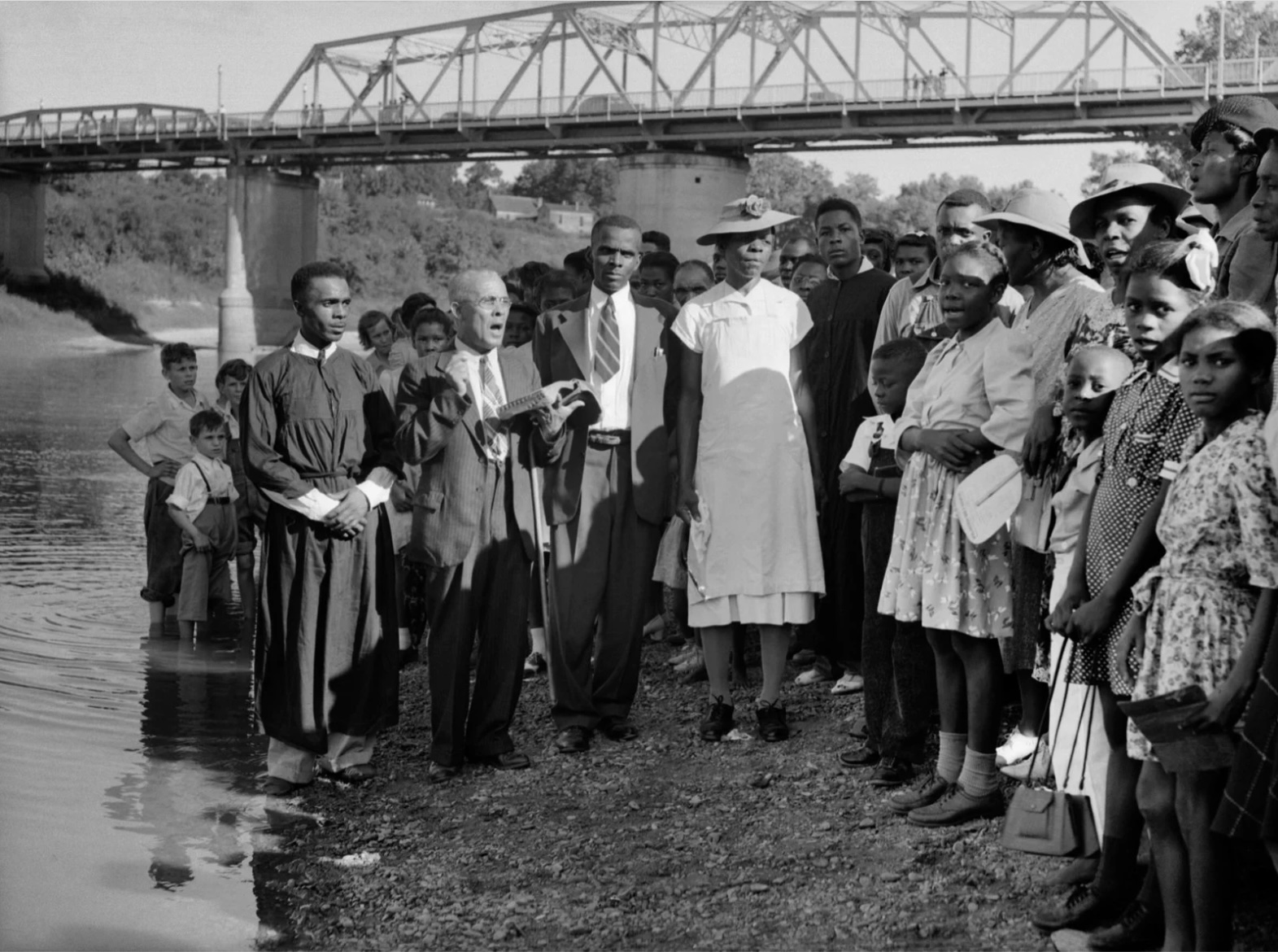

Pruitt did stare directly into the barbaric evil of lynching. His picture of the hanged bodies of Bert Moore and Dooley Morton is horrifying and painful to look at. It serves as irrefutable evidence of terrorism by white people against African Americans. Likewise the photograph of the Ku Klux Klan marching at night in front of Pruitt’s studio in 1922, and his picture of the execution by hanging of a young man named James Keaton in 1934. Whatever his feelings at the time, Pruitt deployed his superb craft to create damning evidence of injustice in undeniable detail. The grim specter of racial injustice is ever present throughout the book.

Certainly, the quality of the book will not be an obstacle to sensitive reading and contemplation of this important and intense work. The photographs are very well reproduced. The paper they’re printed on is of high quality, as is the binding. The design and layout are well executed, if unspectacular. Most of all, Hudson’s curation and sequencing of the work, alongside his well-crafted, informative, judicious, sensitive and often entertaining texts, allow for an exceptionally potent immersion into Pruitt’s world.
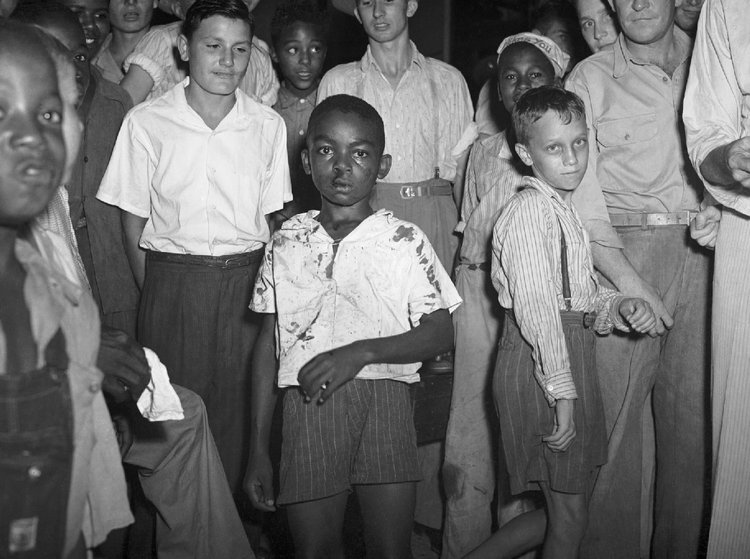

One of the most pernicious aspects of racism as it currently persists in the United States is the frequency with which it is dismissively relegated to the past; “That was a hundred years ago!” the racist will declare. There’s a risk that books like this one will only serve such arguments. Berkley Hudson has somewhat mitigated that risk by assembling a sufficient quantity of pictures to describe the sprawling context in which racial violence occurs, a context that undeniably spreads forward and out to this day. The degree to which such contextual conditions are acknowledged will be the responsibility of viewers. Hudson has provided the evidence to be found in Pruitt’s work and discussed the complexities of interpretation with some rigor.

Purchase Book

Read More Book Reviews


Photographer Philip Heying, born in 1959 in Kansas City, Missouri, learned the basics of photography in middle school. In 1983 he earned a BFA in painting from the University of Kansas.

During college, Philip was introduced to William S. Burroughs and met Albert Hoffman, Allen Ginsberg, Brion Gysin and Timothy Leary.

In 1985 Philip crossed the Atlantic on a coal freighter to live in Paris. The experience of learning a new language and culture had a profound effect on his photography.

He returned to the United States to live in Brooklyn from 1997-2008. He worked for and became friends with Irving Penn and Joel Meyerowitz, among others, and did his own freelance editorial and advertising photography jobs.

In 2008, Philip returned to Kansas. He became a professor of photography at Johnson County Community College. He taught three curricula and managed the photo facility. He completed nine photographic book projects and had prints acquired by the Nelson Atkins Museum of Art and Spencer Museum of Art.

In 2019, after his father died, he moved to Matfield Green, Kansas. He is currently working on a project, titled “A Survey of Elemental Gratitude” which will be completed in four to six years.

Correction: In a previous version of this post, Otis Noel Pruitt's middle name was incorrectly written as Neal.
Book Review This is Bliss Photographs by Jon Horvath Reviewed by Blake Andrews “The closest town to me growing up had perhaps a thousand residents. Redway in the 1970s was a sleepy turnoff where not much ever happened. It was originally settled as a timber town..."

This is Bliss By Jon Horvath.
https://www.photoeye.com/bookstore/citation.cfm?catalog=IG126
This is Bliss
Photographs by Jon Horvath

Yoffy Press / Fw: Books, 2022. 280 pp., 9½x11½".

The closest town to me growing up had perhaps a thousand residents. Redway in the 1970s was a sleepy turnoff where not much ever happened. Originally settled as a timber town, it later transitioned half-heartedly to tourism and counterculture. After being bypassed by 101 the town became even sleepier, but it still boasted the basic components of Americana. There was a post office, a school, a community center, a few diners and a local swimming hole. Everyone knew everyone’s business.

If Redway fell into Hollywood stereotype, that’s no accident. American pop culture has long been infatuated with small-town life. The tendency to romanticize such places as a community ideal spans all art forms, from Andy Griffith to John Cougar to Fargo to Norman Rockwell. Photographers are no exception. Think of Richard Rothman poking around Crescent City’s back lots, Nick Waplington in tiny Truth or Consequences, Timothy Briner joining various Boonvilles or Alessandra Sanguinetti recently in Black River Falls. Their motivations vary, but as a general rule, all are outsiders combing small towns as potential fonts of wisdom and salvation. Perhaps, the thinking goes, these quaint backwaters might turn up photogenic characters. In the process they might provide insight into the national character.

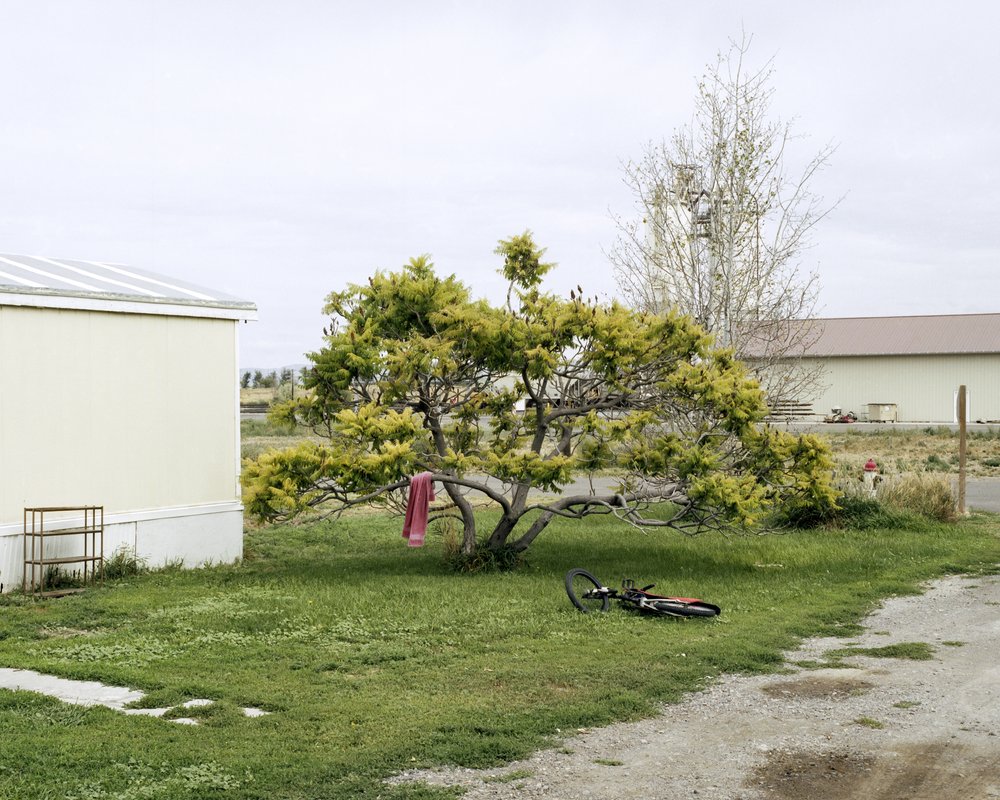
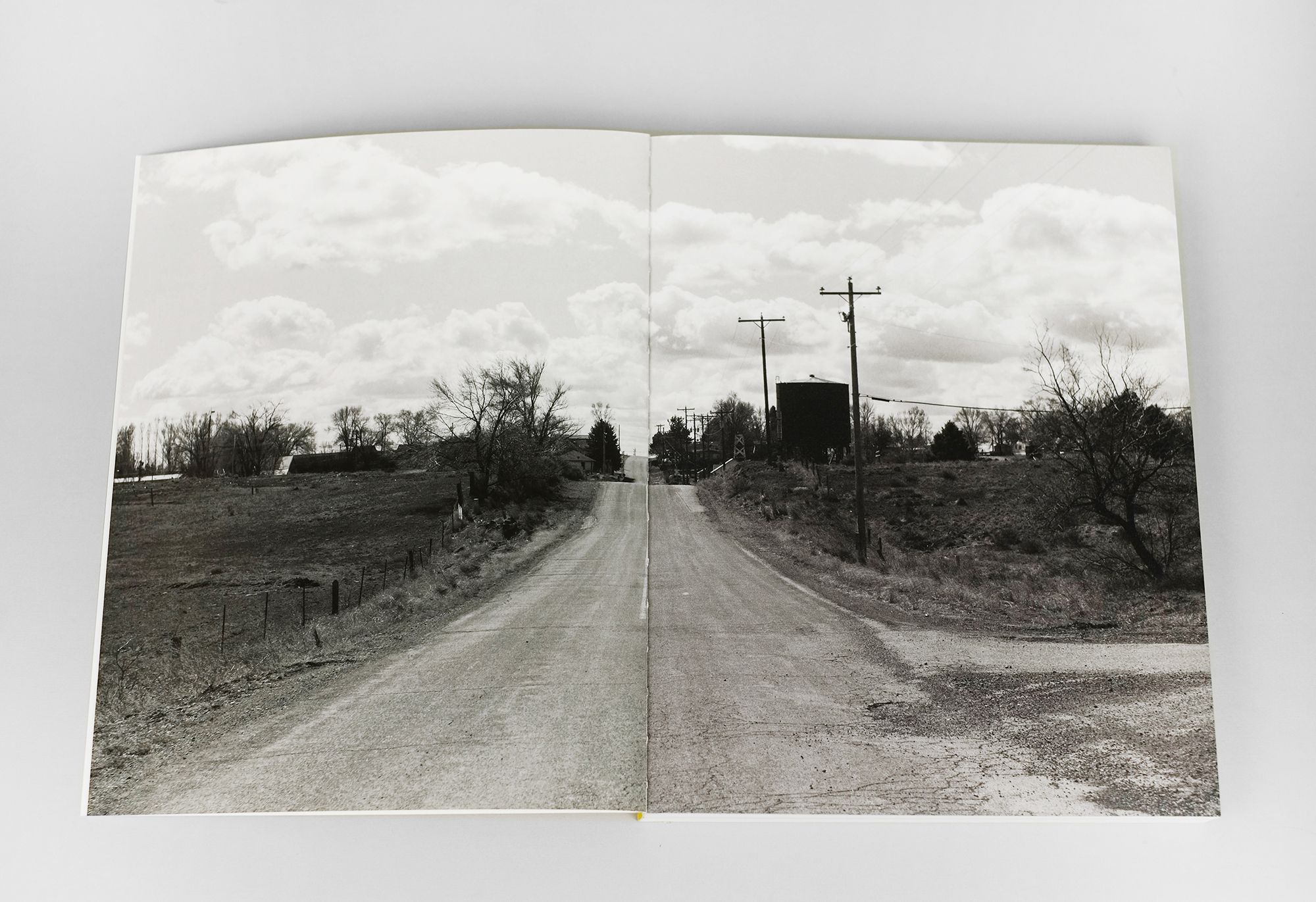
This may be what drew Jon Horvath to Bliss, Idaho, a minor hamlet tucked between the Snake River and I-84, a full day’s drive west of his Milwaukee home. The Bliss census tally when he arrived was 318 and falling. Its elevation: 3271’ and rising. If the town’s threadbare charms weren’t quite attractive enough on their own, its name clinched the deal. Bliss: a double entendre almost too good to be true, at least when viewed by poetic souls. For the record, Bliss was named for a person (founder David Bliss), not a state of being.


Horvath made several return trips to Bliss throughout the mid-2010s, poking his camera sometimes where he shouldn’t have, establishing relationships, and gradually compiling a photographic record of its people and geography. If he were a typical photographer, those images might have surfaced by now in a standard picture monograph. But Horvath’s creative interests extend well past photography. By his own reckoning, he is “an interdisciplinary artist routinely employing systems-based strategies within transmedia narrative projects.”

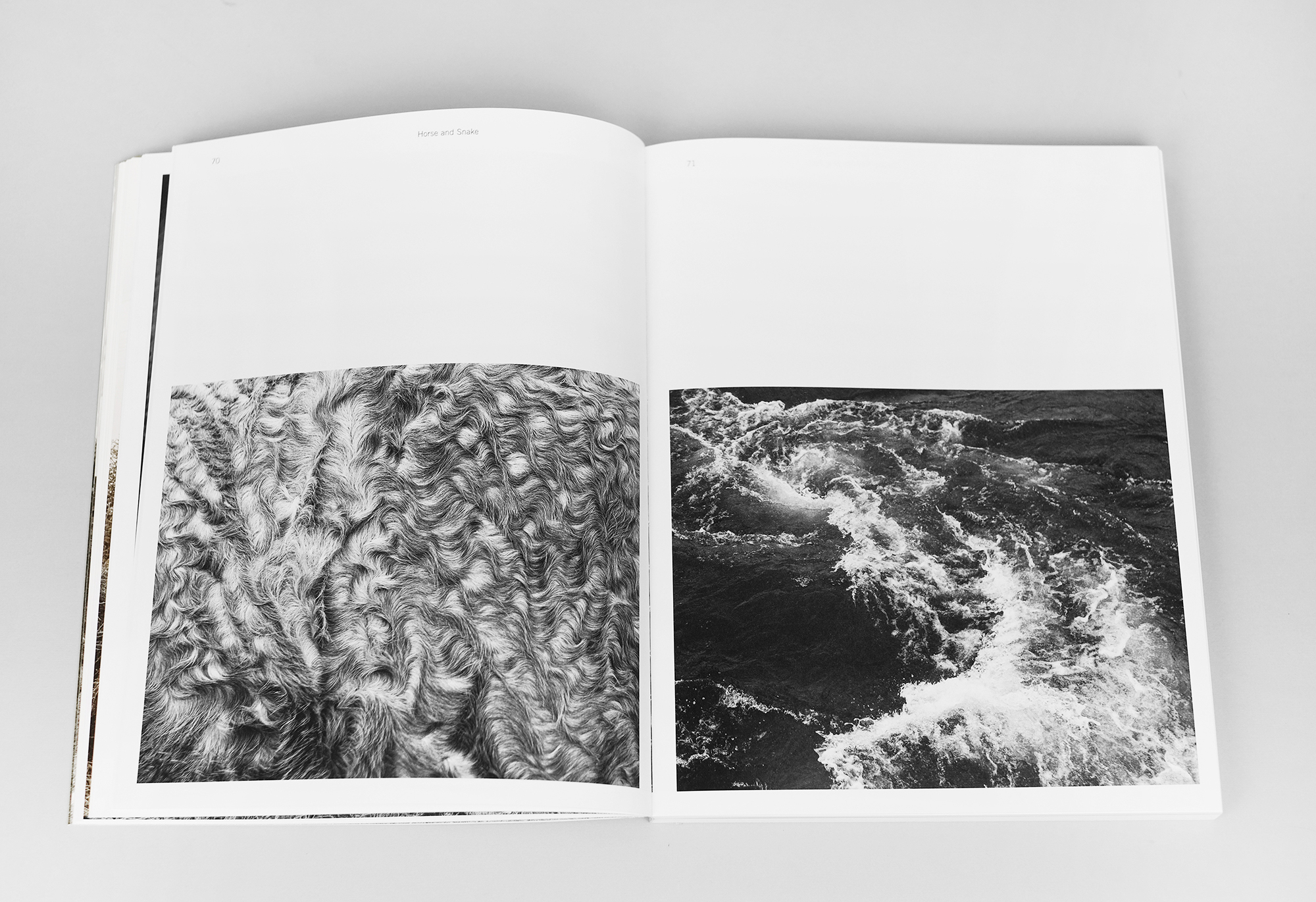
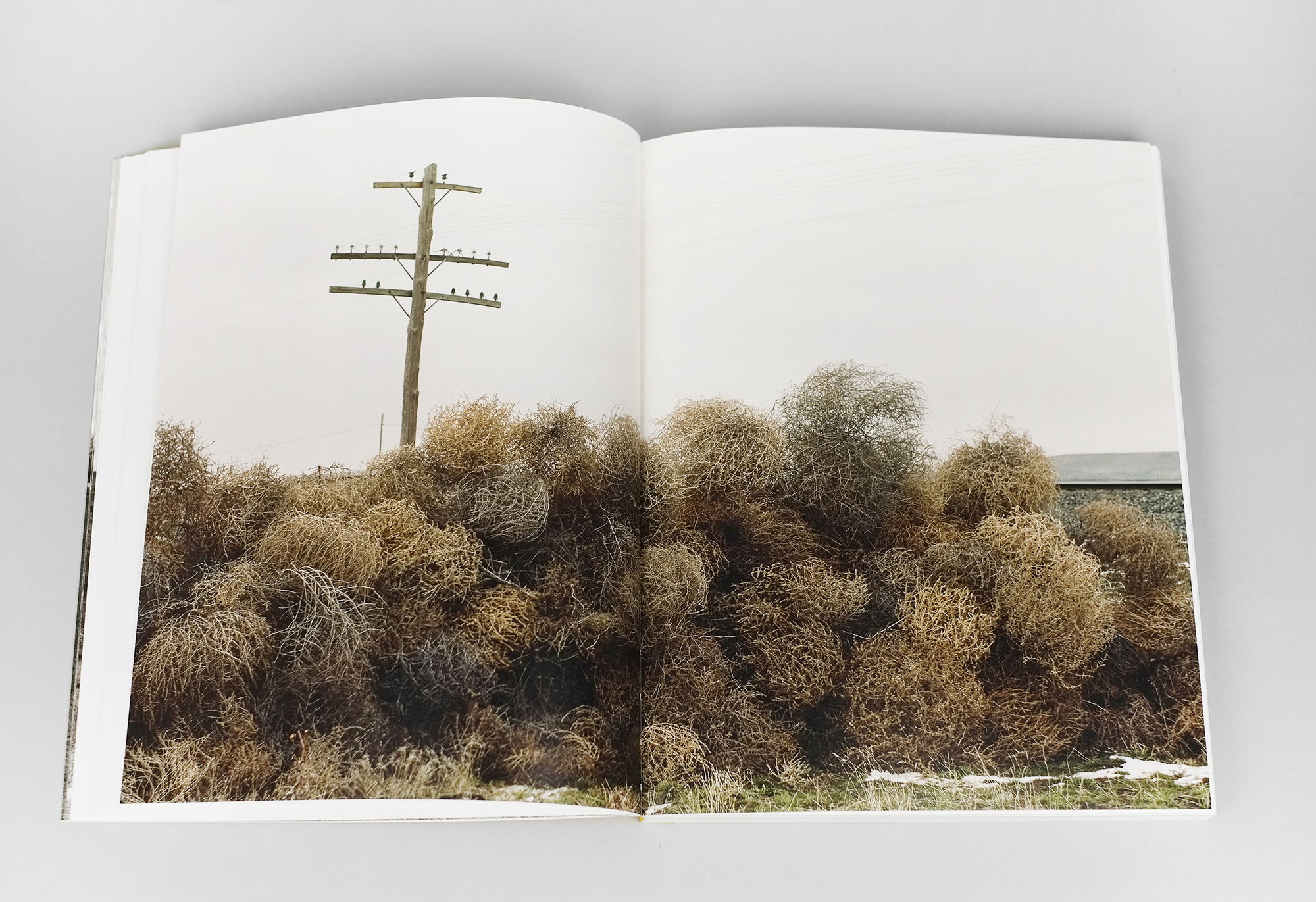
If that phrase has the whiff of artsy hokum, his recent photobook is more grounded. This Is Bliss is a sprawling tome of images, layouts, stocks and treatments. It is large, dense and thought-provoking, in a way that belies its whistle-stop subject. To give a rough sense of the book’s heterogeneity and scope, here is a sampling: There’s an opening spread of monochrome byways, a quick shift to smaller color work, three green restaurant checks, scattered portraits of silverware, people and a dog named Cash. There are wet collodions of discarded beer bottles, branding tools, weaponry and a graphic pun. There are iterations of a floral bouquet photographed against a peeling faux-wood-grained backdrop, a small diversion to explore Holden Caulfield (his namesake lived in Bliss), shots of signage, airplane wreckage, model figures and barely legible dark impressions of Chinese burial sites. There are arrowheads, Senior Class Quotes on paisley color fields and Horvath himself shown in multiple frames skipping stones across the Snake River. Also: birds, puddles, an Ansel Adams photo converted to jigsaw, an evangelist’s note, a melted beer bottle adorning an anecdote about Horvath’s first ever (!?) alcoholic drink in a Bliss bar.


That may seem like an overload already. But it’s just a taste. You’ll have to grab a copy to see it all, and it might take some time to digest. This Is Bliss reflects Horvath’s attempt to size up the place, but the town’s character remains elusive. The book offers a patchwork quilt of images and ideas, a “transmedia narrative project” if you will. As to what they all amount to, that’s harder to say. The project started as a multi-media installation and feels still bounded by that form as a book. We see this facet of Bliss, then that one, then another view. But they are blind men feeling parts of the elephant, disjointed and unintegrated. What is it actually like to be there, to walk down the main street? Perhaps that burden is beyond the scope of any monograph. Horvath wants to crack the small-town code and root out its American essence. But perhaps Bliss has flipped the script and cracked the author in the process.


But all is not lost. The Bliss jigsaw eventually fills in, with the help of a sharply rendered text by Horvath. This comes at the very end, after all the images have been digested and the reader’s brain pulled this way and that, a conscious nod by Horvath toward the literary strategy of short story cycle. The story “Coyote” is seemingly based on actual events and relationships, and its primary characters Jared, Karl, and Cash appear to correspond with photos earlier in the book. But it comes with the subheader: “short fiction”. Is the label a ruse to throw us off the scent? More transmedia jujitsu? It’s hard to know which parts are real and which are imaginary. In the end, it may not matter, since “Coyote” is well-written and entertaining enough to stand on its own. Spilling over thirty pages the tale describes a series of minor hunting expeditions near Bliss. Horvath’s language penetrates the existential angst of the place in a way that his photos sometimes can’t, sketching a multidimensional portrait of boom/bust and perseverance. Ah, the reader might nod knowingly afterwards, so this finally…This is Bliss.

This is Bliss is co-published by the American imprint Yoffy, and Fw:Books out of Amsterdam. It’s not clear exactly how duties were divided, but the design boasts the urbane fingerprints of Hans Gremmen, Fw’s founding editor and one of photoland’s expert bookmakers. His choice of softbound cover — on oddly doubled cardstock? — and yellow cloth spine is eye-catching offset with a crimson cover silhouette. I’ve already mentioned the interior images but not the layout, which Gremmen has punched up to match. The sequence feels its way along like the Snake river through basalt highlands, trying this layout for a bit, then that one. Eventually, it arrives at “Coyote”, stacked eight pages per spread. By this point, we’ve witnessed Bliss from every possible vantage. Its ingredients have been spread out on the table like model parts. How they fit together is anyone’s guess. Nevertheless they’re a joy to observe.

Purchase Book

Read More Book Reviews


Blake Andrews is a photographer based in Eugene, OR. He writes about photography at blakeandrews.blogspot.com.
  photo-eye Gallery   New Work by Artist Chaco Terada    Anne Kelly       New work by represented artist Chaco Terada
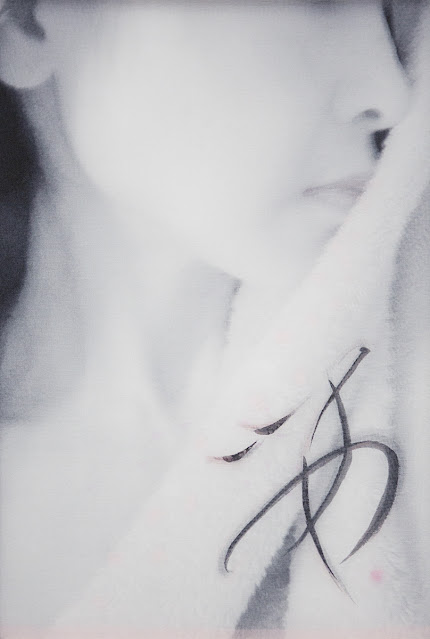
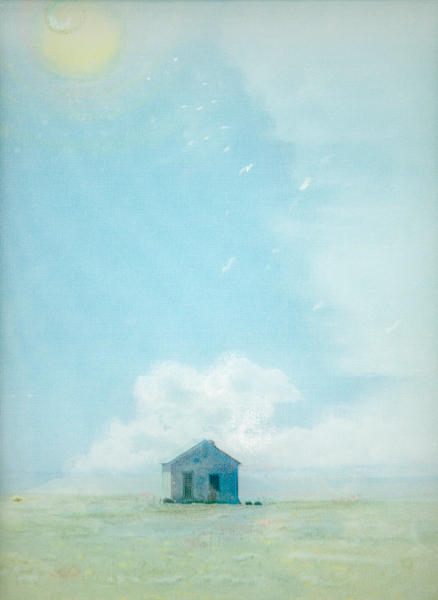
Since the beginning of photo-eye's relationship with Chaco Terada in 2007, gallery staff and collectors of Terada’s works have had the honor of witnessing her art-making practice evolve. Chaco’s process involves printing her photographic images on silk and adding handwork with Sumi ink. Each layer of silk is then stretched between an 8-ply matboard, like a canvas, so that each semi-transparent layer of silk interacts with each other — like a watercolor painting. This unique practice is the direct result of a curious moment when she picked up a piece of discarded silk and considered the possibilities. Terada's process has become more elaborate as she has mastered her craft and delved deeper into her musings. 
“My calligraphy is influenced by life experiences. When I create a brushstroke I think of the motion of water in a stream or the movement of a breeze. My lines do not create a word in the traditional sense, they interpret the meaning or mood that I feel the word represents. Before I depict the character of the word autumn, I would meditate on an autumn scene, and let the details that come to my mind direct my hand."
— Chaco Terada

Recently, Chaco visited the gallery to share works made over the last year — an annual visit the gallery has come to look forward to. Over the years the aesthetic of Chaco’s work has remained consistent, without getting stale and always providing surprises. While many artists credit “the world around them,” as their muse, I would specify that in the case of Chaco, she has a particular sensitivity, or curiosity about, the world around her that makes her visions particularly unique. As a solid example, I will bring you back to her curiosity about the discarded silk, which resulted in the process that she is known for today. photo-eye Gallery is delighted to share these new works by represented artist Chaco Terada today!


Chaco’s new works are introspective, while this isn’t a shift for her, when viewing the work I do get the sense that over the last few years she has delved just a bit deeper as the world around us has morphed from travel restrictions that have prevented her from visiting her home in Japan, resulting in more time spent in the studio, photographing closer to home and pulling images previously shot in Japan as a method of travel. Like many artists, Chaco took a step further inward, and as a result, I believe the viewer gains an even deeper appreciation for Chaco’s curiosity and imagination. 


In the new works, we experience a range of studies, from Cicada wings — who's summer song reminds her of her childhood in Japan, a series that includes self-portraits of the artist with cherry blossoms, studies on small loan houses around northern New Mexico titled The Poets House and some studies that take us back to Japan. 


Chaco Terada, For the Only 4, 2022, Sumi & Pigment Ink on Silk, 13x9", Unique Print, $4,200 

To learn more about Chaco Terada’s process, take a look at the fantastic interview in the link below. 


To appreciate the full effect of a Terada photographic object they simply must be seen in person. If you are in Santa Fe, please stop by during gallery hours or schedule a Virtual Visit here.


Print costs are current up to the time of posting and are subject to change.


For more information, and to reserve one of these unique, extraordinary new works,
please contact photo-eye Gallery Director Anne Kelly or Gallery Associate Jovi Esquivel.
1300 Rufina Circle, Unit A3, Santa Fe, NM 87507
Tuesday– Saturday, from 10am– 5:30pm

You may also call us at (505) 988- 5152 x202


Book Review River's Dream Photographs by Curran Hatleberg Reviewed by Brian Arnold "I think most readers associate novelist Cormac McCarthy with his renditions of the American West, found in his iconic novels All the Pretty Horses and The Crossing. Fewer know that McCarthy’s early works were all set in the American South, and create a vision much more akin to William Faulkner, including novels Child of God, Outer Dark and Suttree..."

River's Dream By Curran Hatleberg.
https://www.photoeye.com/bookstore/citation.cfm?catalog=ZJ928
River's Dream
Photographs by Curran Hatleberg

TBW Books, Oakland, USA, 2022. 152 pp., 65 color plates, 11.5x13.5″".

I think most readers associate novelist Cormac McCarthy with his renditions of the American West, found in his iconic novels All the Pretty Horses and The Crossing. Fewer know that McCarthy’s early works were all set in the American South, and create a vision much more akin to William Faulkner, including novels Child of God, Outer Dark and Suttree. Many critics and devotes of McCarthy cite the latter, Suttree, as the writer’s greatest work. Interpreted as an autobiographical story set in rural Tennessee, the book is about a man named Suttree, an outcast who lives along the margins of society in a houseboat on the Tennessee River. Estranged from his mother named Grace, Suttree’s life is told in a dream-like narrative of Biblical proportions. The twists and turns of the Tennessee River offer a metaphorical and allegorical backdrop for the story. The surface of the water and flow of the river perfectly mimick his life, steadily moving forward, but no two ripples exactly the same. Through the course of the novel, Suttree is revealed as the best kind of antihero, equally driven by compassion, wisdom, estrangement and anger.

Suttree is also Curran Hatleberg’s Instagram handle (@_suttree_), and as such provides an interesting entry point for understanding the photographs in Curran Hatleberg’s book River’s Dream, published by TBW Books. Photographed in the deep south, largely in northern Florida, River’s Dream depicts communities on the edge of civilization, places along the water where alligators and water snakes have as much say over the land as any human. And similar to Suttree, Hatleberg repeats specific Biblical themes; for McCarthy it was the mother Grace, for Hatleberg, the serpent that tempted our fall.


The sequencing of the book is lovely. The opening picture, quite literally, invites the reader through the doorway of a local home, into the private worlds of the people Hatleberg photographs (albeit we are greeted by a dog’s behind). Using different sequencing strategies, from formal juxtapositions to film-like sequences, in which we watch a scene unfold over several page spreads, the narrative leads us into a community characterized by rich social connections, racial divides, broken homes, simple pleasures, environmental trauma, and the lives of people who experience more poverty than opportunity. The final picture closes the narrative as clearly as the doorway opened it, depicting a still and stagnant marshland (we see a picture of this same marsh earlier in the book with a photograph of an alligator scurrying away from the photographer, deeper into the water), a body of water as murky as it is foreboding.

Serpents — whether water snakes or alligators — are abundant in Hatleberg’s book, grounding the entire narrative in the temptation that led to our ruin. Throughout River’s Dream, we see serpents handled lovingly like pets, gutted and crammed into a meat freezer, their shed skins collected as trophies, hiding in the grass waiting for unsuspecting prey and slithering around the family swimming pool or bathtub. It’s hard to find one clear idea behind these pictures, as the serpent is depicted as both predator and prey, an adored pet and keeper of our fears, but collectively they pose interesting questions about our temptations and fall from grace.


The book includes two essays, one by novelist Joy Williams, a part-time resident of northern Florida, and the other by Natasha Trethewey, two-term poet laureate of the United States (2012-2014). William’s essay is well-written but unsurprising. However Trethewey’s essay “Love, Illuminating,” provides some interesting ideas about the languages of dreams and poetry, and how these can help us to better understand photographs. Trethewey notes unique attributes of poetry, specifically the sort of wordplay often used to make meaning by comparing like sounds or word roots, and the arcane pictorial landscape of dreams, often obscure but rich with meaning and insight. She suggests these two languages can converge in a photograph, that like poetic language, photographs forms can suggest associations that surprise us, and like dreams, the pictures can be as literal or associative as we let them be.


By any measure, the book is an exquisite production. The dust jacket is marbled, appearing both liquid and dreamy, printed on a fine matte paper that is pleasing to touch. The pictures are large format and rendered on a coated paper with rich and full colors. Printed one-picture-per-page-spread, with plenty of surrounding white space, River’s Dream invites a patient engagement, asking the reader to pause with each picture and digest the great clarity and emotional complexity it presents. Hatleberg employs color quite effectively in his compositions, never falling for the trap of making color itself the subject of the picture but rather using it to ground and complete the frames, even creating new ideas by repeating colors in individual frames or across the page spreads.

If you compare River’s Dream with Hatleberg’s first book, Lost Coast, a book documenting the landscape, people, and industry of Eureka, California, more comparisons to Cormac McCarthy arise. With his two books, Hatleberg looks to both the West and the South as McCarthy does, and he embraces similar mythologies, using our expectations of these places to shape our reactions and illuminate their tragedies. Nevertheless, in both Lost Coast and River's Dream he offers striking photographs of American communities living along the edges. Following Szarkowski’s theory that photographs are both windows and mirrors, we can use these to better understand who we are today.

Purchase Book

Read More Book Reviews


Brian Arnold
is a photographer, writer, and translator based in Ithaca, NY. He has taught and exhibited his work around the world and published books with Oxford University Press, Cornell University, and Afterhours Books. Brian is a two-time MacDowell Fellow and in 2014 received a grant from the Henry Luce Foundation/American Institute for Indonesian Studies.
Book Review Box of Illusions Photographs by Re’gis de Gasperi Reviewed by Meggan Gould "Photographic series about hands were added to my list of (playfully) banned subjects a number of years ago, where they would join cats and fire hydrants as too cliché-prone, and thus best avoided..."

Box of IllusionsBy Re’gis de Gasperi.
https://www.photoeye.com/bookstore/citation.cfm?catalog=ZJ973
Box of Illusions
Photographs by Re’gis de Gasperi

Witty Books, Italy, 2022. 128 pp., 7¾x9¾".

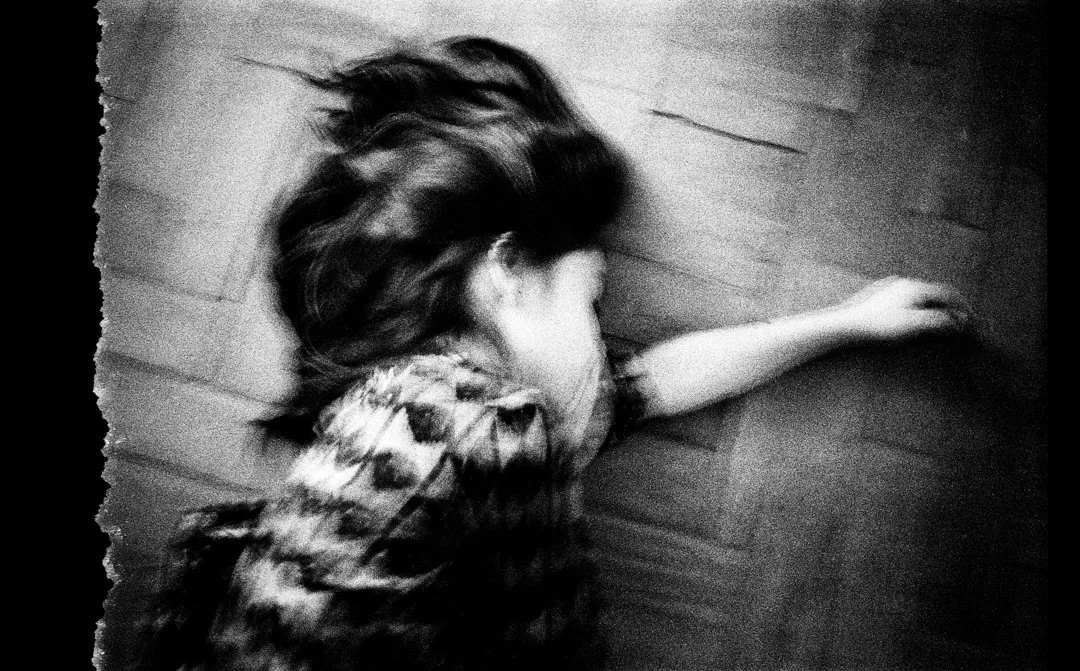
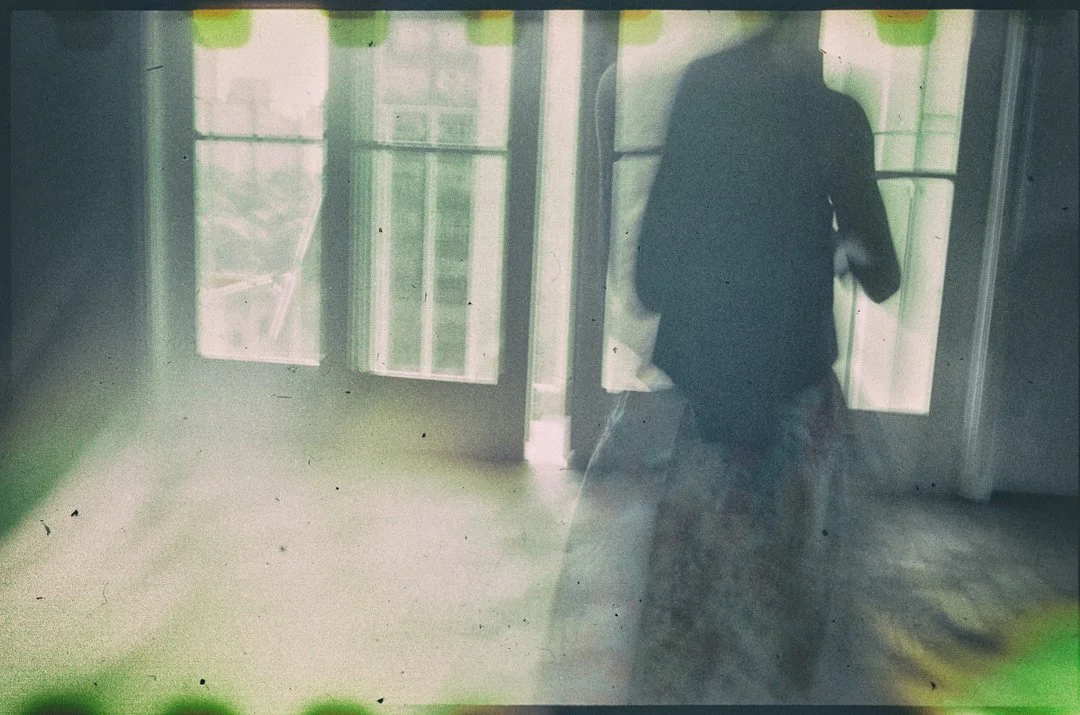
I pick up Re’gis de Gasperi’s Box of Illusions at photo-eye two days before I turn 46 (a detail with only minimal interest here). The book is narrow, elegant, softbound, dark. I am intrigued by the energy emanating from the images on my first flip through: a simultaneous frenzy and calm. Silver grains, unapologetic and brash, sometimes cohere into a recognizable form, other times blur into chiaroscuro abstractions.

Heat seeps from the images. A child rolls on the floor. Elevated temperatures emanate from dancing bodies, flailing bodies, sun streaming in through windows. I feel the windows as exits and prisons both. Precision is refused; all is blur, blear, bright murk.

A visually subtle, but very precise insertion of language interrupts the initial grainy reverie with an unmistakable date, timestamped on the side of a page: 16.3.2020. Ah, that feeling.

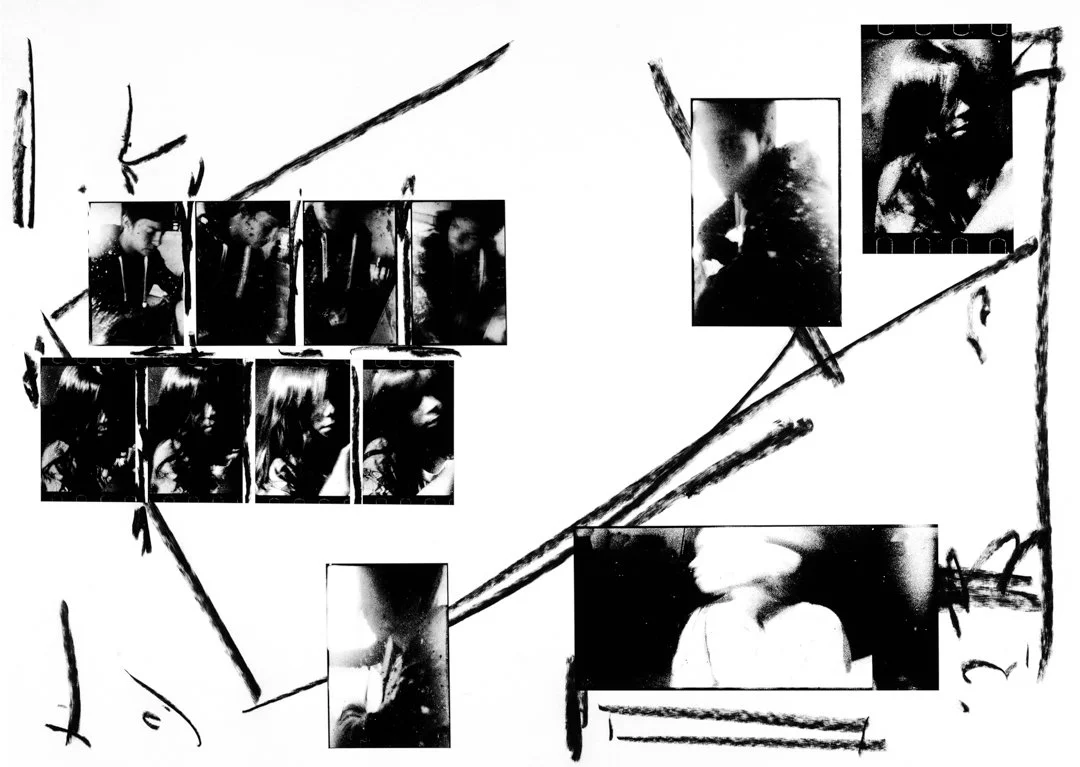
Pandemic parameters arise to surround the images: confinement, the all-too-real limits of a physical space and of our confinement companions. Boredom and the occasional unfocused joy. Moments of beauty and clarity amidst the granular tedium. It feels familiar, how time and space expanded and contracted in unpredictable ways. I note that this quarantine reality feels significantly sexier than my own quarantine reality. Sequences of still photographs splay across the book in multiple configurations, the pacing appropriately irregular. Sometimes we are grounded in the space of a few seconds with multiple feverish frames, other times we are frozen in the slow-motion blur of an extended shutter moment. Charcoal markings show the artist’s hand, holding sequences together or teasing them apart.


I finally turn to the essay, entitled Forty Six (46). In it, the photographer ruminates on the age itself (I indulge in the poignancy of our age overlap), on family, confinement, joy, floating, and dreams. The illusions of middle age are confined (boxed), illusions. The sentence I keep returning to, absurdly: “Lucid until then, the narrator bird flapped its well-structured wings and left the scene.”


The artist’s presence, as editor, voyeur and participant is omnipresent. I try to parse a page of scrawled text, snippets that I want to render poetic, but maybe it’s a grocery list. Annotations, both legible and illegible, in multiple fonts, harsh charcoal drawings, and interspersed English and Portuguese, undergird the sustained loving chaos. There is a sense of inscrutability that feels inevitable; surely no one else could possibly imagine how to make sense of our own individual muddles through this insane pandemic context. De Gasperi bares his own box, of both illusions and delusions, and in it I find comfort and pleasure. I leave the book feeling warmed from the Brazilian sun and chaos, though vaguely wishing that the narrator bird would flap back in to guide my own 46th year.

Purchase Book

Read More Book Reviews


Meggan Gould is an artist living and working outside of Albuquerque, New Mexico, where she is an Associate Professor of Art at the University of New Mexico. She is a graduate of the University of North Carolina at Chapel Hill,, the SALT Institute for Documentary Studies, and Speos (Paris Photographic Institute), where she finally began her studies in photography. She received an MFA in photography from the University of Massachusetts — Dartmouth. She recently wrote a book, Sorry, No Pictures, about her own relationship to photography.

Books 2022 Paris Photo–Aperture Foundation PhotoBook Awards On Monday, October, Paris Photo and Aperture Foundation announced the Shortlist for the 2022 Paris Photo–Aperture Foundation PhotoBook Awards. Established in 2012, the Paris Photo—Aperture Foundation PhotoBook Awards celebrate the contribution of photoooks to the evolving narrative of photography, with three major categories: First PhotoBook, Photography Catalogue of the Year, and PhotoBook of the Year.

2022 Paris Photo–Aperture Foundation 
PhotoBook Awards Shortlist
   
This year marks the tenth anniversary of the Paris Photo–Aperture PhotoBook Awards—a celebration of the photobook’s contributions to the evolving narrative of photography. The award recognizes excellence in three major categories of photobook publishing: First PhotoBook, PhotoBook of the Year, and Photography Catalogue of the Year.

A final jury will gather at Paris Photo this November to select and announce the winners for all three prizes. From there, shortlisted and winning titles will be profiled in a printed catalogue, to be released and distributed for free during Paris Photo fair, along with the Winter 2022 issue of Aperture magazine. The shortlisted books will be exhibited at the Grand Palais Éphémère during Paris Photo, and will tour internationally thereafter.

The following selected nominees are available for purchase through photo-eye.


First PhotoBook


Isivumelwano

Sabelo Mlangeni

South African photographer Sabelo Mlangeni’s documentary work reflects his conscious choice of themes, subcultures, and minority groups that usually remain invisible. The title of this collection of images, ‘Isivumelwano’, comes from Nguni, a Southern African language group. The word means “contract”, “agreement”, or “alliance”, and here it is synonymous with the marriage ceremonies in Black communities that Mlangeni has documented over nearly 30 years.


Last Day in Lagos

Marilyn Nance

From January 15 to February 12, 1977, more than 15,000 artists, intellectuals and performers from 55 nations worldwide gathered in Lagos, Nigeria, for the Second World Black and African Festival of Arts and Culture, also known as FESTAC’77. Taking place in the heyday of Nigeria’s oil wealth and following the African continent’s potent decade of decolonization, FESTAC’77 was the peak of Pan-Africanist expression. Among the musicians, writers, artists and cultural leaders in attendance were Ellsworth Ausby, Milford Graves, Fela Anikulapo Kuti, Samella Lewis, Audre Lorde, Winnie Owens, Miriam Makeba, Valerie Maynard, Queen Mother Moore and Sun Ra.


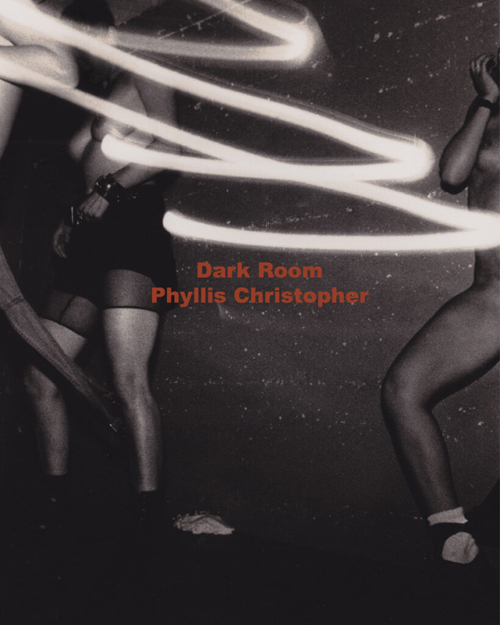
Dark Room

San Francisco Sex And Protest 1988-2003
Phyllis Christopher

Dark Room is a rare collection of lesbian erotic and protest photographs taken by Phyllis Christopher during the period of her life spent living in San Francisco. This explosive and tender body of work connects struggles for lesbian visibility, sex positivity, and bodily autonomy to expressions of gender subversion and queer community. At the height of the AIDS crisis in the United States, amid mainstream censorship and misinformation about sex, Christopher captured a countercultural insistence on the politics of pleasure – a community fighting for sexual and artistic freedoms in both public and intimate settings.


BANK TOP

Craig Easton

BANK TOP by photographer Craig Easton examines the representation and misrepresentation of northern communities. The work focuses on a small, tight-knit community in Blackburn, England, which has become synonymous with the use of words like segregation and integration — BBC’s Panorama describing it as ‘the most segregated town in Britain’.


Play

Philippe Jarrigeon

Filled with colours and tactile moments, Philippe Jarrigeon’s first monograph celebrates fifteen years of a portfolio that is full of expression and deliciously deviant. Published under the artistic direction of Beda Achermann, the book gathers a collection of personal and editorial shots of mixed genres, from portraits to still lifes and landscapes. The title, Play, hints at the imaginative forces at work; a world saturated in pop fantasy and inhabited by humour, with a keen eye for detail and a cheeky wink towards the offbeat and irreverent. Glam goes hand in hand with art house consumer takes, the exceptional with the trivial, the beautiful with the ugly, the too serious with the too funny.


As It Was Give(n) To Me

Stacy Kranitz

For the past twelve years, Stacy Kranitz has been making photographs in the Appalachian region of the United States in order to explore how photography can solidify or demystify stereotypes, and interpret memory and history in a region where the medium has failed to provide an equitable depiction of its people. Rather than reinforcing conventional views of Appalachia as a poverty-ridden region, or by selectively dwelling on positive aspects of the place and its people to offset problematic stereotypes, this work insists that each of these options are equally problematic ways of looking at place.


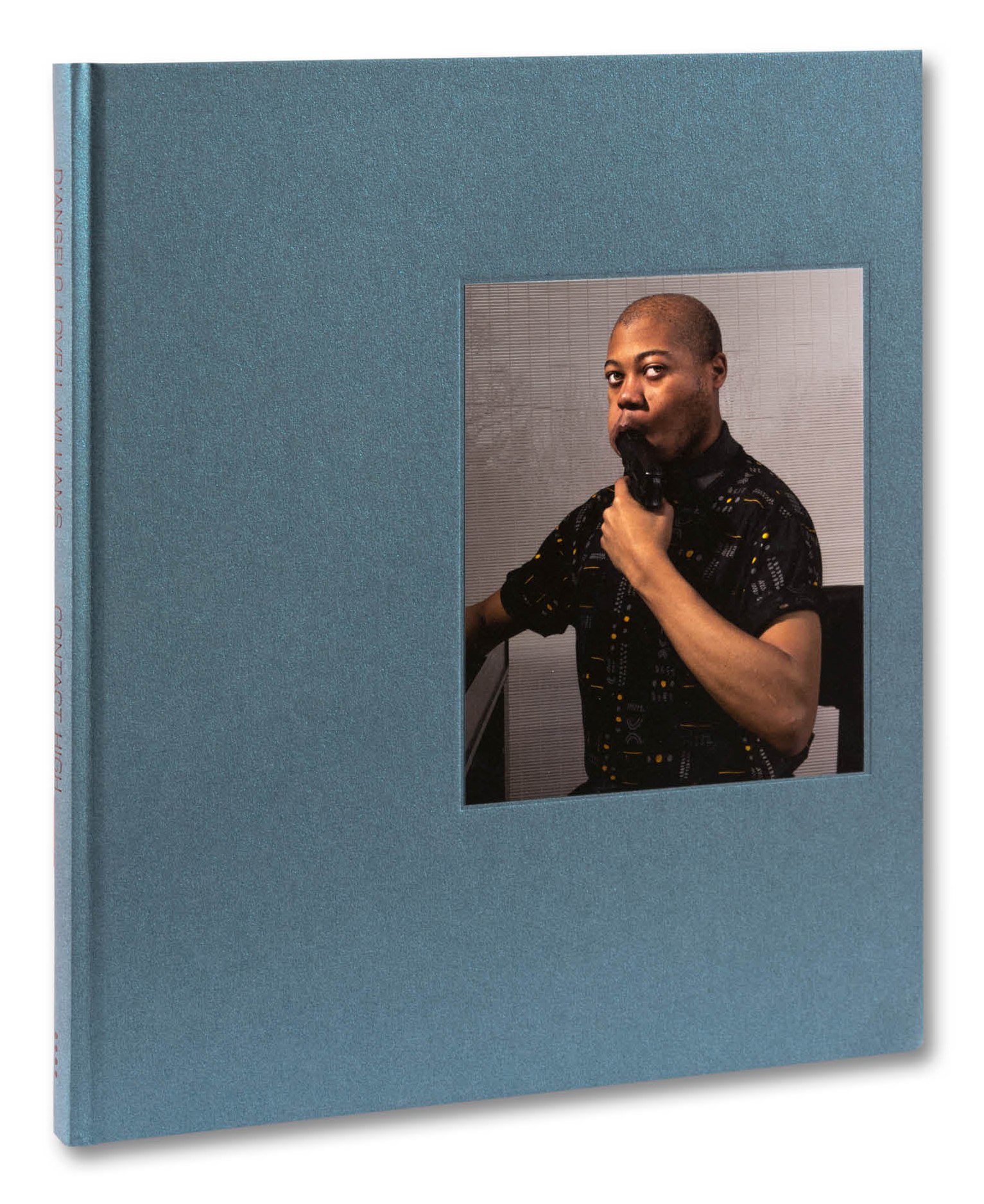
Contact High

D’Angelo Lovell Williams

Both an artist’s book and comprehensive inquisition of D’Angelo Lovell Williams’ work to date, Contact High offers an expansive engagement with the visualisation of desire and depiction of the Black body. Throughout Williams’ narrative images, Black, gay men appear as sitters, lovers, caregivers, or shadows, reflecting the many forms in which Black queer people exist and have existed historically within each other’s lives. Williams’ work is guided by their life experience and an interrogation of their own perspective, as well as wider questions around the representation of race, class, sexuality, gender, and intimacy.


Good Hope

Carla Liesching

In Good Hope, Carla Liesching constructs a fragmented visual and textual assemblage that orbits around the gardens and grounds at the Cape of Good Hope in South Africa — a historic location at the height of Empire, now an epicenter for anti-colonial resistance movements, and also the place of the artist’s birth. Named by the Portuguese in their ‘Age of Discovery’, the Cape’s position at the mid-point along the ‘Spice Route’ was viewed with great optimism for its potential to open up a valuable maritime passageway.


The Land of Promises
 
Youqine Lefèvre

The Land of Promises tells the intimate and personal stories of people living under the restrictions of China’s one-child policy. The policy has had huge and far-reaching consequences, particularly for hundreds of thousands of Chinese girls who have been separated from their families and registered for adoption. Photographer Youqine Lefèvre sets out to portray the journey of her own adoption through the story of six Belgian families. In doing so, she relates it to a broader context of international and transracial adoptions and other stories told by those she has met in the course of her travels. The changes in their lives resonate to this day and will continue in the future.


PhotoBook of the Year


SCUMB Manifesto
 
Justine Kurland

Inspired by Valerie Solanas’ iconoclastic feminist tract SCUM (Society for Cutting Up Men) Manifesto, SCUMB introduces us to photographer Justine Kurland’s own uncompromising initiative: the Society for Cutting Up Men’s Books. This volume presents a collection of collages Kurland created by cutting up and reconfiguring photobooks by male artists, as she went through the process of purging her own library of roughly 150 books by straight white men that have monopolized the photographic canon.


Baldwin Lee

In 1983, Baldwin Lee (born 1951) left his home in Knoxville, Tennessee, with his 4 × 5 view camera and set out on the first of a series of road trips to photograph the American South. The subjects of his pictures were Black Americans: at home, at work and at play, in the street and in nature. This project would consume Lee—a first-generation Chinese American—for the remainder of that decade, and it would forever transform his perception of his country, its people and himself.


Périphérique

Mohamed Bourouissa

In this breakthrough series of photographs, Deutsche Börse award-winner Mohamed Bourouissa chose to appropriate the codes of history painting by staging scenes with his friends and acquaintances in the Paris banlieues where they used to hang out. Confrontations, gatherings, incidents, looks, and frozen gestures all suggest a palpable tension. Invoking Delacroix as much as Jeff Wall, Bourouissa’s high drama in the outskirts of Paris attempts to give a place in French history to individuals usually neglected and overlooked in contemporary society.


My Husband

Tokuko Ushioda

The joyful days with her husband, Shinzo Shimao, and daughter, Maho in a one-room unit of a Western-style house and her solitude she faced alone in the quiet night; Dormant for 40 years, the story of these photographs is finally uncovered. A set of two books with Book 1 and Book 2 each showcasing the 6×6 and 35mm photographs respectively.


Look at me like you love me

Jess T. Dugan

In Look at me like you love me, Jess T. Dugan reflects on desire, intimacy, companionship, and the ways our identities are shaped by these experiences. In this highly personal collection of work, Dugan brings together self-portraits, portraits of individuals and couples, and still lifes, interwoven with diaristic writings reflecting on relationships, solitude, family, loss, healing, and the transformations that define a life.


Flint Is Family In Three Acts

LaToya Ruby Frazier

LaToya Ruby Frazier’s Flint Is Family in Three Acts chronicles the ongoing manmade water crisis in Flint, Michigan, from the perspective of those who live and fight for their right to access free, clean water. Featuring photographs, texts, poems and interviews made in collaboration with Flint’s residents, this five-year body of work, begun in 2016, serves as an intervention and alternative to mass media accounts of this political, economic and racial injustice.


River's Dream

Curran Hatleberg

Building on the concerns of Lost Coast (TBW Books, 2016) he continues his focus on the stories of American people, familIes and communities. River's Dream brilliantly demonstrates the artist's command over the contemporary photo book medium.


Arrangements

Carmen Winant

This book of multivalent narratives began with a simple premise: the collection of sheets of paper—ripped from books—featuring multiple photographs and inlaid narratives. Across a decade of working on other projects involving pulling images apart from one another, excising them from the page and recontextualizing them as new sets, American artist Carmen Winant diligently collected disparate sheets, skimming them off the top of her other ongoing collections.


Photography Catalogue of the Year


Another Country

British Documentary Photography Since 1945
Gerry Badger

Another Country offers a lively, vital rethinking of British documentary photography over the last seven decades. This collection includes a diverse range of photographers working in an exciting array of photographic and artistic modes, encompassing images from iconic reportage to photo-text pieces, from self-portraits to political photo-collages.


James Barnor - Stories

Pictures from the Archive

RRB is pleased to present our second title with Ghanaian photographer James Barnor. Published in parallel with the exhibition James Barnor, the Portfolio: 100 photographs (1949-1983), presented in 2022 at the LUMA Foundation as part of the Rencontres d’Arles festival, the book offers a kaleidoscopic overview of the Ghanaian photographer’s oeuvre.


Devour the Land

War and American Landscape Photography since 1970

Devour the Land considers how contemporary photographers have responded to the US military’s impact on the domestic environment since the 1970s, a dynamic period for environmental activism as well as for photography. This catalogue presents a lively range of voices at the intersection of art, environmentalism, militarism, photography, and politics.


To look without fear

Wolfgang Tillmans

A visionary creator and intrepid polymath, Wolfgang Tillmans unites formal inventiveness with an ethical orientation that attends to the most pressing issues of life today. While his work transcends the bounds of any single artistic discipline, he is best known for his wide-ranging photographic output. From trenchant documents of social movements to windowsill still lifes, ecstatic images of nightlife to cameraless abstractions, sensitive portraits to architectural studies, astronomical phenomena to intimate nudes, he has explored seemingly every genre of photography imaginable, continually experimenting with how to make new pictures and deepen the viewer’s experience.


Diane Arbus Documents

Best known for her penetrating images exploring what it means to be human, Diane Arbus is a pivotal and singular figure in American postwar photography. Arbus’s black-and-white photographs demolish aesthetic conventions and upend all certainties. Both lauded and criticized for her photographs of people deemed “outsiders,” Arbus continues to be a lightning rod for a wide range of opinions surrounding her subject matter and approach.